Showing posts with label American Classics. Show all posts

Friday, 29 April 2016

Broadway Book Club Discussion of The Heart is a Lonely Hunter, by Carson McCullers

This is one of the first novels in a long time that everybody loved- though the discussion was thorough, there was not a bad word said against McCullers' classic pre-World War II, Post-Depression story of isolation and frustration in a small Southern mill town. The novel follows a small community at the tail end of the depression and their battles with poverty, isolation and oppression. We follow the experiences of five lonely individuals and see their ways of coping with their situations and their trials.

We talked initially about the characters of the novel, the four individuals that gravitate towards deaf-mute John Singer and Singer himself. We discussed how Singer is a totally blank canvas- we know nothing of his past or personality. This leaves Mick, Biff, Dr Copeland and Jake Blount an empty space to pour their thoughts into, a man devoid of history that they can assemble and create for themselves, however they want him to be. Each projects a wonderful figure onto him, designating him a listener, a friend, a wise man and confidant. Singer's silence makes them free to say and do what they want. One reader pointed out that the four characters' relationship to Singer is wholly selfish kind of love- none of them make any attempt to get to know him, to understand him at all. They just use him as a receptacle for their worries, frustration and thoughts.

14 year old Mick emerged as most people's favourite. Musical and independent, she wrestles with the neighbourhood boys and takes care of her younger siblings. We talked about Mick's coming of age, how her ending is so heartbreaking. Poverty steals Mick's dreams and ambitions, as she is required to drop out of school and work for $10 a week at Woolworths. The music she has heard in her head, her symphonies and her dreams of snowy places are gone to her as she has to accept her lot in life.

Biff, the owner of the New York Cafe is an interesting though thoroughly mysterious character. He does not know or understand himself, which leaves him unable to confide in Singer in the same way as the other three characters do. He feels nothing when his wife dies. We discussed how Biff's most memorable behaviour is noteworthy because of its traditionally gendered associations. He takes pleasure in beautiful scents and fabrics. He demonstrates a skill for interior design, aesthetics and floral arrangements, all activities with feminine connotations. He expresses a desire to be a mother (not father or parent) to Mick and Baby, which is a striking choice of words for a middle aged man with such a masculine appearance that he has to shave twice a day. We decided that his 'love' for Mick was quite maternal rather than romantic and probably his way of coping with his isolation.

Jake Blount, with his overt communist ideology is a surprising character to find in an American novel of this period. We discussed how, if the novel was set or written 10-15 years later, this would not have happened, especially considering that McCarthyism, the Rosenbergs' execution and so on would take place not much later along the USA's historical timeline. Where Mick has her "Inside Room" and her "Outside Room" which she uses to compartmentalise her life, to escape her reality, Blount has booze to provide his escape. He's a fighter, a communist, a drunk, a philosopher and a would be revolutionary- and he's nothing at the same time. A drifter.

We talked for a while about Dr Copeland and his contrast with his children. It's interesting to see a narrative that seems to be (probably one of many) genesis points of the Civil Rights movement. It's fascinating to see such a defiant character- a black man who trains as a doctor in the North and returns to the South to build a practice of patients from the black community. He speaks with a white man's dialect, much to the horror of white men. He carries himself with the dignity that he is denied, which in itself is classed as civil disobedience and lands him a night in prison. The comparatively backwards attitudes of his offspring, with their slang and their religion and badly paid servant jobs contrasts with the figure of their father and his purpose. We talked about the contrast, how much more complicated it made the Copelands and how their difference really emphasised the disparity of the issues faced by African Americans in the South of the 1930s.

We discussed the author's use of pace in the novel and how opposite it was to most writers' approaches. There is no build up to key events- they just happen with shocking speed and a realistic abruptness. Biff's wife dies within a sentence. Mick's loss of virginity, Singer's ending. Baby's shooting. All these key plot events appear without build-up, fanfare or foreshadowing- it feels so realistic and un-novel-like.

We loved how everybody who is ordinarily voiceless (African Americans, the disabled, the young, the marginalised) are all represented and given a voice in this novel. Not only given a voice, but authentic, thought provoking situations that demonstrate their social difficulties and struggles. It was mentioned that modern novels such as The Help often attract criticism for their portrayal of black characters, but McCullers presents her characters as complex and flawed, frustrated and struggling against a unique and complicated set of problems. We talked about the sheer volume of empathy in this book- it's staggering how much understanding and perspective is demonstrated by a young, white woman in 1939. Her empathy with the oppressed, her understanding of the complexity of that oppression in incredible.

We praised the book's dream-like quality, the abundance of subtext and the beautiful prose that was kind of vague but compelling. It's a timeless novel that feels unanchored in time (despite references to the Nazis and fascism) very relevant today.

Thursday, 5 November 2015

We Have Always Lived in the Castle, by Shirley Jackson

We Have Always Lived in the Castle was Shirley Jackson’s last novel before her death in 1965 and is primarily concerned with the themes of ‘otherness’, mental deterioration and isolation, both geographically and socially. In common with The Haunting of Hill House, a stately but decrepit and far-too-big house plays a major part in the story, in this case the Blackwood manor house, a lonely and isolated pile in acres of woodland, far away from the snooping eyes of the hateful villagers. Like its inhabitants the house deteriorates and suffers greatly, but it’s still standing at the end.

The story is told from the perspective of 18 year old Mary-Katherine Blackwood, Merricat for short, who lives with her older sister Constance and her disabled uncle Julian who has no recollection of the poisoning that incapacitated and nearly killed him. Twice a week Merricat braves the stares and the whispers of the local village, venturing out just long enough to buy groceries, swap library books and drink a cup of coffee, just to show the villagers that she is not afraid of them. She has a very blunt, unusually candid manner of speaking, but it’s clear from the beginning that she harbours secrets. She’s incredibly paranoid and full of fear and a specifically spiteful form of hatred for everybody but her sister Constance and her cat Jonas.

I don't normally quote from books, but look at this for an opening line;
My name is Mary Katherine Blackwood. I am eighteen years old, and I live with my sister Constance. I have often thought that with any luck at all, I could have been born a werewolf, because the two middle fingers on both my hands are the same length, but I have had to be content with what I had. I dislike washing myself, and dogs, and noise. I like my sister Constance, and Richard Plantagenet, and Amanita phalloides, the death-cup mushroom. Everyone else in our family is dead.
― Shirley Jackson, We Have Always Lived in the Castle

Jackson does a pitch perfect job of adding paper thin layer upon layer of unease, steadily building tension and a slowly prickling sense of agitation. It’s very hard to pin down what it is that creates such unease (apart from masterful writing, obviously) but the reader understands from page one that the narrator is a very unusual and very psychologically damaged woman. There are no ghosts or monsters, no haunted house and no phantoms; all the fear in this book comes from the unknowable shady corners of the human mind.

Soon enough we learn that six years prior to the events of the novel a collection of murders occurred in Blackwood House. All other members of the family, immediate and extended, were fatally poisoned at the dining table. Investigators found the source of the poison in the sugar sprinkled on blackberries served at dinner. Merricat survived, being sent to bed with no supper as punishment. Constance, the chef on this occasion and the only one who took no sugar on her berries was the obvious suspect, but a lack of evidence sees her acquitted. The murders become notorious, and the three surviving Blackwoods become village curiosities; reclusive, inescapably odd and invisible.
The sisters’ (and Uncle’s) quiet, and ultimately quite happy life is disturbed when a cousin appears at the house, ostensibly there to reconnect with his family after the  disowning of the surviving Blackwood sisters, his intent and motivation is fairly obvious very quickly. His appearance disturbs the tranquil and established routines, routine so scared it’s almost ritual and sets in motion a deadly chain of events that will change life forever at Blackwood house.

This is such a skinny book it can be read in an evening- it’s gripping and absorbing, and it’s really hard to say what element makes it so unnerving. The sense otherliness is all I can attribute it to. Merricat and Constance are not like normal  people and when they keep to themselves they are happy. I loved the psychological element of this novel, the way that small town gang mentality and persecution is explored and the pains that Constance goes to to keep her evidently mentally ill sister comfortable, safe and content. The sisters (and the cat) want for nobody else, they seek out nobody else, and as long as it stays just the three of them, they will be fine.

As far as the plot goes, it’s a very simple plot. But it’s not the plot that makes it. It’s the writing style that is so arresting. When the ‘twist’ (if it can be called that) is revealed, the reader has suspected it for some time. It’s the casual way that it’s presented that makes it notable, not the revelation itself.

Very much recommend. I read it on Halloween thinking incorrectly that it was a ghost story. While there’s nothing supernatural about it, the moody isolation is certainly atmospheric and it’s definite worth a read for its interesting characters and its creepy sensations.

Monday, 12 January 2015

The Little Friend, by Donna Tartt

The Little Friend
What with all the praise and accolades (rightly) heaped on last year’s The Goldfinch, and the almost cult classic status of her debut novel The Secret History, Donna Tartt’s second novel, The Little Friend unfortunately suffers from a book version of middle child syndrome; kind of neglected, unjustly ignored and considered unspectacular when compared to its siblings. I’m pleased to expose this (what I’ve found to be quite widespread) idea as nonsense.

Ok, so The Little Friend doesn't have the intellectual whydunnit of its predecessor, or the stylish epic scope of its follow-up, but it’s a brilliant “Southern Gothic” novel in its own right that manages to make an engaging little detective out of a semi-feral 12 year old girl. TLF got me right out of a reading funk (The Little Stranger, don’t bother) from the very first page, and the lively host of characters kept me right on track to the last chapter.

The prologue starts on an ordinary, sultry day in 1964 Mississippi. From the first line, it’s intensely ominous, even before the thunderstorm- we immediately get the sense that something tragic happened on that Mother’s Day and that guilt, blame and loss have been lurking in the Cleve household ever since. The prologue goes on to reveal the mysterious death of 9 year old golden boy and prodigal son Robin, found hanging from a tree in what’s assumed to be a murder. Only it’s a murder with absolutely no suspects or evidence at all, witnessed only by a traumatised 4 year old that has since repressed the memory to such an extent she remembers a white sheet blowing in the wind and no more.

Skipping 12 years, we meet the real protagonist Harriet Cleve Dufresnes, raised communally by a trio of bustling great aunts and a very severe Grandmother (whom Harriet is said to resemble intensely), in a crumbling house stuffed with newspapers. Harriet’s mother has never recovered from the day of the murder, spending months at a time in a dreamy depression, confined to her bed and neglecting her family and household. Likened to Jim Harkness of Treasure Island by the author, Harriet is a sort of contemporary Tom Sawyer; a wilderness exploring, grubby footed and sharp-tonged wildling, not to mention adventure story aficionado. Harriet vows to her enamoured and awe-struck friend Hely to track down her brother’s killer and avenge him, craving justice the old fashioned way. Having put in some research and questioned those that knew her brother, Harriet concludes the killer is Danny Ratliff, once a classmate of Robin’s now recently released from prison back into his notoriously good-for-nothing family. She pursues him, Hely at her side, to some unexpected and thoroughly perilous ends.

On the surface it’s quite a simple story of revenge, investigation and justice, but the whole novel seethes with a heat and an anger that seems less to do with Harriet’s thirst for vengeance for her practically sainted brother (she never really knew him being still in a cradle at the time of his murder) but with her frustration at the workings of the adult world. Fatherless, essentially motherless, deserted by her beloved housekeeper Ida Rhew, Harriet has never had stability or boundaries. Beaten in life by one circumstance or another, Harriet sees adulthood as a kind of defeat; the adults around her have no power or control so she seizes it for herself.

I absolutely loved this novel and raced through its pages. The characters are so skilfully drawn- Grandmother Edie and Harriet in particular; wily and skilled manipulators who know their own minds and won’t budge from their convictions, but resourceful and fiercely intelligent. The Ratliff’s too were brilliantly executed- pathetically impoverished, no prospects, no expectations, but despite the cruelty of the elder brother Farish, it’s hard to not feel sympathy for a family so reduced and so utterly without means of elevation. Their caring for their youngest brother with severe learning difficulties proves that they are not without feeling. I loved how Tartt can somehow make a setting feel both thoroughly familiar and understandable, but simultaneously murky with secrets and mystery. Alexandria, MI is a buzzing tapestry of small-town life, but the crumbling legacy of the old families, the neglect, the unresolved murder and the underlying trauma of that makes it seem threatening and moody at the same time. The whole novel has a sticky, feverish dream like quality to it; The endless hot summer, the gibberish nonsense spoken by dazed, drug addled or unconscious characters, the exotic danger of the snakes and guns.

All in all, it’s a worthy middle child novel, hugely different from its siblings, but that just proves the sheer range of the author. The Little Friend has introduced me to one of my favourite child protagonists since Scout Finch- I loved the fearlessness and the conflict of the innocence and independence in the character. It’s a long book, but the sheer quality of the prose sustains it brilliantly. Oh the prose. Nobody writes like Tartt. A single line can be funny, heartbreaking and violent all at once. Read it- it's not the poor relation many readers have had me believe.

Tuesday, 22 April 2014

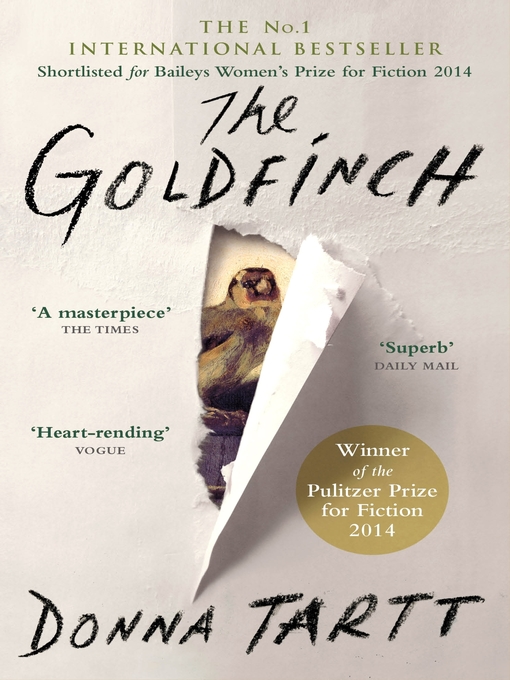
The Goldfinch, by Donna Tartt

It's too hard to even talk about this book. It's beyond description, really. But I shall try.

The novel starts with a feverish young man shivering alone in an Amsterdam hotel room. Afraid to go out, he scans indecipherable Dutch newspaper articles for his name amongst pictures of police cars, incident tape and dead bodies. We go back 14 years to the beginning.

12 year old scholarship student Theodore Decker is in trouble at school for silly, petty reasons. On the morning he is due to attend a meeting with his headmaster, Theodore and his mother Audrey take shelter from the rain in one of New York's lesser known museums, but one that Audrey visits regularly. Theo isn’t much of an art lover, sulking about his impending meeting and squinting at dreary Dutch paintings of autopsies and dissections. He feels a strange, inexplicable connection to a red headed girl, attending the exhibition with her elderly grandfather- they remind him of his mother; gentle, absorbed in the art.

Doubling back for one last look at the mystery girl when the explosion occurs, Theo becomes an unlikely survivor of a huge terrorist attack. Comforting the girl's dying grandfather in his last moments of life, the man gives the dazed and shock ravaged Theo a family heirloom and an address in the West Village. Theo, operating purely on adrenaline and instinct staggers out of the museum with a tiny painting of a Goldfinch and the dead man's ring. And without his mother.

Displaced and homeless with no family in New York and a herd of councillors, therapists and social workers on his case, Theo desperately tries to avoid falling into 'the system'. When his alcoholic, gambling-addict father turns up to whisk Theo to a fresh start in Las Vegas, his life becomes a cloud of disillusion, drugs, booze and underachievement with fellow waster Boris, the alcoholic schoolboy on a self-destructive path to crime. The bulk of the middle section of the story follows Theo's emotional ups and downs of living in Vegas, the lack of company, the endless hours of TV and dog walking in the desert, and the effects of gambling in a town of addicts. He sees how similar he is to the father he despises and he's afraid for his future. He never really stood a chance. Over the years, Theo's lies, omissions and bad decisions draw him deeper and deeper into the shady underworld of Art criminals, traffickers and drug gangs as he leads a double life of antiquarian respectability and narcotic-deadened depression and fraud.

The cast of characters in this book is immense. Each is beautifully realised, full of their own little nuances, motivations and flaws as they weave in and out of Theo's life, colliding and clashing and building a complicated web of accomplices, allies and antagonists. Hobie, the antique dealer is easily the most stable aspect of Theo's post-explosion life, constant and dependable and the origin of most of Theo's happiness. He repairs the old and the damaged and feels fresh out of a Dickens novel. Poppy, the granddaughter of Hobie's late business partner is the unobtainable dream girl from the museum- the girl that constantly reminds Theo what he could have had if he'd had a normal life and hadn't been so hopelessly ravelled up in theft and fraud and drugs.

The Goldfinch is essentially a complicated coming of age story about dealing with loss, betrayal and about the weird adventure that friendship can be. Central also is the importance of cultural history and the preservation of beautiful, important things, and the concepts of home and belonging. It's about life's often sickening pace, but also about its excruciating stagnation. The book is a sequence of causes and their effects as Theo lurches from one disaster to another, uprooted at such an early age and drifting ever since. I loved the character of Theo, apathy, passion and all the rest of his bipolar baggage and desperately wanted him to be ok. I loved how much he cared about the painting that he unintentionally stole, the effect that it has on him and the secret sense of self-worth that he believes it gives him. There's something vulnerable about him, even as an adult, and his seld destructive personality makes him pretty funny at times, and thoroughly tragic in others.

Tartt's prose is amazing, she draws the reader into a world that's real and tragic, populated with characters that are self-destructive and nihilistic and others that are almost angelic in their innocence, all drawn together by chance and circumstances. The acrid dry heat and huge dark skies of Las Vegas and the cramped and impersonal chaos of garbage strewn New York. It's a book of opposites and contradictions. For everything beautiful, there's something destructive and ugly. There are huge sections of prose that seem so meaningful and applicable to all of life. The language in this book, especially sections that relate to the art, the effect of art on the heart and the importance of preservation are incredible.

I hope this waffly adoration makes sense. It's simply an incredible, intricate, important piece of writing It's beautiful and horrific and heart-breaking. Fast paced but measured and delicate, and full of brilliant characters and ideas and important little moments. An instant modern classic. I loved it so much I was procrastinating towards the final section, so it didn't have to end. The Goldfinch makes me want to go out into the world and scrutinise some art and see which picture it is that speaks to me personally, like the Goldfinch does to Theo.

Tuesday, 19 November 2013

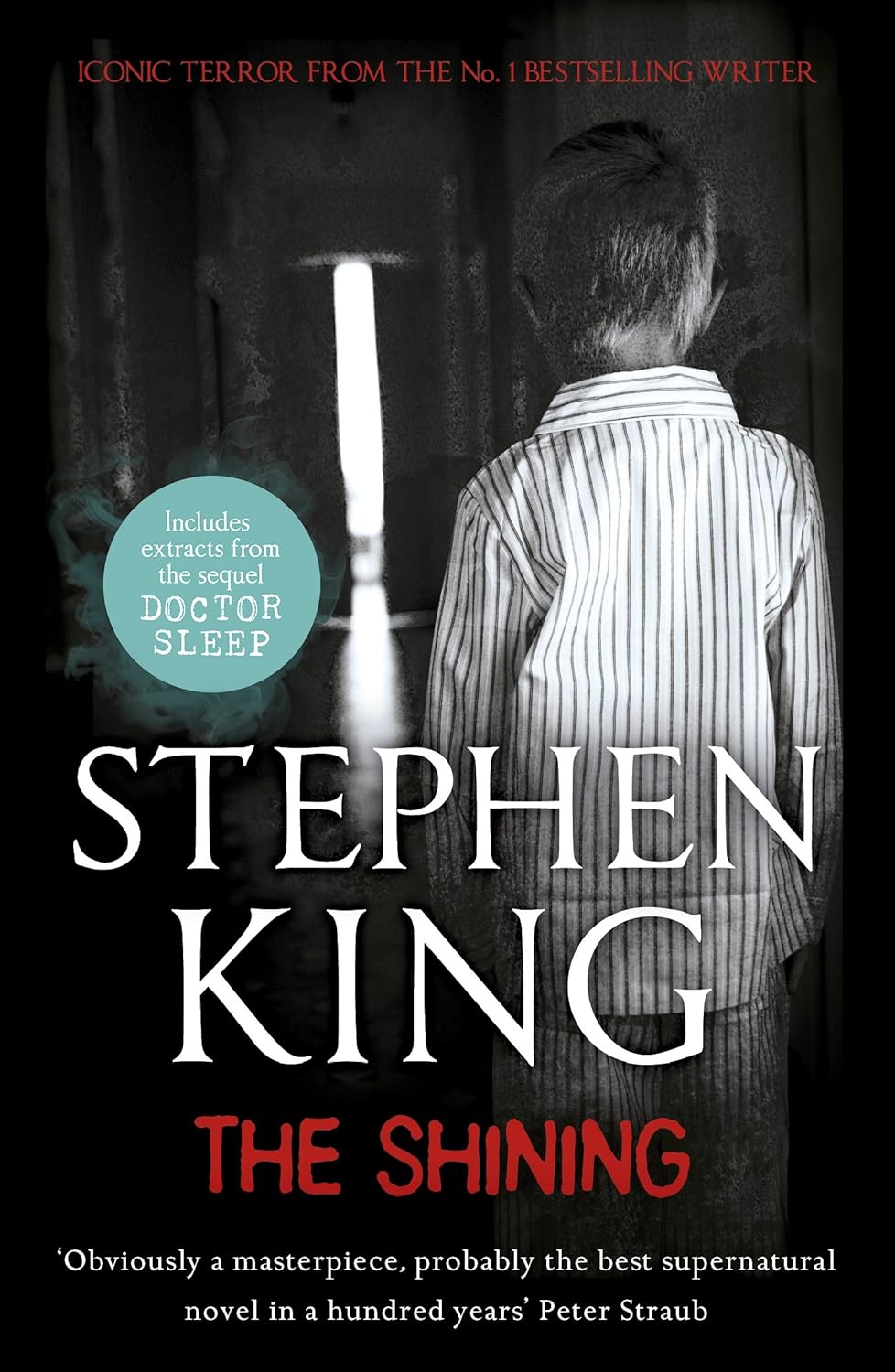
The Shining, by Stephen King


I'll start with a confession.  This is the first Stephen King novel that I've read.  I don't know how or why it's worked out that way, but it seems so.  Will definitely be reading more though- what a master.  I could not put this down.  I watched the film straight after and was staggered by how disappointing it was in comparison.  Despite the "Come play with us", the "All work and no play" bit and the "Here's Johnny" being inventions of Kubrick (Or Nicholson), the book just maintains the feeling of suspense so much better.  The family's relationships with each other and their understanding of the Hotel and of any Supernatural influences is managed with so much craft.

Firstly, the prose is fantastic.  Thoughts, actions, dreams and flashbacks are blended together with such skill that within about 50 pages, the reader has a profound understanding of each of the characters, what makes them function and what each of them fear.  The reader understands the motivations of Jack, for needing his family to go with him to look after the Overlook Hotel.  His shame, embarrassment and pride all play a part, but at the end of the day he is a husband and father trying to take care of his family.  They know that too, but their misgivings are made clear and their reasons are shown. Their Nothing is hidden from the reader, which just makes the tension so much higher.  You know more or less what's coming, thanks to Danny's premonitions, dreams and nightmares, but you are never sure to what extent they are accurate and more importantly when they are coming.  Neither does he.  

I loved the investment that the author makes in his characters.  Jack Torrence could easily be the textbook psychopath, but King makes him into something much more. He's a real person with his own demons, a struggling recovered alcoholic, disgraced academic, frustrated writer and custodian of a pretty nasty temper. He's flawed, he's troubled, but he loves his wife and son and that's made crystal clear.  His mental deterioration throughout this book is only partially supernatural, the signs are there from the first page that this is a man on the edge.  Wendy Torrence too is so much more engaging than the screaming, Phoebe-running doormat of Shelley Duval.  She's torn between her responsibilities to her son and to Jack, and lives in terror of becoming her mother, jealous of the father/son bond between the two of them. 

A lot of the time, I find child characters annoying.  They are often a bit of a liability or just badly written, but Danny is so mature and has such a good grasp on the world that he's practically a small adult.  He's resourceful, undeniably weird, sensitive in an uncloying way and just wants to keep a lid on all the crazy that's kicking off.  But without making a fuss.

Secondly, the way that the author combines the psychological and the paranormal is flawless.  Danny's powers are made evident, though his parents seem semi-aware they don't understand the extent of his abilities, his ability to feel their emotions and to understand their thoughts.  Neither does Danny, really.  Though they play a big part in the plot and in the characterisation of himself and his family, his psychic powers seem more than merely a plot device.  Danny's "Shining" acts as a sort of catalyst and power source for the Overlook Hotel, allowing the shadows and the smoky wisps to become solid, rational and able to inflict harm.  It's hard to tell what's real and what seems real through the power of suggestion, which is something that the reader and the characters struggle through together.

I can't honestly say that this book is terrifying, but it's so soooo compulsive.  As Jack pours his interest and his attention into the Hotel, the building sort of steals it, and pours some of its malevolent self into him.   Seeing the change in the character and the onset of madness is really compelling and makes for a pretty breathless read.    Loved it.  Went out and immediately brought Cujo, The Green Mile, The Stand and Under the Dome.  Just to make sure that Stephen King is as good an author as his squillions of dollars suggest that he is.

Wednesday, 25 September 2013

The Bodysnatchers, by Jack Finney

This is a re-read for me, one I nominated at my book club and it won the vote! Yaaaay.

I really enjoyed re-reading this- one of the easiest, creepiest and most swiftly-paced Science Fiction books I can think of.  I can't say as there was anything profound and important that could only be discovered on a second read...but that's sort of the beauty of the style of this book- it's so easy and quick to read and the pages just fly past.

If Philip Marlowe is a hard boiled Private Detective and Walter Neff is a hard boiled criminal/insurance salesman, then Dr. Miles Bernell is very much the hard boiled GP. Born, raised and Doctoring in the small Californian town that his father practised in before him, Miles knows every soul in Santa Mira, knows their business, their jobs, their characters. He knows every hill and path through the valleys and every field on the edge of town. When he starts getting patients visiting his surgery telling him that their relatives aren't really their relatives, he doesn't know what to make of it. First it's just one. Then it's half a dozen. All convinced that despite looking, acting and remembering to the last detail like they always have done, they're just different.  When Miles and his neighbours discover something impossible and undeniably horrific in the basement, something that looks like a dead body but has never been alive, never been completed or had the finishing touches put on it, they know they've got a potentially species threatening disaster on their hands. It's just a case of finding out how far it's invaded so far...


It has to be said, this book could be considered a tad dated in areas when it comes to gender roles- the women fix a lot of coffee, cook sausages, go into shock quite a lot. The men smoke cigars, make decisions and speed around in cars...Miles is certainly the gung-ho saviour dreamboat that was apparently so ubiquitous in the 1950s. His one-time sweetheart, the recently re-appeared future squeeze Becky has to constantly remind Miles that women can do more than stand clutching their faces frozen in horror at the sight of anything, which she proves later on. I'm not convinced this book would be published today, it's not gory enough, it's ending might be seen as a bit of a cop out and the horror of being turned to dust in your sleep just seems too subtle.

The story of the space spores drifting to Earth and perfectly replicating humans, turning the originals to dust in their sleep is always thought to be a metaphor for communism or free will or something...the idea of the doppelganger is nothing new, but this novel combines the uncanniness of the doppelganger with deadly organisation skills- a recipe for the end of humanity. Whatever it is, it's chilling, slick, in places quite funny, and generally a really enjoyable entertaining and highly original Science Fiction novel. Soooo some of the characters' actions and decisions are questionable... yeeees some of the science might be a bit made up...I knooooow the ending is a bit too convenient...It's a fun, hammy, B-Movie fan's dream come true and I love it.

Saturday, 14 September 2013

1984, at Nottingham Playhouse

I read this book over 10 years ago, so I can't recall if it's a faithful or literal adaptation of the novel, but faithful or not this new play, a collaboration between Nottingham Playhouse Theatre Company and Headlong certainly captures the stiflingly oppressive atmosphere of one of the English Language's most important books.  I remember there being more roaming in the Ghettos and Ulcers in the book but that's probably best left out...

Using a combination of high-frequency noises, static, floodlights and really innovative live projection equipment, the production makes it feel less like you are watching a play of 1984 and more like you are in it. The lights and noises are uncomfortably intense and disorientating and do an incredible job of showing Comrade 6079, Winston Smith's mental state and his confusion- it becomes impossible to know what's real, what's new and what's repeated, what's memory, what's imagined and what's just plain old lies.

This  adaptation focuses not on the gigantic eyes of Big Brother, surveillance personified, gazing down on the individual but on the tiny and insignificant eyes of the minority of one, gazing up.  Looking hard at Big Brother, being baffled and full of silent rage.  It's not about the watchers, it's about the watched.  Or the possibly watched, or the threat of being watched.  Personally I don't know what's so special about Winston. I don't know why the Party are so interested in him and why they become so intent on his destruction.  He's one man.  Yes, he believes himself to be a part of the Brotherhood, the organisation dedicated to destroying the Party that may or may not exist, but he knows he will never meet any other members. There's no way that his rebellious fire could possibly burn any body else.  He associates with few people, none of whom he likes, and he's hardly a leader of men.

For the unfamiliar, the world of 1984 is one of paranoia, propaganda and fear. 'Newspeak', the only language in the world with a shrinking vocabulary, is being rolled out by The Party, its intention is to eliminate rebellion and anarchy. If you have no terms in which to describe these behaviours and to discuss the acts themselves, anarchy and rebellion will cease to exist. To even think in terms of non-conformism is punishable by death, or more commonly, disappearance. That's Winston's job. To modify historical records, newspapers, documents, photographs, all physical evidence of existence to match the preferred history of the Party. If you are ever wiped from existence, it will be Winston or one of his colleagues that presses delete.

Not to give too much away, Winston's own personal act of rebellion is to fall in love, something which is forbidden. It's dangerous and it's life threatening and it's the beginning of a series of events that will lead to betrayal. double agency and to the most famous room in literature.

Excellent, intense performances, particularly from Mark Arends who progresses from bored malcontent to ruined mess and some of the most creative production I've seen. The nightmarish sequences in the Ministry of Love and the destruction of the last piece of unobserved haven in the world are done so, so effectively it's impossible to explain. The Henry James-esque contextualisation bookending the narrative were excellent, if that's an addition made by the director it was a stroke of absolute genius- people do have a tendency to over analyse the historical words of the miserable and this was acknowledged so stylishly.

Go see it, then you'll know what I mean. At Nottingham playhouse from Friday 13-Saturday 28 September - http://www.nottinghamplayhouse.co.uk/whats-on/drama/1984/

Sunday, 31 March 2013

The Perks of Being A Wallflower, by Stephen Chbovsky


Really, really enjoyed this. An intelligent and witty coming of age story that's full of charm and emotion- not a desperate teen-aged emotion, like you might expect, but an intelligent emotion that sort of acknowledges the immortality of youth, but also the briefness of it.

The narrator, Charlie, is a little obsessed with the concept of memory and time, worrying whether these are his glory days and he isn't noticing it, and if he'll tell his kids stories about his past. He worries that his kids will see pictures of his youth and think he looked happier at their age than they feel now. Charlie seems too to understand the complexities of life, feelings and relationships, whilst also being quite bad at conducting them. He sees things that others don't, he's painfully honest, socially awkward and inexperienced, but incredibly intelligent and aware of everything. He's also the best gift giver since Santa Claus, stunning his friends to silence with his incredibly personal and thoughtful presents.

The narrative is told through a collection of letters addressed to somebody that Charlie knows that we don't. He claims that he's chosen this person to write to because "she said you listen and understand and didn't try to sleep with that person at that party even though you could have." The letters are his way of understanding what's happening in his life and dealing with his unusual moods and his over-sensitivity. He talks about the tragic deaths of his friend Michael and his much loved aunt, events which affected him a great deal and continue to govern his occasionally erratic behaviour. Though we later find out something about one of these people that has probably caused more of Charlie's problems than he initially reveals. We follow his struggles to cope with adolescence; sex, drugs, the Rocky Horror Picture Show, homosexuality, domestic abuse, teenage pregnancy, abortion and rape.  It sounds a lot of "issues" for such a short book, but it handles them in a characteristically straightforward, if slightly bemused way.  Whilst it's pretty safe to assume the average teenager won't have experienced the entire plethora of issues detailed in the book, most will have probably have had some experience with some of them, either directly or through friends.  It's pretty easy to relate to the experience of Charlie' even if your adolescence was less eventful. Though it may sound disproportionately grim, Chbovsky captures some beautiful moments in the story. The sense of possibility and promise that comes with being 16, the feeling of being infinite- finding the books and the songs and the films that will be the soundtrack to your life and wanting to live in and remember every moment.

I think that was one of the most successful things in the book, and something that I'm sure the majority of readers can relate to- the way the author acknowledges that families are messy. A lot of the time they have nothing in common besides a handful of genetic material. But families are strong, and despite the agonies and the arguments, tears and overwhelming urge to strangle stuff, families do care for each other and will pull together when they need to.

More in the vein of SE Hinton's The Outsiders than Catcher in the Rye, though parallels obviously exist. It's more about learning to be yourself, to realise what it is that makes you unique and to deal with being unusual then it is about being unhappy or disillusioned, or being a moaning little rich boy like Holden.

Thursday, 4 October 2012

Banned Books Week

This post is brought to you slightly late, on the Thursday of banned books week, so sorry about that!

Banning books.  I've always though the practice to be kind of crazy for several reasons.  Banning anything because somebody is offended/upset/confused by it is ridiculous.  People think and believe all sorts of things, so it's pretty safe to say that if you looked hard enough, you could find somebody to object to almost everything.  A government or an organisation banning a book, film or game wants to stop its people from seeing something. Why? What is it that they object to? It doesn't trust you to understand something or thinks it knows what's best for you.

When To Kill a Mockingbird was banned by the Hanover County School Board's for immoral content in 1966, the author wrote to the censors with a bit of a zinger:

"Recently I have received echoes down this way of the Hanover County School Board's activities, and what I've heard makes me wonder if any of its members can read."
Surely there is no better novel to promote kindness, equality and a sensible moral code than this one.  Herper Lee was pretty bang on with her wonderings.

Also, there is probably nothing more effective at shifting copies of a book than to ban it.  Mark Twain seems to have cottoned on to this early enough, saying 
"Apparently, the Concord library has condemned Huck as ‘trash and only suitable for the slums.’ This will sell us another twenty-five thousand copies for sure!"

Modern-day controversy surrounding Huck & Tom Sawyer tends to focus on the representation and treatments of African-Americans and slaves and the frequent use of what are now racial slurs.   Contemporary objections were to the mischievous, unruly and parental-authority-ignoring  behaviour of the boys.  What people object to will change, but they will always find something.

The reasons for imposing bans seem to be various, but the full list (of the American Library Association, at least) is Anti-Ethnic, Anti-Family, Drugs, Insensitivity, Nudity, Occult/Satanic, Offensive Language, Racism, Religious Viewpoint, Sex Education, Sexually Explicit, Unsuited to Age Group and Violence.  Essentially Sex, Religion or Politics.

I challenge anybody to name a decent book, one that held your attention and made you think or feel things that hadn't occurred to you before, that doesn't touch on at least three of the above.  Unsuited to age group is one that baffles me particularly.  Many objections to adult books seem to be their potential damaging effects on children...

Books that are deemed racist/violent/sexist often draw attention to the issue of racism/violence/sexism.  Characters' words and behaviour aren't necessarily the actual, real-life thoughts of the author, they don't want you to repeat them.  They want you to see their effect in a fictional world, so it doesn't happen in the real one.

Read as many banned books as you can, not just this week.  Censors seem to be under the impression that reading a novel where unjust, sadistic or unpleasant events/people occur results in people adopting and acting out these themes.  Because everybody is just that corruptible and insane.  American Psycho does not make you go out and kill people.  It makes you wonder what the hell Patrick Bateman's problem is, and whether he's a massive crazy or a massive liar.  You think "This guy's a dick, 1980s New York sounds like a dump".  If something makes you queasy, contravenes your world view or just generally disagrees with you, you can do one of two things.  Put the book down, move away from it and pick another, or persevere and see what happens.

Reading a couple of top 10 banned lists this week, I've found a couple of interesting bits that I thought I'd share...

Green Eggs and Ham - Dr. Seuss' whimsical rhyme-fest was banned in China between 1965 and 1991 because it apparently portrayed early Marxism.  There really aren't many lines to read between, but that's what was dredged up by important Chinese readers...
Brown Bear, Brown Bear, What Do You See? - An unfortunate and obscure Marxist namesake on the part of the author meant that Brown Bear was banned by the Texan Education Board in 2010.  Most of these bans come from the 1930s and 1960, so they seem pretty ridiculous and archaic now.  But this was 2 years ago.  Pretty depressing. 
In present day Australia, restricted print publications are sold to over-18s only, shrink wrapped and labelled with this sticker. Things are submitted for restriction classification if they " are likely to cause offence to a reasonable adult to the extent that the publication should not be sold or displayed as an unrestricted publication; or are unsuitable for a minor to see or read."  Not all books are classified, but ones that are submitted for classification are considered then either made restricted or deemed to be OK.  I've read that American Psycho is still sold like this.

You can find a full list of all the books that have ever been banned in the UK here on BannedBooks.Org.  Pick one, read it and find out what's so utterly, world-endingly terrible about it.

Friday, 21 September 2012

East of Eden by John Steinbeck


East of Eden
Steinbeck's epic novel starts with a description of the Salinas Valley that's so full of smells, sounds and colours that it'll be burned into your mind's eye forever.  Every tragic story of human nature needs it beautiful natural backdrop.

It's a story of numerous generations of two farming families, the Hamiltons and the Trasks.  The Hamiltons are poor, but work hard and live happily.  The Trasks are a family of soldiers and farmers, and not particularly good (or suited) to either occupation. The Trask brothers seem doomed to re-enact the story of Cane and Abel and their fatal rivalry generation after generation, fighting and competing for their father's love and attention.

So much of the story asks questions about what it is that makes a person.  Is a person the product of a time?  A place? Their upbringing? Is a a person genetically programmed to behave a certain way?  Are they a product of their education?  Their choices and decisions?  Most of the characters in this novel struggle with these questions throughout their entire lives.  Apart  from Lee, the Chinese servant and Sam Hamilton, who are perhaps the only two men in California who can think straight and see sense.  Their conversations showcase Steinbeck's knack of showing true understanding between people and giving the reader faith that perhaps one in every 100 people has that calming influence and sensibility that's needed so universally.

Personally, I think the most interesting character in the novel is Cal, the third generation Trask.  He's dark complexioned, brooding and hugely intelligent.  The type of intelligence that can make a man a brilliant businessman, or a malicious malcontent.  Cal's angelic twin, Aron, is loved by everyone and appears to sail through life with ease.  Everybody knows how it feels to try your hardest and to find that it still isn't enough and the reader can't help but ache with sympathy for Cal, reliving the neglected life of his uncle Charles, who Steinbeck himself abandons part way into  the story.  Cathy/Kate too is a brilliant study of pure evil.  Every Biblical allegory has to have its Devil.  Her complete lack of emotion, her unending patience and her psychopathic-genius intelligence make her seem otherworldly or mythological, like Pandora.

I absolutely loved this novel.  Usually I can tear through 600 pages in a couple of days, but you can't do that with East of Eden.  It's too good to rush.  You get full of it.  Like gateaux or cheese.  The ending is devastating too.  You wonder how you can end a novel that sprawls continents and decades like this one does.  Turns out you end it with a punch to the guts and the confirmation that it's your choices that make you who you are.

I honestly did not know that James Dean played Cal in the film.
I only sort of half knew there was a film.
Casting like that doesn't happen anymore.