Showing posts with label Politics. Show all posts

Tuesday, 26 September 2017

Autumn, by Ali Smith


Autumn begins with a trippy out of body experience- there’s definitely a beach, possibly a dead body, definitely a copse and trees, sand and leaves and nature. It’s ethereal and floaty, dreamlike and disorientating. Having read Lincoln in the Bardo, this summer I was expecting it to be some kind of purgatory, because it seemed oddly familiar. We eventually learn that this is Daniel Gluck, one of two characters that will recur at different times, at different ages throughout the novel. The next time we see him, slightly more corporeally, he is 101 and clinging to life in a soulless care home.

Next we meet Elisabeth Demand, a thoroughly modern just-about millennial, over educated and under employed. Scraping an existence as a casual contract lecturer in Art History, she seems harassed, unfulfilled and adrift in a world that she no longer recognises. The first time we meet her is to observe a farcical, almost Fawlty Towers-esque ordeal with the bureaucratic minions at the Post Office involving head sizes, deli tickets and the humourless jobsworths that work there- the erosion and decay of Public institutions and social bankruptcy are recurrent themes throughout. The Post Office, on this visit, is full of homeless people as the library has closed. The book declares itself to be the first post-Brexit novel, and it captures the melancholy betrayal of a divided and abandoned nation, one that is confused, angry and adrift. I loved the book just for how disappointed it is in people. It’s not really a hopeful story, there’s no suggestion of a conclusion and that fits how us official 48% feel about pretty much everything.

As a child, Elasabeth lived next door to a late 70s aged Daniel- their friendship was an odd one, encouraged by Elisabeth’s mother when she needed a babysitter, recast as suspicious if she thought about it too hard. The sprightly for his age Daniel taught his young neighbour to think, to imagine, to wonder. To see things that weren’t there and change things that were. He seems to be one of the first people to really recognise Elisabeth’s intelligence, and he treats her like an equal. We also get a glimpse of his immigrant backstory and his lost sister, a woman that Resisted and was promptly never heard of again.

Elisabeth’s mother, the only other character we really see much of is an odd woman, to begin with almost Mrs Wormwood-ish in her brashness and presumed negligence. When her daughter is young, she seems reckless, irresponsible. She lies to her kid about where she’s going and Elisabeth is smart enough to see through it with adult-level cynicism and exasperation. Mum encourages her daughter lie about her homework and leaves her in the practically stranger danger hands of a next door neighbour. Later on she is suspicious of their friendship, wilfully and frustratingly misunderstanding their shared love of art as something sinister and inappropriate. After moving to the village in later life, she becomes this liberal antiques enthusiast, lamenting the hate crime wave and railing against the lies and the wilful ignorance. 25 years makes her unrecognisable. I don’t know what that means, but Ali Smith never makes it seem like a mistake. It’s just mysterious people being mysterious.

Autumn is a non-linear novel that flits around between Elisabeth’s lifetime- the art dissertation she wrote on a forgotten British pop artist, her canalside walks as a child with Daniel, sat at his bedside in the present day reading Brave New World. The prose is beautiful and powerful, a slideshow of images and emotions. It manages to be both playful and furious at the same time, which I was incredibly impressed with. I love books that have art as a central theme, how art makes a person feel. It’s fascinating to have such visceral and personal responses captured in prose, which is one of the elements that I found the most joyous about How To Be Both.

I enjoyed this book hugely, I was absolutely captivated by the world it created- this murky Autumnal landscape of apathy and gloom. I loved Elisabeth and did not find it difficult to empathise with her for a second. I loved how ordinary she was- how responsible she felt for everything, how resentful she was towards her mother’s generation and how guilty and conflicted she felt about being so. It’s not a novel that everyone I going to be able to get on with, but I thought it was witty and playful, with a generous and cathartic helping of righteous Brexit fury

Friday, 7 April 2017

Seeing, by José Saramago

Despite the heavy rain, the presiding officer at Polling Station 14 finds it odd that by midday on National Election day, only a handful of voters have turned out.
Puzzlement swiftly escalates to shock when eventually, after an extension, the final count reveals seventy per cent of the votes are blank - not spoiled, simply blank. National law decrees the election should be repeated eight days later. The result is worse; eighty-three per cent of the votes are blank. The incumbent government receives eight per cent and the opposition even less. The authorities, seized with panic, decamp from the capital and place it under a state of emergency.
In his new novel, José Saramago has deftly created the politician's ultimate nightmare: disillusionment not with one party, but with all, thereby rendering the entire democratic system useless. Seeing explores how simply this could be achieved and how devastating the results might be.
I read Blindness, Saramago's most famous (and also amazing) novel in 2013 and did not realise until half way through that this is the sequel. Perhaps a closer look at the titles would've illuminated me. Anyhow.

Seeing takes place in the same nameless city of the same nameless country (Portugal in mentioned, purely as an example). Only this time, the epidemic that seems to be sweeping across the nameless capital is political apathy. Political apathy which is confusing, unexplained and dangerous. Therefore it is swiftly upgraded to domestic terrorism; the city evacuated by the authorities and placed in a state of siege to sweat it out. The remorseless, treacherous inhabitants will stew until they are sorry.

The first part of the book is back and forth squabbling between the interior minister, the prime minister, the president and the exterior minister. All are, initially, aware that casting a blank vote is not an illegal act- what is and is not illegal is conveniently irrelevant during a state of siege. Good idea. After much discussion, observation of the chain of command, faffing about what should and should not be done and generally demonstrating perfectly why powerful men are essentially useless, the government seems to conclude that the people trapped within the city, 83% of whom cast blank votes, are enemies of the republic, miscreant anarchists with no respect for democracy or civilization. They declare them to have brought this all on themselves, with their savage, conspiratorial ways and the chaos and villainy that befalls them is their fault alone. Logic is the first casualty of this particular position. Truth swiftly follows. They have no plan. They have no sense. They have no courage or morality. They are politicians. They retreat, set up a border and see what happens.

After a period of siege, during which the besieged go about their business in a bemused, non violent and positively collaborative way, the government receive a letter. It it a letter from the first blind man, who four years ago fell in with a woman who retained her sight through the blindness epidemic. He tells of her leadership, her bravery, the fact that she did not go blind. Seizing this non existent connection between the previous and the current epidemic, the increasingly paranoid Governments gets a bee in its bonnet about bringing to justice the person that they believe to be the ringleader of this corrupting war on democracy- the doctor's wife. There is nobody else it could be; they will find the evidence to prove her guilt and expose her as the cold hearted criminal kingpin that she is.

The second part of the novel is three police officers, a superintendent, an inspector and a sergeant conducting an investigation into the supposedly suspicious activities of the doctor, the doctor's wife, the girl with dark glasses and the man with an eye patch, the first blind man's ex wife and the dog of tears. The first blind man, he that wrote the letter, is not under suspicion, being a patriotic informer. He probably cast a valid vote. The boy with the squint cannot be traced.

Personally, I found this second section much easier to read. The internal struggle of the superintendent is kind of heart breaking to witness. He has been explicitly ordered to conduct an investigation, and implicitly (though no less clearly) told what its outcome is expected to be. To see a man wrestle with what is obviously a very finely tuned conscience is grim; to see him still try to stick to his moral code and be good at his job. I got quite attached to the superintend ant and his fatherly stewardship of his subordinates. I liked that he was occasionally insecure about his decisions, endearingly methodical and occasionally quite grumpy, but he's the novel's hero really. He sees the goodness in the doctor's wife from the first moment and his quest for evidence against her dies quickly.

Written in Saramago's margin to margin text, disregarding most punctuation and dialogue conventions, Seeing is a slow burner. The squabbling politicians, though deplorable and eye-rollingly, infuriatingly familiar, are never exactly exciting and are (I think) intentionally interchangeable. The novels is a fascinating and depressingly accurate satire on the ineptitude of politicians and their obsessive need to point the finger, to be seen to be solving things. To get their bravado on and be Big Men. Their hell-bent determination to pursue a pointless, destructive, impossible plan and to expect demand, the pie-in-the-sky outcomes that they dreamed up is bitterly recognisable.

The end of this book is just so horrifyingly unjust. So abrupt and unsatisfying. Not in a badly written, structural way, but in a "That's life, what's now?" kind of way. I'd love to know what the government did next. Their master plan- so expensive, so ill thought out, so destructive and morally bankrupt, has demonstrably failed. Now what? How are they going to manipulate their populace, now the crowds and even the papers have failed to back their crazy movement? It's that spiral of increasing desperation on the part of the powerful, decreasing influence on the part of the 99%.

If you have not read Blindness, definitely do that first. Then feel the impotent rage after you finish Seeing.

Monday, 6 February 2017

The Bone Sparrow, by Zana Fraillon

There needs to be a copy of this book in every school, every library, every hospital in the Western world. There needs to be a copy pushed on to every person that has ever been heard to say "Why don't they just go home?", "I have no sympathy for those savages and scroungers in that Jungle" and "We have enough refugees". FWIW, I've heard all of these fairly regularly in day to day life.

The Bone Sparrow starts with a red and mysterious sea lapping at what is revealed to be the tent of Subhi- an imaginary sea that visits him sometimes and leaves treasures from the father he has never met, across the sea in Burma.

Subhi has never seen the real sea. Nor Burma. Nor anything that exists outside the fences of the detention centre in which he was born. With his sister Queenie and his listless, inert Maá, and hundreds of other refugees that arrived illegally by boat to what is revealed to be Australia, Subhi waits. They eat low-nutrition, out of date food. They cower from the angry, violent 'Jackets' who keep order in the centre. They crowd into rat-infested tents, with itchy, parasite riddled blankets. They get ill and die waiting. They scuff around in the dirt, hoping for a while, then resigning themselves to the fact that nobody cares what happens to them. Nobody is bothered what goes on behind the wire and the fences because these are not people. These are problems. Burdens.

The book begins with Subhi and his friend Eli running packages around camp- swapping soap for toothbrushes, underwear for bottled water, things like that. We get a sense of the resentment of the Australian guards for the refugees that they keep corralled; their occasional, inexplicable cruelty, their unpredictability, their indifference. All except for one nice one, called Harvey that behaves like an actual human.

Subhi's existence is pretty grim. No school, no future, no way out, he consoles himself with stories. He draws the stories and the memories of the older detainees, because he has no memories of his own. He lives for stories of hope and escape, of tall trees and fresh air. The monotony of camp life is broken one night when Subhi meets Jimmie- a scruffy, curious little girl form the outside who slipped under the fence. She brings with her new stories, the story of the Bone Sparrow that she wears around her neck. It tells the story of her own immigrant family, generations before, who survived due to the luck of the sparrow. Through Jimmie's friendship and companionship, and her flasks of hot chocolate, Subhi starts to see the power of hope- he starts to see what his sister and Eli have seen all along; that they should matter, and they should never give up on the idea of freedom.

I loved the characters in this novel. I loved Subhi's cheekiness, his inextinguishable hope and thirst for stories. I loved his imagination and his fierce love for what remains of his family. I loved how he tried to ease the suffering of everyone around him, even the rats. He is the absolute embodiment of compassion, even when he has no reason to ever be nice to anybody. Jimmie too was a curious, spunky and intensely likable kid who befriends first and asks questions later. Equally enthralled by stories, she turned Subhi's into somebody who thinks and waits into somebody that takes action; they made the best team.

It's a book that is unexpectedly funny in places, and inevitably tragic in others. The injustice and the inhumanity of Subhi's existence is powerfully depicted, and the book is a real empathy tonic. I defy anybody who reads it to not condemn the way the World treats those who are in need. The luxury of peace and relative stability is something that we in the UK, America and Australia (to name a few) take for granted, almost feel that we deserve as a matter of course, and desire to keep for ourselves. It amazes me how people act like they are born within the arbitrary borders of a peaceful nation down to their own good merit and foresight, not through sheer chance and co-incidence.

I can only hope that this becomes a modern classic- the Boy in the Striped Pajamas for the modern humanitarian crises. I hope demand to see it on the Carnegie list, and on any other list that anybody cares to put together, because it is so essential.

Wednesday, 25 May 2016

Asking For It, by Louise O'Neill

Last year's YA Book Prize winner Louise O'Neill returns to take another well-aimed whack at the patriarchy and to bring the conversation about rape, consent and victim blaming into the social arena.

Asking for It is the story of Emma O'Donovan, a beautiful Irish 18 year old school girl; popular, clever, head-turningly gorgeous, Emma is torn between life staying the same forever, enjoying being the biggest, prettiest fish in the pond of Ballinatoom, versus getting out into the big wide world and making her mark. For the first part of the novel she enjoys a fairly normal social life; shopping, hanging out at the park, parties, drinking and casual, almost competitive sex.

We see Emma manipulating her friends, constantly trying to draw attention away from their genuine crises onto herself. She basks in attention; feels that she deserves it due to her undeniable beauty. She expects whistles and compliments from men and boys; then feigns annoyance that them, stung when they aren't forthcoming. Sometimes Emma's thoughts in parentheses save her, you think- if these are her real thoughts I feel bad for the effort and exhaustion it must cost her playing the beautiful ice queen. Other times the parentages just make me think, yeah, she's an absolutely horrible person. It's incredibly clever, what author Louise O'Neill has done. By putting the reader in the position of judge and jury, we take on the role of society and see how easy it is to pass judgement on people. She's the worst type of frenemy, the one that belittles everything that you're excited about and steals your boyfriend just to see if she can. Emma could easily be the bullying, poisonous antagonist in so many other YA coming-of-age novels. She's cruel and spiteful and we the readers want her to receive her comeuppance. We want something to happen to her that makes her change her ways and be nicer to the people around her, the people that she calls friends. But not that.

O'Neill has really seized hold of the idea that it's easy to judge, and it's easy to dismiss until the shoe is on the other foot. Emma is incredibly dismissive of her friend Jamie, herself a "yes actually that does count as rape" victim, and we see Emma in the earlier chapters actually laughing about it with the rapist himself- he makes a crack about girls' tendency to deny things they regret in the morning. We know Jamie has confided in Emma. We suspect it's the reason for her mood swings and drinking- yet it's not until Emma finds herself in the same position that it actually occurs to her that rape is a prevalent, essential issue and consent is very much a binary situation. At a weekend party a drunken pseudo-celebrity conquest spirals out of control- a consensual but unpleasant sexual experience becomes something completely different and much more criminal- and there are Facebook groups and Snapchat stories to preserve it for ever. Nothing is secret in the digital age, and even the most irrefutable evidence does not seem evidence enough.

I loved how the book deliberately and aggressively (and rightly so) challenges society's expectations, particularly when it comes to the portrayal of rape victims. Society, the Daily Mail, everyone would be quick to demand prison time for a male that attacked an innocent young girl on her way home- all the more so if it were a pretty, private school girl from a good family. What if she was wearing a dress cut to the bellybutton? What if she'd previously shown interest? made the first move, even? What if she was over 18? What if she was drunk? Would we then say that the girl was asking for it? That she got what she deserved? The whole novel is a brilliantly packaged way in to an incredibly crucial problem- a critical issue that we as a society are so disgustingly guilty of and that is victim blaming. It shows so clearly the reality of gendered expectations, and how the powerful aren't subject to the same rules as the rest. The town's heroes, good boys really, promising football stars, aspirational teens- can't possibly be rapists.

The second half of the book deals with Emma, a changed Emma, no longer Emma O'Donnelly, but the anonymously notorious "Ballinatoom Girl". Her case has exploded nationally. Everybody has an opinion, a judgement. Emma is torn apart by guilt- for all the lives she thinks she's ruined. For everyone she's tainted. For all the things she did and didn't do. She's a friendless, unsupported ghost in her own house. The lads in the videos- her 'friends' are enjoying life as usual, safe in the knowledge that everybody believes them- that Emma was Asking for It. They're good boys.

This is an angry, venomous book that demands that the reader listens to what it has to say. It dares you to confront your own behaviour and that of everyone around you. The more a person looks out for the victim blaming rhetoric, the more ubiquitous it seems. There are many chunks of this book that will stay with me for a long time. It's unexpectedly disturbed the way I view all justice. ALL justice. If our whole criminal system depends on the axiom of " Innocent until proven guilty", then the victim of a crime is automatically a liar until proven honest. I've never thought about that before. The whole book has made me question my own behaviour- I judge. Everybody judges to some extent. I'm going to try and do that less.

I urge everybody to read this book. Buy it for yourself, your kids. Buy it for you friends' kids. The more people that read this book, the better and more unavoidable the conversation around consent will be,

Wednesday, 23 March 2016

The Long Way To A Small Angry Planet, by Becky Chambers

I'm going to start off by saying how surprised, refreshed and downright overjoyed to see legit, air-lock requiring, deep-space wandering science fiction on the longlist for a major literary prize. Reason number 49 to love the Bailey's Prize. *heart eyes*

Anyway. The Long Way to A Small Angry Planet starts with the Mars-born-and-Raised clerk Rosemary embarking upon a new chapter in her life. It's evident that she's escaping something, with an illegally doctored ID file and a head full of secrets, she's taken a job on the Wayfarer, a long-haul tunnelling ship. It's what it sounds like- a ship that drives manually from A to B and punches a wormhole through space. Galactic road builders if you like.

The characters in this novel are its true strength. The multi species crew on board the Wayfarer is an eclectic bag of sapients, a glorious mix of oddballs rattling around in space. The motley crew is strange, flawed, and extremely likeable (with one obvious exception who even so proves his worth by the end). These are all complex, developed characters belonging to various species with long and complicated histories. The author did a really good job of capturing the communal spirit of the ship- to live and work at close quarters with a small bunch of people has its pros and cons and it worked wonderfully. The dynamics of the ship's crew was balanced and despite it all quite realistic. I especially loved Sissix the navigator, member of the lizard-esque Aandrisk race.

The majority of the plot is the Wayfarer's long haul journey to a big, life changing job that could provide the capital for upgrades and a better class of job, jobs not usually done by lowly humans. The contract involves punching a tunnel from Hedra Ka, home to a volatile and inherently violent species that have recently and controversially joined the GC, linking them to central space. As the mission progresses, certain secrets and truths about the crew come to light.

I loved how diverse the universe of this book is. To begin with, we have the multi-species crew aboard the Wayfarer. There's a lot of being observant and sensitive to other cultures, habits and opinions that seem pretty alien to members of other species. It's a harmonious crew though, with lots of mutual love and understanding, very little persecution and effort is made to bridge those cultural gaps among friends. I liked the inclusion of some wider political context too- the reader learns quite a lot about the GC, the Galactic Commons, how its organised, who joined when, the unofficial hierarchy of species. It's refreshing to see a narrative that doesn't hold the human race up on a pedestal as the conquerors of space. In this novel, humans, an immature, squishy species that stupidly populated their home planet to death are begrudgingly admitted as to the GC by its founding species (the Aandrisk, Aeluon and the one with the tentacles) after first being taken on as refugees, fished out of space on the life-boat ships. The Exodans, they became known as. Either way, they're a minor species in a Universe and that was quite refreshing.

My one criticism of the book would be a slight underdevelopment in the character of Rosemary. She serves as the reader's introduction to this new world, describing the patchwork hotch-potch of the ship, the appearances of the species, the sights and smells of these new planets...Yes, she is more familiar with the future than the reader, but being born on privileged Mars, she has never been to multicultural Central Space. She has studied languages and cultures but never been exposed to them directly. Though Rosemary is the rookie, sharing all these first encounters with the reader, her character remains quite flat in comparison with the others. There is such vibrancy in the Grungy human Kizzy, the reptilian sass of Sissix, the homely compassion of 6 legged Dr Chef. Even Captain Ashby, the liberal, ambitious and incredibly empathetic captain seems more three dimensional than Rosemary. She is our eyes, but has much less to hold on to than her shipmates. I hope she can be fleshed out in the upcoming (and much anticipated) sequel.

Some elements such as the claustrophobic confinement and parts where characters attempt to describe physics (I mean ??) reminded me a little of Interstellar. The Universe itself is quite reminiscent in a good way of Futurama- all these different races and species going about their daily lives, space travel being the norm, a multi planetary, bureaucratic universe of commerce and rogue technology. The technology angle was really interesting also- there's a species-wide ethical debate about what does and does not cross the technological line of danger and decency and all kinds of interesting bio-metric questions there...

In conclusion, I really, really enjoyed reading this. I haven't enjoyed a Space Sci-Fi this much since I read Stanislaw Lem's Solaris. Obviously they are vastly different books, but both hugely enjoyable. TLWTASAP is funny, humane and heart-warming book about prejudice, friendship and the world beyond our sky. The book manages at once to be an action packed space adventure and an emotional story of identity and belonging. It also raises questions about colonial histories, racial discrimination and the pointlessness of racism, the politics of unions in which there are several clashing cultures and the value of the individual. Despite its population of alien races, it's an incredibly human book.

Brilliant. I hope it makes the Shortlist. I hope it wins. I hope everybody reads it.

Friday, 29 January 2016

The Noise of Time, by Julian Barnes

The Sense of an Ending is the only other Barnes book I've ever read, so I started this knowing very little about its setting or about Barnes' usual style, though I remember liking TSoaE. This new work is quite an obscure little book in all honesty; The Noise of Time is a  re-imagining of the life of Soviet composer Dmitri Shostakovich and his unlikely but continuing survival in Stalin's Soviet Russia.

Beginning at the time of the Stalin Purges, we find composer Dmitri Shostakovich living like a hunted animal. Night after night he packs a suitcase and some cigarettes and waits by the elevator of his apartment block, so inevitable is his arrest. A practical man, he is prepared to go quietly and in timely fashion, placing himself at a safe distance from his home with the intention of keeping his wife and baby daughter safe from the Secret Police. Once composers, artists, writers produce something deemed unsoviet, formalist or generally difficult to comprehend, they have a nasty habit of being arrested and then either disappearing, or framed for orchestrating some ludicrous plot and executed. Following the flop of his latest Opera, Dmitri is paranoid and  on edge,  and his fear is reflected in the short, choppy style of the prose. His first person narrative is unfocused, jumping around nervously from one thought to another, to an event, to a recollection, a speculation... He's an unusual character; torn between his loyalty to his family, his loyalty to his art, and the necessity of surviving through providing low-art mass-appeal music at the Direction of the State.

Themes of paranoia, power, authenticity, art, integrity pervade the novel. What's better? To be a martyr to one's art, then to be written out of history, or to lose one's integrity, do as you're told and hope to ride it out? I really liked the suggestion that those in Power hold history's pen- there's a memorable part where Shostakovich tries to wriggle out of some scheme or another that the Party have planned for him by reminding them that they renounced him and banned his music. The Party immediately deny ever doing such a thing, then promptly un-ban his back catalogue. Shostakovich is plagued by his conscience and the idea of his artistic legacy being either forgotten, or being considered worthless. He has no control over his life or his work, even the speeches that he reads have been written for him and all of his work must meet strict Soviet criteria.

Throughout Shostakovich's life he is a half-arsed opponent of authority, resisting The Party in his head and in his heart, even if his actions seem complicit in their actions and in line with their ideology. He kids himself that he remains true to his art, but his desire to stay alive outweighs his integrity- despite his own private wishes that this wasn't the case. He is an almost constant disappointment to himself, remembering sadly the only time in his life that he was truly happy, a brief holiday with another free-love believer in his youth that went on to marry someone else. He desperately clings on to the fact that he never joined The Party...until he joins The Party. The way circumstances are, it's unlikely he could survive refusal and the rest of his life is mapped out for him.

I enjoyed this novel, it is beautifully written and I constantly found myself sucked into this real life dystopia, the nightmare world of this historical period that I know practically nothing about. Barnes' gift with language is apparent from even the prologue- it's a masterful novel (novella?) that I'm afraid was a little bit lost on me. Though I found a lot to love in the prose, the narrative and the setting I felt were a little bit of a misty blur to me on account of my historical illiteracy. I loved the helplessness of Shostakovich's rebellion, and I did like him as a character and empathised with his internal struggle- I do love fiction about artists. It's quite thought provoking really, the relationship between art and power- it appears that suppressing art and controlling creativity is pretty high up on the fascist agenda. By a small coincidence today is the last day on the consultation for the EBacc, which will see the arts very much take a back seat (potentially all but disappear) in British schools. Just a thought.

Wednesday, 5 August 2015

Concentr8®, by William Sutcliffe


Set in a future London, Concentr8 is a prescription drug intended to help kids with ADD and ADHD. Once teachers recommend which troublesome, unfocused or overly-active kids should be put forward for the programme, 95% of those suggested are on the drug. Soon the ADHD epidemic becomes quite manageable with these behaviour altering medicines. It prevents downward spirals into crime, suppresses excessive energy, makes them more manageable and less prone to violent or aggressive behaviour. The attached disability living allowance directed to parents makes things easier too. Better for teachers, better for parents and better for society as a whole, right?

Overnight, funding for Concentr8 is slashed and the drug is withdrawn. Rioting, looting and disorder ensues, as a nation of violent criminals revert to their feral state, tearing the capital apart. This violence is not really the focus of the book, but the smokescreen which allows the plot to unfold. Amidst the chaos of the summer riots Troy, Femi, Lee, Karen and Blaze, kids who have been on Concentr8 for longer than they can remember, kidnap a nameless, faceless office worker from the mayor's office and abduct him, chaining him to a radiator in an abandoned warehouse. What starts off as a spur of the moment laugh, something they do because they can, turns into a media frenzy that there's no walking away from. A tense five days follow, as the teens struggle to realise what they have done- no demands, no motivation and no idea what's going to happen to them now.

The narrative jumps around as each of the teen characters takes their turn as narrator. We come to understand why they're angry (even if they don't see it themselves) and they gradually reveal their thoughts and anxieties. Each of the kidnappers had a unique voice and outlook- they worried about the same things in very different ways. The narrative style of the teens is very colloquial, which won't be to all readers' tastes, but here I thought it was used very effectively. It gets across that these kids are at the bottom of the social pile. No ambition, no hope, no role models, little education and no future. I found the alternating perspectives to be really insightful, and I really liked how the narrator would switch between the teen voices, then change to one of the adults; the floppy haired, power thirsty Mayor, a journalist investigating the policy surrounding the drug's introduction and withdrawal, occasionally the hostage and infrequently but hilariously the police hostage negotiator, who is simply an idiot. As the reader pieces together the fragments uncovered by the journalists, and through the snippets of books, journal articles, tweets and testimonies that begin every chapter, we start to see what the sinister motivation and rationale is for the widespread prescription of Concentr8. It really gives a heist narrative a political thriller edge. 

I liked that this book tackled a different mental health problem- depression and OCD are increasingly prevalent in YA fiction, so I found this topic to be of immense interest. I don't believe the novel was too hung up on presenting accurate portrayals of ADHD, but instead focused on the difficulty of diagnosing and treating such invisible, complicated and varying mental conditions. It asks is medication always the answer? Especially when you consider how difficult it is, naturally, to diagnose mental illness? This was at the heart of the story really, how easy it is to write off bad behaviour and social problems as mental disorders. Over-diagnosis and misdiagnosis misrepresents mental illness but to explain away deep-lying social problems as mental insufficiencies is an arrogance and an injustice that it's all too easy to imagine Westminster stooping to. The book also opens up the always fascinating debate about nature versus nurture. What is the underlying cause of mental health problems? Is it part of out genetic make-up? Are we born predisposed to metal illness? Is the clock ticking down the moment we're born? Or is it a result of environmental and social factors?  The politicians of Concentr8 don't really care, they just slap on the same label and medicate the social problems away.

I found this to be a compelling and thought provoking book that looks at the shadowy relationship between politicians & policy makers and the corporations or individuals that benefit financially from the effects of the policies they make and enforce. It asks interesting questions about the way that society is manipulated and managed, how we label people, particularly  children, and how between the media and the government, we really have no idea what's going on, what the real problems are or who to blame.

If you liked this book, look out for  these:

The Hit by Melvin Burgess- another smart, tense YA read. Explores social collapse, youth drug use and the search for the ultimate high at the ultimate price.

Nobody Saw No One, by Steve Tasane- if the colloquial dialogue added to your understanding of the characters, try this. An updated Oliver Twist, but set in the 21st century wake of Operation Yew Tree. The book looks at how the rich and powerful can satisfy their perversions and buy silence and anonymity.

If you're feeling brave and don't care who knows it, go for Brave New World, by Aldus Huxley the original drug-based utopia, where society is so afraid of its own feelings and emotions that everyone collectively blocks them out using Soma, a drug designed to induce utopia.

Thanks to @LizzSkelly for the copy :)

Friday, 22 May 2015

The Good Son, by Paul McVeigh


The long summer holiday is a time of dread and confusion for 11 year old Mickey Donnelly; fantasist, aspiring actor and in his head, the community trend-setter. Secondary school is looming ever closer, but the cost of a grammar school uniform means that Mickey will be going to his local school, described as one of the roughest in Ireland. His big brother Paddy goes to that school, and he assures Mickey in no uncertain terms that there's no way a "soft, fruity" lad like him will survive there. Deprived of his chance to escape Belfast’s turbulent Ardoyne neighbourhood, Mickey concludes that school is ages away and tries to make the best of his summer; playing with his new dog, Killer and his little sister wee Maggie, running errands for his Mammy and generally keeping out of the way of his drunken and violent Pa whilst trying to avoid getting shot or detonated.

Set during The Troubles, McVeigh's Belfast is raw and brutal, full of paranoia, violence, poverty and fear. The reader understands immediately the claustrophobia and brutality of the life of a Catholic in Northern Ireland in the early 1980s. It's all the more terrifying in this instance because the violence comes from all sides and Mickey is as likely to get hurt by one of his own as one of his enemies. Raids and explosions happen with no warning, and it's never clear who's attacking who at any given time. The author really establishes the paranoid watchfulness of a cornered community; there's always the sense that somebody is spying, listening and waiting to get you. The British, the IRA, the gang of cruel boys that call Mickey gay or your own family that could land you in trouble or get you killed. 

I loved how close-up Mickey's world felt- it was a truly child's eye view of a place and a time that seems very hard to appreciate from an outside perspective. Personally I know next to nothing about the Troubles, so this book was quite a learning experience. It's very much a coming of age narrative, unique though Mickey's personal circumstances are, there are things common to all childhoods; skipping games, 10p mixes and first crushes on next door neighbours. It is a heartwrenching and hugely sympathetic narrative about growing up confused and without the Manual of Life. Just made all the more difficult against a backdrop of Civil War.

I absolutely adored Mickey as a narrator- his voice was so strong and he has absolutely heaps of character. Cheeky, imaginative, insecure, hilariously funny. He wants nothing more than for his family to show that they love him, and to be allowed to be himself. The taunts and jeers of the neighbourhood kids were devastating. Mickey's love for his Mammy and his little sister, and The Wizard of Oz and Grease make him gay in their eyes. Despite their teasing and despite growing up knowing nothing but the poverty and destruction of the Troubles, Mickey has a heart of gold. The passages that show how torn Mickey is between fear and love for his Mammy are genuinely difficult to read. I just wonder how they could have been but for the Troubles. 

I was thoroughly impressed by how this novel manages to be accessible and endearing, relateable on some level to everyone, but it manages to pack a real emotional punch too. Vivid though the setting is, it could quite easily be any childhood spent in a war zone- playing in the bomb-sites, curfews and no-go areas. Much of this book put me in mind of the also excellent Girl at War by Sara Novic- a war seen through the eyes of a child that knows nothing else. I found McVeigh's writing to be absolutely captivating- the plotting is so tight it makes your eyes water, there is not a single line or incident that does not further the reader's understanding of the characters, or the feelings and fears of a community virtually under siege. Very much recommend.

Thursday, 30 April 2015

Trees, by Warren Ellis and Jason Howard


Tress begins ten years after massive and silent alien presences have established themselves on Earth. They stand silent and immobile, seemingly unfazed by and oblivious to human life on Earth- just like Trees.


The narrative is divided into several points of view, each following different sets of characters as they live and work in the landing sites of the Trees, where their shadows darken the cities. We see fascist gangs in the tree zone of Rome, destruction in Rio de Janeiro, warmongering in Mogadishu, the mayoral candidate's musings in New York City, a polar research team on Spitsbergen and blossoming romance in "The City of Shu". Each of these separate groups are slowly learning things about the trees near to them, unsure whether anybody else in the world is doing the same.

I loved the city of Shu- it feels like it could be an entirely new series by itself. We could spend volumes simply exploring the bizarre micro culture and the artistic, super-liberal attitude of a city that's grown and matured in the enclosed, isolated 'special cultural zone'. The events that unfold in Shu definitely launch the plot into action in a sudden and shocking way, and I think we're going to be seeing a lot of Zhen in the next issue.

Zhen and Tian in the city of Shu-
look at those colours and that hum of life that comes off the page
I was pretty much floored this book and found its concept fascinating- so many narratives deal with the invasion, the war or whatever event that spells the end of the world. In Trees, that happened ages ago- and people love to believe that they don't need to do anything, to interfere. Since the landing people have adapted and more or less carried on with their lives, living with the Trees' silent presence. This story instead deals with the few individuals that ask questions, that reason, that don't merely want to act like nothing happened. What we see are reactions, ten years down the line. Ellis points out this old-news alien invasion, then pushes it to one side. Instead we see how people deal with this change of life. Democratic governments have been replaced by fascist ones, wars are still raging, police brutality is rife, there's poverty, trafficking, gangs...there's no wonder these aliens, whatever they are, don't consider the human race civilised or intelligent.

There's something incredibly threatening about the Trees, but the reader is in very much the same position as the Earth's population; it's impossible to determine their purpose, their objectives and what exactly makes them so ominous. All we see at this stage are isolated incidents, all over the World that add up to a pretty huge threat, and the questioning individuals in those locations as they discover and react to these slight changes in the trees that have become so familiar to them. It's frustrating, not knowing, but I'm itching for volume 2.


The artwork in this is absolutely beautiful- the scope of the artist is incredible. I just stared at the pages in some cases, soaking up the indulgent detail. It doesn't technically add to the story, the characters or anything but it adds a depth to the world that makes it feel alive, ignorant. We can see all these people that just carry on in the background, happy to ignore the Trees until the impact on their lives directly. He creates buzzing, vibrant cities full of bustle and colour, then barren polar wastelands and manages to make each seem beautiful. I loved how expressive the characters were, how they can communicate with the reader without the need for speech or direction. The colours are simply stunning too.

Definitely worth a look, even if graphic novels or futuristic speculative fiction isn't your usual reading diet- Trees is a gripping and tense read that asks more questions than it answers and leaves the reader desperate to know more. The ominous threat builds all the way through, the author clearly is not afraid of a big body count and it's a really unique concept that has loads of potential to go pretty much anywhere.

Tuesday, 13 January 2015

The Crimson Petal and the White, by Michel Faber

The Crimson Petal and the White
A stunning novel, quite simply. Normally, I'm not a fan of historical fiction. I find that in trying to punctuate a story with “authentic period detail”, or affecting an archaic turn of phrase of style of speech, much of the time an author becomes annoying and the effect is lost because the reader becomes too aware of the illusion being played out in front of them. The Crimson Petal and the White, however is so ridiculously post-modern, that you're aware of literary techniques and intentional period detail, as the reader has some jaunty narrator along for the ride pointing it out to them. He tells the reader which characters we should follow, who to avoid, and who to take a last look at, because we won’t see them again. The illusion is part of the story and embraced and the whole book becomes some sort of literary diorama that the reader swoops around, peering into houses, taverns and brothels like a doll’s house with the front removed. This alone was enough to hold my attention for the first few chapters, then the incredible prose and the twisted drama kept me going through the following 800 odd.

The novel follows a year in the lives of two very contrasting Victorian women “types”, Agnes; the Victorian ideal, the angel of the home; and Sugar, the archetypal “fallen woman” and the man that their lives revolve around (as does the world): William Rackham, Jr. It’s filled with lust, issues of class, wealth and poverty and of various falls and rises through the social hierarchy.

When we first meet William Rackham, he is a pathetic shell of a man buying a hat and cringing at the shabby disrespectability of his current, outmoded headwear. Scared of his sassy servants and living off of an increasingly meagre allowance from his cruel and unreasonable father, William is out in London spending money on prostitutes that he cannot possibly spare. After a doubly disappointing experience in a mediocre house, he goes off in search of Sugar, a girl advertised as one of the best in London. Enthralled by her unconventional beauty, intellect and wit, he resolves to knuckle down, accept responsibility for his father’s perfume business and become rich so that he can claim exclusive patronage of this rare and exquisite woman.

As his business goes from strength to strength with the canny assistance of Sugar, now his mistress, ensconced in luxurious rooms of her own, William’s life begins to fall apart, despite his increasing wealth, position and opulent lifestyle. His increasingly unstable wife Agnes is showing him up at every opportunity by claiming to see angels and by having loud and indecorous fits in public; his competitors are gaining increasing footholds in the cosmetics industry, his devout brother still won’t take his vows and the servants are becoming impossible to control. Add to that William and Agnes’ daughter Sophie, growing up lonely and strange isolated from her family in a distant corner of the house.

The star of the show, however, is Sugar. I absolutely loved her as a character, though she is impossible to properly understand. Sometimes she seems to genuinely and deeply care for William, sometimes she seems concerned only with maintaining the lifestyle he has offered her. Sometimes she seems to thoroughly loathe him. No doubt she is a manipulator and an opportunist, but she is also capable of powerful devotion and love as we see later in the novel. I found myself wondering if prostitution made an object of her, or if it started her on the road to success. Was she a degraded victim, or did she always have the upper hand? Undoubtedly Sugar fares better than the other prostitutes in the novel- but is that because she has ambitions or is it because she was simply a better, more desirable prostitute? The book made me think about luck and chance, and whether these are bestowed upon a person, or whether they make them for themselves. Sugar never came across as a victim to me. Though she has undoubtedly been abused and taken advantage of in the past, she refuses to be beaten. The reader watches her feelings evolve from rage, revenge and retribution to survival and propriety. She ends the novel as a respectable, self-sufficient woman with independent means, experience and references.

William’s wife Agnes, the doll like, pale and beautiful trophy wife is languishing at the other end of the social spectrum. The stepdaughter of a lord, she is a good catch by the second-son William, but he comes to feel that, when he is successful, he has been short changed by her delicate health, her unstable nerves and her apparent insanity, also by her apparent inability to provide him with an heir. Agnes is the other type of Victorian staple- the crazy wife that needs caring off to an asylum. Wife, prostitute, kept woman or servant. They are the four options for female roles as presented by this novel and by history.

William Rackham is characterised mostly by greed and a constant compulsion to want what he can’t have. When he is poor, he craves wealth and Sugar. When he has wealth and as much of Sugar as he could ever desire, he doesn't want it anymore. He wants family, something he neglected when he had it in pursuit of mistresses and fortunes. He’s a contradictory character, both pathetic and likable to begin with, before taking a nose dive into unforgivable tyranny.

The Crimson Petal and the White is a brilliantly crafted beauty of a novel, full of grotesques and beauties, visions and dreams and rises and falls. It never feels particularly Victorian in tone- Sugar is too worldly to feel 19th Century and the rest of the characters feel quite contemporary. Whilst the book is obviously set in the mid Victorian era, it never becomes bogged down in replicating the Victorian novel, though it does recreate Victorian London in all its squalor or luxury. I loved the constant switches in protagonist, the way the reader got to see into the deepest and most hidden corner of the characters’ brains and I the plot was incredibly pacy, without being hugely complex. The whole novel builds up to a dramatic episode at the end, but provides no conclusion, leaving the reader to draw their own conclusions to a number of incidents.

Brilliant writing, brilliant characters and brilliant plotting.

Tuesday, 16 December 2014

Stories of World War II: Kindertransport, by A.J. Stones

2014 has been all about World War I, as the year marks the 100th anniversary of the outbreak of the conflict. However, 2014 has also seen the publication of some brilliant WWII titles, of which this is most definately one.

I recently ordered Stories of World War II: Kindertransport- a collaboration between kids' publishers Wayland and the National archives, having been informed that it told the German side of the story as regards evacuation. Having read it, I realise now that that's only partially true.

I can't speak for everyone educated in 1990s Britain, but my knowledge of WWII is patchy at best. We did medicine in WWII extensively, the Holocaust obviously, and D-Day. Bits and bobs you pick up along the way from films, novels, TV, museums- the Home Front, the Blitz, the plight of the Evacuees, Digging for Victory and so on. But I personally was quite surprised to find a totally new, unheard of topic that sat squarely in the history of WWII and that is the story of the Kindertransport.

I simply had no idea that thousands and thousands of Jewish German children were rounded up by Christians, Quakers and Jews and shipped to the safety of Britain after the ascent of the Nazi party but before the outbreak of the war. Then from Belgium, the Netherlands, Czechoslovakia, Austria and Poland for as long as it was possible before the Nazis closed Germany's borders.

This title is a truly brilliant introduction and source book for anybody learning about or interested in the Second World War. The layout is brilliant- it's engaging and invites the eye easily. Text is broken up into easily digestible paragraphs that are concise but really informative, there are loads of contemporary and recent photographs,illustrations and images that accompany the information, as well as captions and annotations. The pages are always interesting, but never overwhelming.

The book's pages have a beautiful sepia scrapbook quality, so it really does feel like you're examining someone real's personal history- a photo album or a diary. The snapshots and portraits and little personal touches really bring home what a traumatic, life changing experience this was for the young Germans and what a remarkable achievement it was to be able to not just evacuate such large numbers to safer locations, but welcome and nurture them to that extent.

It really is a fascinating insight into what I can only assume is quite a forgotten event of World War II. I very much recommend it to all libraries, historians and students. If only Britain were still as welcoming and hospitable to newcomers.

Wednesday, 22 October 2014

The Sacrifice, by Charlie Higson

The Sacrifice, Charlie Higson, The EnemyThe Sacrifice is the fourth book in The Enemy series and we have a pretty established cast of characters by now. This breaks the pattern of the preceding books in the series in that it doesn’t introduce a new cast, instead the book begins to further develop those we have already met. This is where Higson has woven his web, now he’s beginning to pull the strands together. London, the World for what matters, is becoming smaller as contact is established between the groups. Community is reborn in a fashion. This book sees a watershed in the narrative where the focal point of the series ceases to be coming to terms and coping with the new world, instead shifting to making sense of it and the pursuit of answers.
So,

This book focuses primarily on two related stories and on one apparently separate one. The Sacrifice continues the chronology, following immediately after the events of The Fear. It begins to look at the development and evolution of the adults and the disease that has changed them beyond recognition and turned the world upside down.

After being taken in at the Tower of London, the Kid and Small Sam are keen to get back on the road to the Natural History Museum in search of Ella, Sam’s sister from whom he has become separated. Nice guy Ed, star of the second book isn't keen to let them go as it would mean going through the No Go Zone and that’s just suicide. However, they slip away after encouragement and persuasion from Tish, a green-clad girl that Ed rescued from grownups. The three of them head off towards Kensington. Their journey and their eventual (unexpected) destination is one half of the main story, and we find out what some divergent characters from The Dead  have been getting up to for the last year.

Realising that they have put themselves in danger by leaving the tower and reluctant to lose any more kids after the disappearance of DogNut, Ed sets off with a small rescue party of loyal fighters to find Small Sam and The Kid. Stopping off at the Houses of Parliament, he discovers the existence of a sort of information exchange between settlements of kids and the hunters that destroy adults on a mercenary basis. It’s here he meets Nicola at Westminster and learns not only that DogNut passed through recently, but that Small Sam and his friend are not on their way to the museum at all, but have seen sighted near St. Paul’s Cathedral. He also learns of David’s settlement at the Palace and the expatriates that have fled his regime. Ed’s group’s pursuit of Sam and The Kid and their dramatic rescue make up the other side of the group-based story.

Separately, Shadowman has continued to track The Fear singlehandedly through London, observing them, learning their behaviour and gathering intelligence on them. The adults are beginning to display some signs of organisation- setting traps, using weapons, displaying a herd mentality- survival of the fittest. Naturally this disturbs Shadowman greatly. I really liked the accidental lapses in Shadowman, when he catches himself off guard almost feeling proud of The Fear, impressed by their strength and organisation. I'm increasingly intrigued about Shadowman’s character in general. Inherently mysterious, he’s obviously an incredible survivor, intelligent and resourceful and he’s demonstrated both a detached and hardened exterior and a surprisingly heroic side. He's a contradiction and an enigma. What intrigues me most is his peripheral nature. The main story wouldn't be hugely different without him, but the amount of time invested in his narrative makes him seem incredibly important. I look forward to seeing where Shadowman is going.

Another aspect of this book that really caught my imagination was the religious themes. Being a huge extremist, Mad Matt, Pope of the religion of The Lamb really has change to flex his crazy muscles in this book. His pomposity, his arrogance and his fundamentalism lead him to make some really dodgy decisions- decisions that are not seen only in Theocracy but in Military rule too. But I liked that the scared 14 year old showed through sometimes. It’s something not communicated very often- that religious extremists might have a scared and confused person inside that just wants someone to tell them to stop. Is it important that the two primary themes are evolution and religion in this book? Is that intentionally polarised? Is Wormwood, the monster living underneath St. Paul’s some kind of bridge between the two? I honestly can't wait to find out.

Not as character driven as the previous instalments of the series, The Sacrifice definitely gives the reader the sense that things are heating up. The adults are evolving, the settlements are all up to their necks in their own problems and conflicts. David is trying to take over the physical World, Matt the Spiritual one. The politics of power have remained dangerous and contaminating throughout. The kids are starting to ask questions about the disease, they’re starting to get a grip on the new world, establish an order, get things organised. But unfortunately so are their advisories. The adults in this fourth book are truly terrifying. They've stopped simply being gross and dangerous and have become eerie and uncanny, automatons in some cases. It’s just getting weirder. I'm continually baffled by the breadth of the narrative in this story and the skill with which the separate strands are all developed, reigned in then combined. To have so many plates spinning and to still leave the reader gagging for more is a pretty incredible feat. I'm sad already to have passed into the concluding half of the series. Two more books to go!

Tuesday, 14 October 2014

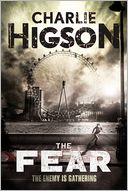
The Fear, by Charlie Higson


The Fear, the Enemy, Charlie HigsonThe third part of Charlie Higson's The Enemy series sees the small, isolated pockets of survival beginning to forge links and communicate with one another, making allegiances and deals. The Fear marks the beginning of the rebuilding of something like a working society. Building a society doesn't happen overnight though, even when the social architects aren't being pursued and murdered by cannibalistic, disease rotten adults...

Ed and Dognut, a main and a peripheral character from the last book have created a safe haven at the Tower of London under the military guidance of Jordan Hordern, the War Game obsessive from the IW museum. Separated from the other half of the Bus/Imperial War groups in the Fire and the battle of Vauxhall Bridge, The Dead ended with them fleeing a group of Sickos by floating an abandoned pleasure cruiser across the Thames. Ed, who it turns out is something of a natural leader has looked after the group with Dognut as his friend and second in command.  A year after the blaze and the battle, Dognut is getting restless and beginning to wonder what happened to Brooke, Wiki, Justin and the rest of the group that managed to navigate the chaotic and panic stricken crush across Vauxhall Bridge.

Deciding that he wants to be some kind of hero and knowing that it will never happen as second in command at the Tower, Dognut launches an expedition to explore what remains of London and look for his friends. He takes along some of the other Tower kids that have become separated from friends or family. He also takes Courtney, whose real reason for setting out on this mission is her feelings for Dognut. Their journey takes them to various London landmarks turned settlements and their progress is watched closely by several often unobserved groups, some friendlier than others. It's clear though that there is some kind of news grapevine in the world- a way to exchange information.

Meanwhile, King David the dictator at the Palace has decided that in order to take over the whole of London, he needs allies and he needs fighters. David sends out the Jester, a couple of younger kids and Shadowman, a mysterious drifter to go and bring some new recruits back to the palace. A large chunk of the novel is dedicated to the wanderings of Shawdowman- his observations and discoveries about the Sickos that still roam the streets are neither heartening nor pleasant. David sets about getting his allies in his own way- mostly by making promises he has no intention of keeping.

This book really demonstrates the differences in the lifestyles chosen and maintained by various groups. There's the Houses of Parliament that elect a leader and vote on everything, the Natural History Museum that dedicate themselves to research and understanding, the Military set up at the Tower, Buckingham Palace that's run as a dictatorship and various renegade bands of savages and/or mercenary hunters. It's almost like London has become a tiny planet, a whole entity made up of small, independently ruled countries that need to cooperate that are subject to various differences in culture and management.

Taking place roughly at the same time as The Enemy the chronologies of both books collide so many of the events depicted in The Fear are quite familiar, we might just see it from a different angle or from the perspective of a different character. We find out more about the mysterious Jester, the patchwork coat kid that enticed the Waitrose group to Buckingham Palace. We find out who the silent girl in the infirmary at the Palace is and what she's been through. We find out more about the remaining adults and what they are evolving into inside and outside of the No Go Zone.

This third book continues to expand on the themes that have ran through the series; the corrupting influence of power, the disease of unchecked tyranny and gang mentality, the 'art' of politics and negotiation, the desire for power, dealing with loss, fear, guilt, responsibility. It truly is a brilliant story that provides loads to think about. There are definitely parallels with the real world, particularly the behaviour of previously ordinary people when they realise that nobody is watching, nobody is threatening to hold them to account. There are more brilliant characters, breath-taking prose and loads of suspense and as ever. 

Monday, 13 October 2014

The Dead, by Charlie Higson

The Dead, the Enemy, Charlie Higson
The second book in Higson's The Enemy series, The Dead takes place about a year prior to the first book, and focuses on the immediate aftermath of the outbreak of the horrific illness that turns previously normal adults into snarling, pus filled, cannibal zombies.

It starts with main characters and best friends Jack and Ed fighting off hoards of their former teachers at their secluded and exclusive boys' school. They're part of a group of surviving students holed up in one of the dormitories- after convincing their remaining group that it's not safe at school anymore, Ed and their friends set off for the countryside but Jack is determined to see his home again. On their not-as-straight-forward-as-they-would-like way out they rescue a second group of boys from the school chapel and gain a solitary girl, the French master's daughter Frederique. When the group are ambushed on the edge of town by a group of young, not-too-diseased adults, they sustain some pretty heavy losses and it all looks set to end for the boys. Even when it's life or death, Ed struggles with the idea of killing. He just can't seem to make himself do it. Fortunately for him, at the last second they're rescued by a coach driven by what seems like a healthy adult. Seeing strength in numbers, the group team up with the coach's inhabitants; a couple of primary aged kids, three attitude-heavy rude-girls and a couple of older kids. The stay for the safety and for the ride but it all goes quite spectacularly wrong for their driver.

The Dead populates the familiar tourist attractions of London with more settlements of kids- mostly in this instalment the Imperial War Museum. Where better to hole up during a Zombie apocalypse than in a building dedicated to warfare and weaponry? I loved how meticulously researched the museum sections are the references to the particular exhibits and galleries added more than the necessary detail and authenticity to the book and it really ensured that London played its part properly. The Oval and the Arsenal stadium also feature a little. This second part of the series also introduced environmental dangers- it's been a long time since fire was able to rage completely out of control but that's the reality now for these kids, and being burnt to death is no more pleasant than being eaten alive.

For the first half of the novel I still considered the cast of The Enemy to be the main characters and was waiting for this bunch to meet up with them. However, as the story progresses Ed, Jack, Frederique and the rest developed brilliantly and hacked out their own corner of the story, their own roles and their own share of the reader's concern. I liked how different best mates Ed and Jack were; one insecure about his appearance (due to his birthmark) but brave; a natural leader. Ed is good looking but struggles with the idea that he might be a coward and afraid he's not a survivor. Their difference, opposing reactions, opinions and coping strategies create loads of friction that kept them unpredictable and dangerous. I really liked the character of Chris Marker in this book. One of the original dormitory boys, he's always reading, even during an attack. He takes charge of the museum's library and starts thinking about what is surely one of the most important (if not entirely practical) questions; if the World is crashing down and society has collapsed, who is preserving and protecting the accumulated sum of human knowledge? Surely without this knowledge any future civilisation starts at year nought. That's a loooong walk down the road of progress before you get Internet again.

This book does a brilliant job of filling in the gaps left in the story of The Enemy and creating a richer, more complex and infinitely more dangerous world. Though for the most part the narrative follows a completely different cast of characters in similar but definitely different scenarios, there are a few individuals that cross over from the pages of the first book. I love the feeling of that sudden burst of understanding when you as a reader put two and two together and join up the dots. We learn more about David King, knowing that he will eventually become the little dictator in charge of Buckingham Palace. We learn the origin of St. George, the dangerously intelligent grown up that led the siege on the Waitrose supermarket in the first book. We can see Higson expertly pulling the strings of his world, revealing links and connections between the scattered bands of kids and their increasingly decayed assailants.

In all honesty, I can't praise these books enough. So far this series is genuinely tense, it's properly chilling and there's no heroic immunity. Higson will and does kill off a main character every now and again. Being central does not make you safe. The quality of the prose is brilliant. Unnecessarily brilliant. It's already full of bum-clenching tension, gore, anarchy, tyranny and brutality; there is absolutely no need for it to be skilfully and intricately written. But it is. The imagery is second to none and the keenness and accuracy with which the streets of London are rendered is pretty amazing. Higson seems to have a really good understanding of how people (kids especially) tick. He knows what scares them, what motivates them, how far people will go to get what they want. He sort of sneakily raises questions about power and government, about how those that seek power almost always turn out to be inherently evil and that those who have responsibility thrust upon them against their will are always better, fairer, more beloved leaders. The idea of religion and its value/lack of value in real everyday survival is raised in this book too. It's possible that Small Sam, snatched by the grown ups in the first book is about to become a God...

Brilliant. I've bought the rest of the series- I need to see how the big arcs pan out.

Friday, 10 October 2014

Gone, by Michael Grant


Gone, Michael Grant
On an ordinary day in November, every resident of Perdito Beach over the age of 15 vanishes. Poof- into thin air. The students at Perdito Beach middle school don't know what to make of it initially. One minute their teacher is talking about the Civil War, the next the chalk is falling through the empty air and he's gone without a trace.

It's the different reactions to this brave new world that drive the story. How do 14 year olds cope when they're given the reins? To some the reality of a world without adults means unrestricted fun, every kid for themselves and no responsibility. To some it's a death knell; with no police, teachers or grown-ups the tyranny of 14 year olds is unstoppable. To protagonist Sam Temple it means that everybody is looking to him to sort it out, to lead, to make decisions and tell everyone it's going to be okay. Just because of the one heroic thing he did once, the rest of the town looks to him for answers.

When Perdito Beach is suddenly taken over by the charismatic and smooth talking Coates Academy student Caine Soren, social order quickly starts to disintegrate. To begin with he assigns jobs, looks like he's the guy to keep Perdito Beach ticking over until the grown ups return. But as the hours tick by, Caine reveals his paranoid, power hungry self, and it becomes clear that the supernatural powers that some of the teens are starting to develop are going to land them in grave danger. Caine cannot have challenges to his authority and the Perdito Beach kids (even the Coates kids) are either with him or against him.

When Sam discovers that the town is encased in an impenetrable electrified barrier, he has to ignore his impulse to run and take his rightful place as the leader of the resistance. With his group of friends turned fugitives, Sam, Quinn, Eldilio and Astrid the Genius (along with her severely autistic younger brother, Little Pete) have got to find the cause of the FAYZ, the origin of the strange mutations that seem to be giving them mysterious and dangerous powers and stop Caine's reign of cruelty and terror.

What I liked most about this book was its sheer accessibility. There are no long sections of description, no philosophising and no extra baggage weighing down the plot. It's fast paced, relatable and full of realistic, funny characters that act in ways that are both believable and understandable. It's proof that you don't need to make things complicated to produce a breathless, exciting story. Each chapter begins with a countdown until Sam turns 15 and "poofs". Throughout the whole book, there's a frantic, desperate feel that genuinely prevents the reader from putting the book down. Its pace is kind of phenomenal.

I loved how relatable the kids in the book were. The panic, the fooling around, the sarcasm all felt completely genuine. The 'bro' relationships and the sometimes tense, sometimes inseparable links that that sort of friendship means. The potential for good and evil that exists in everybody was really well realised and the author did an excellent job of showing how the characters found out what type of person they were in the heat of the moment; hero or coward, leader or follower, traitor or ally. I loved how the characters struggled with themselves when their true self was revealed trough their extreme circumstances. It's not until your mettle is tested that you really know who you are.

In summary then Gone is an exciting and frantic action story that looks at how people cope with extreme situations, how they manage to rise to the challenge or disappear under the pressure. The book looks at the behaviour of bullies and of heroes and how gang mentality works in the face of a situation that seems to have very few real consequences. It looks at how far some people will go to get what they want and how far some people will go to do what is right. There are some giggles, some really good characters and lots of really authentic 'best mate in crisis' dialogue. Fans of Alex Rider and The Enemy would love it. It's basically Under the Dome meets Lord of the Flies. But with X-Men style mutations...

Friday, 12 September 2014

Things We Didn't See Coming, by Steven Amsterdam

Things We Didn't See Coming starts with the 9 year old narrator being hastily packed into his parents' car on New Year Eve 1999, fleeing the disaster that his father is sure will come. Everybody else seems to be overlooking impending doom and celebrating as usual. They alight at his Grandparents' house and he sneaks off at midnight to be with his evidently quite paranoid father in the woods.

The story skips forward some years into a changed landscape. The urban and rural communities are segregated, each with their own problems and struggles. When the narrator's mentally ill, bedridden Grandma suddenly comes to her senses one day, he takes her and Grandpa on a Sunday drive, talking their way into the countryside. He teaches them to steal, they live a lifetime in a day and he leaves alone...

The narrative continues in this fashion, breaking off for years at a time and rejoining the narrator at some undisclosed year, in some undisclosed area of what was once probably England. He utilises the skills gained through his modest criminal record; thievery, deceit, selfishness, to survive a varying wasteland of perils. Flooding, drought, some sort of corrosive rain, pollutants and bad air, plagues, disease and hunger. Each time he seems to have a different companion, a different job and a different danger to face. He lives (at different times) a nomadic life of scavenging, a criminal life of opportunistic theft and a semi-settled one in sort of new-age hippie alternative medicines community that believes in the power of nature to heal.

The last section that sees the narrator guiding terminally ill and cancer riddled patients on around the world experience tours particularly stood out to me. The author (as palliative care nurse) has done an incredible job of detailing the care of end of life patients. I think these fleeting characters were in a way much more real than the narrator. They came across simply as a mess of contradictions- they're happy to be spending their final days entertained, but they complain about the activities. They grumble about little things and ignore what's killing them. They're full of camaraderie and sadness and exhilaration living against the clock. The first and the last chapters definitely represented the best of the author's prose and depth.

Whilst I liked this novel, I never really felt like I got to know the narrator or understood what the book was trying to do or say. The fragmented, jumpy timeline is easy enough to follow, but it's the absolute lack of any geographical consistency that's a little disorientating. Every five years the world seems to change completely. New governments, new improvement schemes, new landscape, new agendas and new expectations. The world doesn't seem to gradually improve, nor decline...Each chapter opens on a completely different scene. Maybe that's the point, I don't know. Maybe the world can change as much as it cares to- people will always be the same. Maybe we a the reader are supposed to feel as adrift and as unattached as the narrator.

I felt it was quite unusual as far as Apocalypse scenario novels go. We never find out the nature of the disaster. We never experience the panic and the social collapse that follows. There's no group of survivors fighting the elements and the odds to rebuild a safe haven. There's none of that. It's just one guy, turning up all over the place and getting by.

It's an odd one, with an unusual structure and a dreamy style. It reminded me of what an entire person worth of memory must look like, written down. Bits that you remember vividly, wooly bits- whole years where you can't remember anything of note. Bits you'd rather not remember. Worth a read simply for its uniqueness.

Friday, 29 August 2014

My Notorious Life by Madame X, by Kate Manning

Ostensibly based on a true story, My Notorious life follows the story of Axie Muldoon, New York street urchin and general ragamuffin as she claws her way up the fashionable ranks of the rich and privileged to her eventual position as a wealthy but notorious women’s physician. It documents the birth of midwifery, the stifling social oppression and dual standards that were rife in the Victorian era and the pretty grim lives of ordinary women 

Foul mouthed and filthy, living with her Irish Immigrant mother, sister Duchess and baby brother (Joe) in on of New York’s numerous slums, Axie’s family’s life is changed forever when a philanthropist sends her and her siblings East to ‘better lives’. Unfortunately the Muldoon matriarch has lost an arm and is sadly incapable of looking after her children so consents to send them to the prairies. Axie’s more amenable siblings are adopted but she returns to New York, foul mouthed and wild as ever, determined to return to her mother and rescue Dutchie and Baby Joe from their captors. When her mother dies in childbirth shortly after Axie’s return, she goes into the service of a midwife and learns the trade over the course of the following years- always spurred on by the thought of saving women from the fate that befell her mother.

With the help of her fellow orphan-train returnee turned husband Charlie (whose business acumen and penmanship help get the business up and running) what starts off as a few remedies sold from a tray soon becomes a mail order success, then a small surgery and on and on. Until Madame de Beausacq, Axie’s professional alias is one of the most notorious figures in New York. Hounded by the judges and the journalists but visited in secret by their very wives and daughters, Axie has brought midwifery out of the hands of doctors and into the hands of women and paid the price. Condemned for her “Murderous” practices, her compassion for her patients' circumstances and situations has brought women’s physicians to the attention of the law, practises that have always been technically illegal but largely ignored are suddenly becoming more and more heinous and public.

I had sort of mixed reactions to this book. It is quite soapy and a tad melodramatic. The book opens with a dead body in the bath and Axie making the decision to use its demise to fake her own death...this is the big mystery that I suppose is supposed to keep the reader's interest engaged, but it was not interesting or mysterious enough to warrant such a dramatic opening...it fell a bit flat because of how easy it was to guess the body's identity. It would've been better told in sequence. Some of the characters were more thoroughly developed than others, Greta the German housemaid turned prostitute turned receptionist really isn't very well developed at all. She appears to exist purely to set up situations for Axie. Secondly, midwifery really isn't an area that I would ever choose to read about. Some find it fascinating. I would normally have avoided this book had it not been a Book Club choice. I also found a lot of the editorial choices (the censorship of scandalous words, for example) to be quite off putting.

However, I liked the character of Axie, I liked how she fought tooth and nail for her position in life and made a success of her meagre lot- a proper little  American Dream success story. The fact that she was never a proper ‘lady’ was also a nice touch, proof that all the money in the world can’t buy class and you will always swear like a fishwife if that's who you are underneath. I found her relationship with her husband Charlie to be a bit confusing. I understand that orphans can never really trust as they have always been abandoned- but it just seemed to hinder the development of the characters really, her doubting his fidelity and his intentions just distracted from the story. The novel did a good job of demonstrating the lopsided obligation of men and women when it comes to reproduction. Axie is driven partially by the need to save the lives of mothers and babies, but also by the social injustice that places so much blame, infamy and judgement on women, for what is at best a joint mistake, at worst entirely the fault of the man’s desire and force. She becomes a champion of preventatives, advice and “obstruction” medicine, allowing women to plan their families for the first time.