Showing posts with label Abuse. Show all posts

Wednesday, 22 August 2018

The Water Cure, by Sophie Mackintosh

Imagine a world very close to our own: where women are not safe in their bodies, where desperate measures are required to raise a daughter. This is the story of Grace, Lia, and Sky kept apart from the world for their own good and taught the terrible things that every woman must learn about love. And it is the story of the men who come to find them - three strangers washed up by the sea, their gazes hungry and insistent, trailing desire and destruction in their wake.
 Hypnotic and compulsive, The Water Cure is a fever dream, a blazing vision of suffering, sisterhood, and transformation.

I think my main problem with this book is that I expected something very different based on that intentionally vague synopsis. It's not that it's a deliberately misleading summary, it's that my expectations were just sent in a different direction and I think that affected, rightly or wrongly, the way I feel about the book.

So the book begins exceptionally well with the disappearance and assumed death of Grace, Lia and Sky's father, King, the only man any of them have ever been around. He left for the mainland to gather supplies and hasn't come back. The family, three daughters and their mother, live in isolation on an island, in a crumbling house, safe from the toxic mainland and the predatory men that populate it. Women used to come to the island to be cured, to be cleansed of their experiences using a variety of home-developed treatments. They don't come any more. There have been no strangers on the island in a long time.

I loved the hazy, ethereal, endless summer vibe of the prose. The languid language, the vagueness. As the reader, your suspicions are heightened fairly early on, purely by how dreamy and unreal everything seems. I was not sure if these narrators were unreliable, or if they really believed they were speaking their truth. The narrative switches between two of the sisters but to be honest, it's very difficult to notice any difference in who's speaking. Perhaps this is the dual narrator format not working out, perhaps they have been fed the same opinions and values to the extent that they are largely indistinguishable. The novel seems to settle into Lia as the main narrator after a while. The sisters have been encouraged to give and withhold love as a means of control and I guess as a type of psychological torture. Everything the sisters partake in seems to be considered a Therapy...lots of importance is placed on water and salt. I wondered if they were the survivors of some sort of apocalypse or the leftover members of some kind of cult. The answer is much less interesting.

I know deception is a main theme of the novel (along with survival, sisterhood, truth etc) but as things started to become a bit clearer, the whole thing sort of fell apart for me. I had been suspicious of the lack of world building, and was disappointed with the direction the story went in. As soon as the (male) strangers turn up, you can pretty accurately predict what happens next. Any remaining interest in the story and its conclusion dries up as the narrative limps towards its end. I know there will be readers that love this, and that will argue that everything is done deliberately to highlight the ridiculousness of certain types of feminism, for extreme worldviews lacking in nuance , the infinite corruptibility of humans and the many ways in which the naïve will be taken advantage of and molded into a new shape. It just didn't really do anything for me at all. I struggled to find much to hold on to in the narrative, even after more information came to light I still found it hard to feel much of anything for any of these characters. In a book as detached and as Othering as the Water Cure, perhaps that is the take away experience that was intended. However, it leaves me not particularly inclined to reread, to recommend or even to think about once that last page is over with.

*spoilers*
The writing really was excellent- claustrophobic, oppressive, languid and threatening, but I just really did not think much at all to the story, which, ultimately is about a man and his wife abusing their daughters away from the eyes of society.

Tuesday, 10 October 2017

After the Fire, by Will Hill


Probably the best standalone YA novel I have read this year. After the Fire is compelling, empathetic and so perfectly paced. Narrator and protagonist Moonbeam is a remarkable character- despite never knowing life in the real world, she is humane, intelligent and ceaselessly strong. What an amazing young woman, I kind of love her.

The novel jumps right in to a chaotic siege, there is gunfire, panic, roaring flames. The frantic narrator recognises bloodied, dead and dying faces around her; she's running, apparently on neither one side nor the other. We don't know these dead people yet. The next time we see Moonbeam, she is waking up in a secure facility, alive and bandaged. She has survived the fire, but she does not know if she is safe. She is now in the hands of the Outsiders, the Government- people she has been raised to believe are torturers, murderers and devils. She is suspicious of them to begin with, as anyone would be waking up in what they have always been told is the lion's den.

The book is split into numerous sections, each one labelled Before and After (the fire). In the After, a shell-shocked, confused and doubt riddled Moonbeam is required to sit down in therapy sessions with a Dr Hernandez and eventually also Agent Carlyle, as they work to piece together the aspects of her life and experiences. Moonbeam grew up and lived most of her life on the "Base", the homestead of the Lord's Legion, a cultish branch of extremist Christianity led by the charismatic, tyrannical Father John; a fire and brimstone Prophet who claims to commune directly with The Lord.

As Moonbeam reveals more about Father John, his increasing powers and his means of control, life on the Base is laid bare. The manipulation. The fear. The brainwashing. The disappearances. The radicalisation of angry young men by means of isolation, ego stoking, entitlement and gun access. The reader follows Moonbeam's gradual realisation that her religion is deeply flawed, that how she and her peers are treated is wrong, that Father John is an absolute maniac and that nobody else is going to be able to help her get away- nobody except for Nate, a dreamy guy from the outside that manages to win the favour of Father John, chucks a spanner in his works and then promptly vanishes into the dust. It's really easy to relate to Moonbeam's feelings for Nate- being convinced that he just sees her as this annoying, doting kid with a crush.

Moonbeam takes her time to recount her story, gradually leading up to what she considers to be a sickening, gut churning secret, a festering guilt that will taint her in the eyes of the men she has come to trust, and the remaining Base kids that are still at the facility with her. The ones that look up to her. It's a hearbreaking story of abuse, a yearning for belonging and powerlessness that is both emotional and fascinating.

I love books that feature cults, and the people that come to their senses and escape. After the Fire is honestly one of the best novels I've read this year and would thoroughly recommend it to anyone- readers that loved Lisa Heathfield's Seed will go mad for it, as would any adult readers that enjoyed last year's runaway cult bestseller The Girls, by Emma Cline. After the Fire is pacy, intelligent, filled with compelling characters, both innocent and evil and a fascinating study of how charismatic, forceful individuals can create their own empires if they are deluded enough, they believe their own lies enough, and if the supply of lost, damaged and disillusioned individuals to convert is plentiful enough.

Stunning.

Thursday, 1 June 2017

Beautiful Broken Things, by Sara Barnard

Such a brilliant, thought provoking book about the strength of female friendships and how intense they can sometimes be- how in giving so much to a friend, you can lose sight of yourself. The narrative also explores the importance of boundaries, severe trauma and mental health problems, and the tragic truth that sometimes, trying to help, trying to 'be there' for someone is damaging, no matter how good your intentions are. You can be the best, most thoughtful and accepting friend in the world, but some people need rescuing from themselves.

Caddy and Rosie have been best friends their whole lives, despite their separate schools. Caddy's set up is a woefully boy-free affair, filled with too-high expectations and extra curricular activities. At the start of year 11, Rosie meets new-girl Suzanne, and Caddy is determined to hate this super gorgeous, witty, self deprecating interloper that Rosie has brought into her life. But Suzanne- enigmatic, secretive, hurt, has just escaped an unsafe home life and is struggling with her behaviour, her destructive tendencies and her self esteem. Caddy does not come off well to begin with. She's jealous, kind of spiteful and spends a lot of time being self obsessed, lamenting that nothing interesting ever happens to her, unlike Rosie who has a baby sister die and her sister Tarrin who is bipolar. Yep, she really is wrapped up in herself to the extent that she is jealous because her life lacks the drama of death and mental illness. As with many 'shy/boring/too-nice' narrators, she's determined to shed her shyness, become more Rosie, become more interesting. Get a makeover and a boyfriend, in true teen priority style.

Thankfully, Caddy does grow as a character. The duo becomes a trio and for once, it's really refreshing to read a story about three girls where one is not ostracised. As the girls get closer, the reasons for Suzanne's increasingly erratic behaviour becomes clearer. Is friendship enough to save Suzanne? Will listening help? So Rosie seems more aware of Suzanne's state of mind, seems to view her struggle more objectively- Caddie is just desperate to be there, to be a good friend to Suzanne. She kind of gets off on being Suzanne's go to- not just the friend of a friend. She still parades around like a fool as Rosie begins to become concerned about Caddy and Suzanne's developing friendship and the intense closeness that they suddenly have. Caddy thinks she's jealous. Caddy's family think Suzanne is an awful influence and is jeopardising their daughter's future. Suzanne is a brilliantly crafted character, heartrendingly vulnerable and deeply sympathetic- she's frustrating and reckless and in many ways quite unlikable. But she is hypnotic. Rosie and Caddy’s deep, lifelong friendship is such a beautiful one- I absolutely believed in their bond and knew that they were both in it for the long haul.

Teen rebellion is explored brilliantly, and the rites of passage, the bust ups, the friction and the solid foundations of teen friendships are beautifully explored. Anybody that has ever been a teen will relate pretty hard to this. Sara Barnard captures that teen intensity, that NEED to be accepted, to be liked by your peers, perfectly in a complex and engaging character study. The prose is gorgeous- sensitive, resonant, and enthralling. These girls are so real: their changing relationships, the lessons they have to learn and the challenges each faces are so authentic and absorbing.

It leaves the reader with a weird mixed feeling cocktail of melancholy, happiness, hope and that sort of tragic acceptance of inevitability- it's the very definition of bittersweet. In her notes at the back of the book the author herself afterwards calls it "A love story without a romance", which it so absolutely is; it's really refreshing to find a contemporary that willfully neglects boy meets girl romance so steadfastly and instead spins a tale of the deepest and most life changing friendships. The support, the craving and finding of acceptance, how heady that can be. How occasionally, intentionally or not, such intensity often leads to destructiveness.The fallout from such a friendship makes bad decisions seem like good decisions, fosters an impulsiveness that overrides sense. The book is so realistic in its depiction of that process, and in the aftermath and the consequences of such an intense, impulsive friendship.

Tuesday, 2 May 2017

Paper Butterflies, by Lisa Heathfield

Paper Butterflies is utterly heart-breaking. It’s so compelling and beautifully written, but it hurts to read. Like a physical stab in the heart. It’s claustrophobic and terrifying- is there an idea more chilling than telling the truth and not being believed? To hide something because you know how far fetched and unlikely it seems, so suffer the constant, crushing repercussions of your secret, then to have that silence used as proof that your story is a lie?

The story follows June from her young childhood to early adult years, moving between the "Before" and the "After". We begin when she is around 10- her mother has died in the recent past and her dad has married a new wife, Kathleen. June’s step-mom is abusive. She plays vindictive mind games, she hurts and humiliates, she shames and verbally tortures, aided by her accomplice Megan, her biological daughter. June’s completely clueless father refuses to see what is right in front of his eyes, berating June for not trying hard enough, for being distant when all Kathleen has ever done is try to love her. 

June is black, like her late mom, which only increases her sense of 'otherness' in her white family, and in her mostly white school. She feels like a cuckoo at home and a target at school. Her torture from her stepmother and classmates seems never ending- she endured it with such tragic, silent dignity. I don’t want to romanticise her silence and imply it was the right thing to do, but she is so brave. So brave and so alone. As readers, as adults, as people who have not experienced this torture, it is easy to say that she should’ve spoken out; but the fear. The fear is shown so thoroughly and totally by the author- it rubs off on the reader. That suffocating, claustrophobic *dread* is profound and visceral. That fear of making the first step, of breaking the cycle. She tries so hard and so frequently to tell, early on. We see her repeatedly promise to speak up, only to lose faith in adult after adult. We say it’s brave to stand up and speak out, and of course it is, but June is a separate kind of brave- the kind that suffers unspeakable torment and hardship and persecution but refuses to be broken. 


Paper Butterflies is about how all those safeguards that we think protect us; family, teachers, grown-ups, society, authority in general, can fail a person so entirely. It's about the treacherous flexibility of truth, the gaps between how events can unfold and how they are perceived from the outside. Kathleen is a master of manipulation; she has perfected her craft and her persona in a Gone Girl like way. The book does remind us though to consider the cycle of violence and abuse; it reminds us that nobody is born evil. June is asked to consider- what made Kathleen this way? What must she have endured in her life to manifest this suffering on you? How must Megan have felt about her part in this? Who is really to blame?

The only reprieve she gets is in the form of her secret friend, Blister, and his eccentric family. The secret talisman that she can hide from her violated home, that will protect her for only as long as it is hidden. I loved Blister. I loved his carefree happiness, his trust in his own identity. He was utterly authentic and his mad, enormous Weasley-ish family was absolutely gorgeous. I don’t know what June would have done without them. Blister ensures that this book has a light in it; a sliver of hope to hold on to.

I don’t think I have ever felt more impotent, wounded rage on behalf of a character before. I’d worked out quite early what had become of adult June, but the route to that ending pretty much destroyed me. The unfairness. The injustice. That tiny sliver of hope just amplified the wrongness of the whole thing. This book is a testament to the craftsmanship and the skill of its incredible author. She forces us to walk the tiny, sliver of a line between hope and despair and we are so close to the despair that it will haunt us forever. I loved Seed, Paper Butterflies, though difficult and ruinous and devastating, is also an incredible, incredible novel. 

The YA book prize has, since its inception, never shied away from recognising and platforming tough novels, novels that other, more traditional kids' book prizes might discount as being too traumatic, gratuitous or bleak, regardless of the strength of the message or the quality of the writing. I am so glad the YA Book Prize included Paper Butterflies on its shortlist, it's absolutely essential. If the winner was decided on the strength of a readers' reaction, PB would win every time.

Monday, 11 July 2016

Gerald's Game, by Stephen King


This was recommended to me by a colleague and I was very honoured to get a lend of her 1992 original paperback that was very much falling apart (it's 4 years younger than me). I love the feel of well read books, they're so pliant.

Stephen King raises the odd eyebrow every now and again for his portrayal of women. Yes, sometimes they're not very good characters. Sometimes they are a bit crazy and monstrous. Sometimes they exist purely to be alluring. Jessie Burlingame is one of his most nuanced and complex creations, holding down a whole book single handed.

The book begins with Jessie Burlingame and her husband Gerald in the bedroom of their summer cabin in lakeside Maine (where else? I ask you). They have decamped to the lake for an impromptu weekend in the interests of romance. Gerald, a successful lawyer but otherwise ordinary man has been able to reinvigorate the couple's sex life by handcuffing Jessie to the bed. Initially Jessie enjoyed the game, grateful of Gerald's renewed interest in her and the rejuvenation of their love life. On this occasion however, the cuffed Jessie changes her mind. She sees understanding and realisation in Gerald's eyes, and with horror, sees him shake them away, pretending that he thinks her protests are part of the game. Blinded by the panic that her dull, ordinary lawyer husband is preparing to rape her, she kicks him in the stomach and groin with all her strength. Gerald keels over, turns red, has a heart attack and dies, cracking his head on the floor for good measure. Jessie is alone, chained to the headboard with two sets of police issue handcuffs, on a deserted lake in the off season.

Gerald's Game reminded me of those sitcom 'capsule' episodes where the characters never actually leave the set and the whole episode takes place in one location. I'm thinking the classic The One Where No One's Ready ("I'm Chandler, could I be wearing any more clothes?"). Jessie, obviously, cannot move and her entrapment forces some very creative writing devices and some incredibly intricate plotting. Over the course of the next 3-4 days, Jessie wages a one-woman war of survival on her own mind and body.  She battles thirst, muscle spasms and desperation. She hears voices in her head; offering advice, bickering, encouraging or discouraging. Each one seems to be based on a her or person in her life, "The Goodwife AKA Goody Burlingame" (a kind of puritan Stepford Wife version of herself), Ruth Neary (a wild college roommate that she ghosted) and Nora Callighan (her  former psychiatrist). The voices all clamour for attention and appear to represent different parts of Jessie's fractured mind. She hasn't spoken to Ruth or Nora in years, but what they do have in common is that they both came dangerously close to uncovering a buried, traumatic childhood memory that Jessie has suppressed for years.

The only other characters that occur in the novel are the Former Prince, a hungry and skittish abandoned dog that risks entering the cabin to feed, to Jessie's horror, on Gerald. The other is a horrific deformed apparition; leering, hideously elongated and reeking of death, it's not clear initially if this is a physical reality or a figment of Jessie's dehydrated mind- but the terror it inspires is real. Interspersed with visits by these two beings, the plot is made up of tiny victories on Jessie's part; lengthy, gradual tasks like obtaining a drink of water, easing her muscles, lifting the headboard, interspersed with flashbacks to college, to a particularly harrowing solar eclipse in the 1960s and to her subsequent periods of trauma. 

It's a really thought provoking book that examines the contrasting expectations that society has of women and the emotional weight that such expectations accrue over a lifetime. Jessie is a silenced, dutiful, manipulated daughter. A trophy wife.  Forced out of a job she loved by a too-successful husband, she begins to take stock of her life, realising for the first time how unhappy she has been in her marriage. She's a plaything, a decorative commodity to first her father then her husband. Her ordeal at the lake forces her for the first time to confront and then reject the roles she has been expected to play. She is forced to save herself from the cycle of abuse at the hands of the men in her life. It's only when she resorts to digging up and accepting the hidden memory that she can start the process of freeing herself from it.

I have to add also that I was utterly heartbroken for Prince, the dog left to languish, starving, afraid and covered in burrs by some Massachusetts asshole in a Mercedes that couldn't be bothered to pay for his licence. The parts where the narrative switches to a Prince-eye-view are so sad to read. Poor prince.

Though I struggled with this book initially, it gripped me shortly after Jessie's first flashback. It's a brilliant character study and an impressive exercise in fiction writing. King can create unbearable suspense in a novel where the protagonist doesn't move, there are no conversations, a single location and a solo character. It's an interesting examination of the strength of survivors, the damage that repressed abuse can wreak on a person's life and the lengths that an individual will go to to survive. It's a lone, desperate woman refusing to give up and to claim her life back from the men that have hurt her.

Monday, 30 May 2016

Ruby, by Cynthia Bond

This is certainly not an easy novel to read- the ritual animal sacrifices, lynching, suffering, sex trafficking, child abuse, incest and misery. The novel’s two main characters, Ephram Jennings and Ruby Bell meet once, right at the beginning, when they are about seven and six. It’s a memorable but traumatic meeting- Ephram is beaten to a pulp, Ruby is subjected to a sort of rustic exorcism behind the closed door of a witch-like forest dwelling voodoo woman, Ma Tante. Bruised and bloodied by the boyish Margaret, Ruby’s cousin and sole protector, Eprham will never forget Ruby’s beauty or her braids, and will carry this image of her for the rest of his life. Ephram catches one or two glimpses of Ruby over the next decade in church and in the town, but their paths do not cross again until Ruby returns from New York after 13 years away.

Raised by his sister after his mother went crazy and his preacher father was lynched by white men, Ephram begins as a pious, routine abiding character. Bagging groceries at the market, handing all his wages over to his domineering, coddling and manipulative sister, Celia his ‘mama’ since he was 14. Her only aspiration in life is to become the Church Mother, something that was almost a given until Ephram took the notion to spoil everything.

Ruby escapes Liberty to New York in an attempt to re-invent herself and for a chance to find the light-skinned mother who abandoned her as a baby. It’s unclear initially just what horrors Ruby is truly escaping; her childhood will be revealed to Ephram via flashbacks as the novel progresses. New York seems exciting, glamorous, seedy. It’s the closest thing to equality available to “coloured” folks in 1950s America. It’s not much different for Ruby though- she resorts to the same skillset as she’s always used to survive, detaching her mind from her body whilst it does not belong to her.
Upon her return, accent slightly lost, her first lost spirit in tow, judgemental stares from the townspeople redoubled, Ruby spends another 11 years slowly going crazy. Avoided and derided by the community, she talks to spirits, lives alone on her family’s land, filthy and detached, just wandering the woods and wailing. We later learn that the spirits she obsesses over, hundreds of them, are the lost souls of the murdered children that wander the Piney Woods. One of the worst part of Ruby’s story is that she is by no means the only person to have been used in such a way. She soothes their pain and gives them shelter in her battered body.

The people of Liberty Township, the devout, church-going community, seem to view Ruby’s troubled mind as inevitable recompense for what they see as waywardness, her sinfulness, her unusually pretty face. She’s brought it on herself. What the township chooses to turn its blind eyes away from is incredible. The injustice of it is so frustrating- the men and boys that have abused her and taken advantage for decades condemn her for her wickedness. The book’s most powerful point is the things that happen under our noses that we choose to ignore.

If the reader’s heart breaks for Ruby from the beginning; they are thoroughly ruined by the end. As Ruby becomes more lucid, as Ephram diligently coaxes her back from her spirits and her torment, she fills in the gaps of her life with horrific details. We learn that the ‘boarding school’ that Ruby was sent to work at is nothing more than a brothel, that she has been passed from pillar to post ever since that first meeting in the woods. Various lynchings, escapes and desertions within her family left her without an adequate carer and she fell into the evil, horrific hands of the very people that would be expected to save her. The author makes a powerful point about evil being something that can occur anywhere- literally anywhere without exception. Evil is a powerful and uncontrollable thing, which is made all the more surprising by the ease with which it can be hidden.

Ruby is a beautifully written book, full of a kind of old, trickster magic, evil spirits and the horrific weight of history. But it’s also about patience and kindness, and about tackling injustice, no matter how insurmountable it seems, or how ill-equipped one is to do it. I loved the quiet diligence of Ephram, as he acts on the feelings he has harboured for decades. He cleans Ruby’s house, washes her clothes. Painstakingly and lovingly washes her hair. He listens to things that she has lived, things that she has bottled up all her life. He treats her like a person again, and Ruby doesn't know how to act. Her behaviour is so divorced from her feelings, she has literally no idea how to be act when shown kindness. I liked that there are still good people, who will still do selfless things, even if it is years overdue.

I know I haven’t really done justice to this book- I could never get across the depth of its effect on me. It’s a haunting book that tells the story of a life of such unimaginable cruelty and dehumanisation. It’s shocking and raw and brutal, told in a style of prose that is disarmingly beautiful. I can see this willing the Bailey’s Prize this year (and it would be a well deserved victory)
for its honesty, its lyrical prose and its brilliantly crafted mysticism. It would be easy, with a plot so laden with misery and trauma to become melodrama, but the characters are so balanced and so well realised that this never happens. An incredible novel.

Wednesday, 25 May 2016

Asking For It, by Louise O'Neill

Last year's YA Book Prize winner Louise O'Neill returns to take another well-aimed whack at the patriarchy and to bring the conversation about rape, consent and victim blaming into the social arena.

Asking for It is the story of Emma O'Donovan, a beautiful Irish 18 year old school girl; popular, clever, head-turningly gorgeous, Emma is torn between life staying the same forever, enjoying being the biggest, prettiest fish in the pond of Ballinatoom, versus getting out into the big wide world and making her mark. For the first part of the novel she enjoys a fairly normal social life; shopping, hanging out at the park, parties, drinking and casual, almost competitive sex.

We see Emma manipulating her friends, constantly trying to draw attention away from their genuine crises onto herself. She basks in attention; feels that she deserves it due to her undeniable beauty. She expects whistles and compliments from men and boys; then feigns annoyance that them, stung when they aren't forthcoming. Sometimes Emma's thoughts in parentheses save her, you think- if these are her real thoughts I feel bad for the effort and exhaustion it must cost her playing the beautiful ice queen. Other times the parentages just make me think, yeah, she's an absolutely horrible person. It's incredibly clever, what author Louise O'Neill has done. By putting the reader in the position of judge and jury, we take on the role of society and see how easy it is to pass judgement on people. She's the worst type of frenemy, the one that belittles everything that you're excited about and steals your boyfriend just to see if she can. Emma could easily be the bullying, poisonous antagonist in so many other YA coming-of-age novels. She's cruel and spiteful and we the readers want her to receive her comeuppance. We want something to happen to her that makes her change her ways and be nicer to the people around her, the people that she calls friends. But not that.

O'Neill has really seized hold of the idea that it's easy to judge, and it's easy to dismiss until the shoe is on the other foot. Emma is incredibly dismissive of her friend Jamie, herself a "yes actually that does count as rape" victim, and we see Emma in the earlier chapters actually laughing about it with the rapist himself- he makes a crack about girls' tendency to deny things they regret in the morning. We know Jamie has confided in Emma. We suspect it's the reason for her mood swings and drinking- yet it's not until Emma finds herself in the same position that it actually occurs to her that rape is a prevalent, essential issue and consent is very much a binary situation. At a weekend party a drunken pseudo-celebrity conquest spirals out of control- a consensual but unpleasant sexual experience becomes something completely different and much more criminal- and there are Facebook groups and Snapchat stories to preserve it for ever. Nothing is secret in the digital age, and even the most irrefutable evidence does not seem evidence enough.

I loved how the book deliberately and aggressively (and rightly so) challenges society's expectations, particularly when it comes to the portrayal of rape victims. Society, the Daily Mail, everyone would be quick to demand prison time for a male that attacked an innocent young girl on her way home- all the more so if it were a pretty, private school girl from a good family. What if she was wearing a dress cut to the bellybutton? What if she'd previously shown interest? made the first move, even? What if she was over 18? What if she was drunk? Would we then say that the girl was asking for it? That she got what she deserved? The whole novel is a brilliantly packaged way in to an incredibly crucial problem- a critical issue that we as a society are so disgustingly guilty of and that is victim blaming. It shows so clearly the reality of gendered expectations, and how the powerful aren't subject to the same rules as the rest. The town's heroes, good boys really, promising football stars, aspirational teens- can't possibly be rapists.

The second half of the book deals with Emma, a changed Emma, no longer Emma O'Donnelly, but the anonymously notorious "Ballinatoom Girl". Her case has exploded nationally. Everybody has an opinion, a judgement. Emma is torn apart by guilt- for all the lives she thinks she's ruined. For everyone she's tainted. For all the things she did and didn't do. She's a friendless, unsupported ghost in her own house. The lads in the videos- her 'friends' are enjoying life as usual, safe in the knowledge that everybody believes them- that Emma was Asking for It. They're good boys.

This is an angry, venomous book that demands that the reader listens to what it has to say. It dares you to confront your own behaviour and that of everyone around you. The more a person looks out for the victim blaming rhetoric, the more ubiquitous it seems. There are many chunks of this book that will stay with me for a long time. It's unexpectedly disturbed the way I view all justice. ALL justice. If our whole criminal system depends on the axiom of " Innocent until proven guilty", then the victim of a crime is automatically a liar until proven honest. I've never thought about that before. The whole book has made me question my own behaviour- I judge. Everybody judges to some extent. I'm going to try and do that less.

I urge everybody to read this book. Buy it for yourself, your kids. Buy it for you friends' kids. The more people that read this book, the better and more unavoidable the conversation around consent will be,

Tuesday, 23 June 2015

Nobody Saw No One, by Steve Tasane

I was at YALC when somebody asked Patrick Ness if he thought there would ever be a kid's book written about Operation Yewtree- the institutionalised child sexual abuse investigation launched by the Met in 2012 that has dredged up handful after handful of disgraced past and present personalities from every sector of public life. Patrick's reply was "Good luck pitching that to your publisher". He obviously didn't mean 'that book shouldn't happen' or 'nobody would read that' or 'that would be a terrible book' but, rightly, he was unsure of if a publisher would feel comfortable unleashing such a potentially disturbing book onto the young reading public. Or if any of the young people that it was unleashed upon would read it. Never one to shy away from tackling difficult subjects head on, I'm sure he's thrilled to have been proven incorrect on this one. Steve Tasane has written that book, it has been published by Walker Books, and it is, most importantly, really, really good.

Nobody Saw No One is a modern retelling of Oliver Twist, replacing the workhouse with a negligent and corrupt care home, Fagin's den with a dodgy branch of Cash Converters and though the 'family' of broken boys are prone to the odd picked pocket or five fingered discount, they specialise primarily in internet scams and identity theft. Bill Skyes becomes the psychopathic Jackson Banks and his killer dog 'Obnob and Nancy is updated to Grace- a motherly and caring young woman that suffers abuse and misuse by JB.

The story is told through the eyes of two narrators, both runaways from Tenderness House Secure Care Home, a place that is anything bust secure and where bad things happen. Streetwise and cocky, Citizen Digit is a master thief and skilled in the art of disappearance. He has a shall we say unique dialect- think if Russell Brand wrote Urban Dictionary and lobbed in an extra helping of Spoonerisms. After spotting moon-eyed, baby faced Alfi Spar on the streets of London and recognising him from Tenderness, Digit takes him back to Cash Converters to join the gang of thieves, assuming his angelic looks would be useful for Virus, their unofficial guardian and manager. Alfi Spar is so named because he was found in a shop doorway as a baby and has been in care ever since. Unlucky, but honest and turfed from Foster to Foster through no fault of his own- Digit's life of crime is a shocking revelation to him.

I really liked the relationship depicted between the two lads- some of their story overlaps, so we get to hear both boys' thoughts on the same events. Digit feels a mixture of sympathy and frustration for Alfi- he's so pathetic he wants to help him, but knows deep down that it's risking everything he *is* in order to do it. Digit's anonymity is his superpower and Alfi knows his real name, knew him pre-persona when he was a care home inmate just like any of the others. Similarly, Alfi admires and respects Digit, but he doesn't trust him at all. He questions Digit's loyalty constantly, unsure if he will flake on his responsibilities, on exposing their abusers, on him.

Though sexual abuse is central to the story, there are no observed, explicit scenes- the characters are too traumatised to talk about it, even amongst themselves, resorting instead to codes; 'Jim'llfixits' and their 'Jimmy Parties' they call the perpetrators and the nights that they visit. The reader sees the extent to which the authorities ignore the problem- either because its in their interests to turn the other cheek, or simply because they don't believe the allegations. The kids in this book are proven liars, thieves and criminally delinquent- who would believe their accusations levelled at such pillars of the community? The book makes it clear, obviously, that these evil 'Jim'llfixits' are abhorrent in every way, but it also levels blame at those that see these things and know what's happening but do nothing about it.

This book really highlights the plight of those individuals that fall through the gaps of society. The invisible care leavers that walk out of the system at the age of 16 and the state considers them mature, secure and capable enough to fend for themselves in the outside world, whatever they've been through. It shows how easy it is to discredit the opinions, concerns or problems of people that have no voice, no back up from friends or family- it shows how easy it is for care leavers to become lost and sink. Care and crime isn't a foregone conclusion, but 23% of the adult prison population has been in care and nearly 40% of prisoners under 21 were in the care system as kids 1. How does this still happen?

Ultimately, this is a book about bravery and strength and about standing up for right and good against the odds. It's also about the emotional security that a home and a family provides, and the strength that that fortifies a person with. I loved the brotherhood that developed between Alfi and Digit, and Grace, to a certain extent- another let down care leaver that's been through everything that they have and more, just a few years earlier.

All in all, it's a riveting book that casts light on a set of very topical issues, some of which are issues that people are often reluctant to talk about. It handles the horrific abuse suffered at Tenderness sensitively and skilfully, and the reader can't help but root desperately for Alfi and Digit as they attempt to make their voices heard. It's pacey, frequently very funny and though the uber-urban dialect gets a bit distracting in places where you try to work out what the hell Digit is on about, it's genuinely gripping.

SourceThe Who Cares Trust

Tuesday, 16 December 2014

The Little Stranger, by Sarah Waters

I have finally finished this book! No kidding, it took the best part of a month to read, such was my disengagement with it.

The story starts with the narrator's childhood self being star-struck at the imposingly grand home of the local landed gentry. The impressive Captain Ayres and his handsome wife are handing out medals to the local rustic children on the sweeping lawn of their red-brick estate. The narrator mentions a subsequent tragedy that befalls the Eyres; the loss of their young daughter to illness which causes them afterwards to retire from public life.

Fast forward a decade or three, and the young narrator of humble origin is now the strapping Dr. Faraday, local boy done well and now the area's favourite medical practitioner slash bachelor. A chance call out to Hundreds, the house that so impressed him during his youth, makes him both nostalgic and curious. On his call out to treat a young housemaid, he finds the frail Mrs Ayres is still living there, still handsome despite her age, with her two grown children, born after the death of the first. Caroline is masculine and practical; she wears unbecoming clothes, is no stranger to household chores and spends much of her time trudging around the crumbling estate with her beloved but elderly dog Gyp. We get it; a character in a novel that has dared to be ugly. No need to keep going on about it, narrator. Roderick, the brother, is a disfigured but celebrated ex-serviceman with lingering war wounds and is left the unhappy task of managing the family's increasingly desperate affairs. Dr. Faraday becomes something of a family friend and is frequently up at Hundreds on social visits, taking tea, dispensing advice, wielding his stethoscope.

During one such visit, a party of sorts to cheer up the Ayres' and to throw spinsterish Caroline into the path of the County's eligible males (just like old times), a freak accident occurs that foreshadows the many tragedies that lie in the future of the Ayres and Hundreds. Overnight Hundreds goes from being a somewhat dilapidated relic to a dangerous and malevolent threat to its inhabitants. It's up to Doctor Faraday to keep the Ayres' safe and rational at a time when they think their house wants to drive them away.

I love a good ghost story. I love a good mystery. But the Little Stranger really can't make up its mind what it is, so it kind of dabbles a bit with both, therefore not really pulling either off to anyone's satisfaction. If the supernatural burns, noises, arson attacks, physical assaults and taunts were truly ghostly, the author really failed (for me) to build up any sense of dread, or fear or anything remotely chilling. I found myself simply shrugging off many of what I think were supposed to be key plot points. They just lacked the suspense and the drama of what could have been a terrifyingly tense haunting. The other explanation however; that the slow, persistent torture of the Ayres' by sounds and spooks is perpetrated by a much more corporeal individual is somewhat half arsed, and is kind of thrown in at the end...a sort of "It's a ghost...OR IS IT?!" not-quite-twist. What the author is suggesting makes no sense and doesn't fit in with the events of the plot...It could be a ghost, it could be a person- neither case really makes a particularly persuasive argument.

For a novel of 500 pages, it isn't half a slow burner. We see Dr. Faraday doggedly pursuing Caroline and they spend the novel in a mixture of awkward friendship and a confused, plutonic courtship. Faraday doesn't make a very gentlemanly suitor and seems much more enamoured of the house than his intended. As the house picks off its owners one by one, he stubbornly rationalises the incidents, explaining them away again and again despite the mounting evidence placed in front of him...

Personally, I found the novel to be lacking in plot, short on the chills that it promised and with a dully small cast of uninteresting characters. I can't say I warmed to any of them at all really, and never felt anything for them when they met their various fates. I couldn't muster anything for any of them besides a mild indifference. It's a shame really, as I do really like Waters' style of prose. I love her attention to detail and her ability to find the magic in the mundane. I was just disappointed to find that none of it really mattered in this particular book as the plot and the characters were so weak.

Tuesday, 8 July 2014

Eleanor & Park, by Rainbow Rowell


Excuse me for a moment while I squee a little bit; I love love loved this book. Okay.

I've been wanting to read this for a while, and the upcoming YALC this weekend gave me the perfect motivation. It's also become something of a Twitter juggernaut recently...I'm fully expecting a The Fault in Our Stars style explosion of love for this novel...

This book could so easily have been a soppy, twee story of teen-aged star crossed lovers making dramatic gestures and cooing at one another. Thankfully it is so much more than that; it's intense, sincere and tender and it is completely submerged in the heartbreak, pain and beauty of first love. To begin with it simply made me laugh, then it just killed me.

Briefly and without spoiling anything, the wild haired and unconventionally attired Eleanor has just moved into a too-small house in Omaha with her downtrodden mother and numerous younger siblings. Her alcoholic brute of a stepfather threw her out a year ago and has only just allowed her to come back. On the first day of her new high school, Park begrudgingly lets her sit next to him on the bus to avoid the agony of watching the new girl accidentally taking someone else's seat. Terrible bus protocol. Despite it taking several weeks to exchange a word, they gradually fall in love- the rest is a whirlwind of comic books, mix tapes, high school politics and the agonised exhilaration of first experiences. They fall in love in a way unique to teenagers- with intensity and self-consciously. A person only has one shot at first love and Eleanor and Park do not waste their chance on each other.

I absolutely and completely loved the characters; Eleanor and Park are simply brilliant creations. I loved the way that each of them only really came to know themselves when they'd begun to know each other. Park, the only (obviously) half Korean kid in Omaha doesn't struggle with his own identity exactly, but he struggles to place himself in the wider world. Eleanor is hugely self conscious about her body and her home life, but Park manages to make her forget that and truly escape into his company for a few hours a day. Each of them are incomplete without the other, and it is simply a beautiful story of love and discovery, rather than romance, and about the slow building of trust and the self-sabotaging impulses that run through even the strongest of people.

I loved Park's family, and all the crazy that came with it. His relatives were all believable and their relationships were realistic, easy to relate to and really endearing. His "best shape of my life" action hero Tom Selleck dad had me in stitches and it was such a lovely (though inevitably complicated) father-son relationship.  My heart broke for Eleanor and the awful, terrifying situation that she was placed in daily, and I was so angry at her mom for letting it happen, for not taking herself and her family out of the clutches of her husband. I admired Eleanor's strength and her courage, and I loved Park for being able to see through all the secrets and the shame.

This book is incredibly well written, with brilliantly funny prose that can have you laughing on one page and wincing with internal pain on the next. It was compelling and nostalgic, and the intensity of that first love screamed out from every line. I really liked the frustratingly enigmatic ending, some things are just unknowable, even to readers who get to know characters as intimately as we get to know Eleanor and Park. It is simply a lovely book about love and finding the place that you belong.

Wednesday, 25 June 2014

The Bunker Diary, by Kevin Brooks

The Bunker Diary, Carnegie, 2014, CILIP Carnegie, WinnerThe day that begins with Linus Weems assisting a blind man with a suitcase ends with him captive in a deserted, underground bunker. Completely sealed and empty of any other inhabitants but equipped for six, Linus knows he won't be alone for long. He searches the bunker for clues, escape routes and sharp objects and finds only surveillance cameras and microphones. He waits. Sure enough, the buttonless lift (the only way in or out) eventually delivers another victim the following day, a 9 year old girl called Jenny. The new arrivals roll in, each with a different story about how the unknown man overcame them; a muscly casual labourer, a sleek property saleswoman, a fat commuter and an ageing physicist. No connection, no pattern. The pieces are now all in play and the captor's games begin.

The captor, Him, as he is referred to in the novel, subjects his collection of prisoners to slow, deliberate torture and torment- remotely controlling the temperature, the lighting, the supply of food and even the pace of time. Like the Sims, but with real people. Linus writes a diary of his existence in the bunker, the routines, the boredom, the failed escape attempts and the cruel punishments for their attempts. He talks about the friction of six strangers living in captivity together, the nature of time and identity, the motivations and psychology of their captor and tormentor. Is he holding them for entertainment? Is it a game? A project? A power thing? The author has risked alienating their readers (and it's paid off) to demonstrate how isolated the characters are, and how frustrating it is to know so little.

The diary provides an intimate insight into the thoughts and feelings of Linus the narrator, his protective love for Jenny obvious throughout. He's incredibly real, and is so engaging as a character. He's a bit messed up, confused and angry, but all in all he's not too different from the average teen. The idea that he could quite easily have been any other given individual is unsettling and all things considered, he comes off incredibly well in the circumstances. I can't see how any reader would not be rooting for Linus- he's proven himself in the bunker which makes him a brilliant protagonist.

This book was remarkable in its ability to create unendurable tension and suspense. The reader sees only the bunker's side of events, the movements, motivations and environment of Him, the captor, remain unknown. Our guess is as good as anyone else's and it's incredibly frustrating to be denied access to such a crucial character. The way some of the prisoners cope with impossible circumstances and under such strain is admirable- The Bunker Diary shows that good people come in all guises and from all backgrounds, as do bad, weak or greedy people. It shows too that the human race is capable of great and horrific things. Torture, cruelty and abuse, yes. But also love and hope and comfort, even when it seems pretty desperate. It shows that in difficult circumstances and in impossible predicaments a person's true nature shows through. Being captive in the bunker forced Linus to become the person he'd always avoided and forced him to come to terms with his broken home life.

I was absolutely enthralled by this book. The prose is masterful and the plot impossible to even guess at- it would make an incredible film. It's fraught and harrowing, but there's a sense of camaraderie and community about it. There's defiance and solidarity and a resilience that's incredibly uplifting, despite the relentlessly grim plot and the unhappy ending. Linus never allows himself to be demeaned. He endures and he resists, the only actions that keep him going. The ending too is uniquely grim, but any other outcome would have felt like cheating. A worthy winner, congratulations Kevin Brooks.

Thursday, 19 June 2014

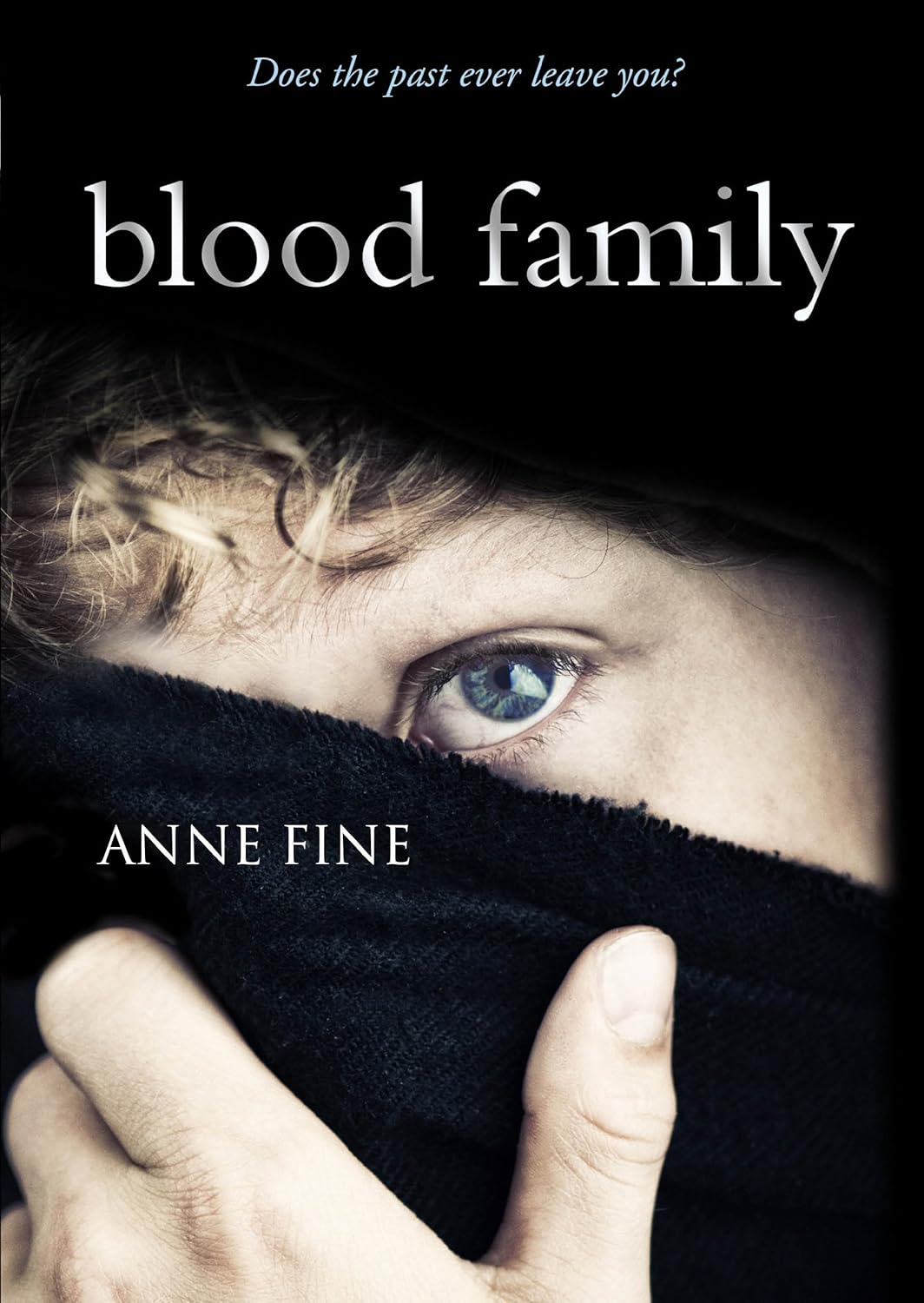
Blood Family, by Anne Fine

The book starts with the Police and Social Services breaking down the door and forcing entry into a dark, squalid flat. Seven year old Eddie has not been outside for years. He's shared a filthy blanket with the dog in the corner of the room, lived on cheap bread and cheese and is bruised and silent, shrinking into the wall in terror at every sound or sudden movement. His mother has been beaten into a state of vacant dependence by her abusive partner. She is frozen in armchair, keening and unable to move or speak.

To start with, Eddie seems like he has escaped his traumatic upbringing unscathed- as a seven year old he's bright, responsive and eager to please. He responds well to the care and attention of his foster family, then his adopted family. He seems remarkably normal, considering regular things like swimming or going to the supermarket are totally new experiences to him. The problems really start in his early teens when Eddie makes a horrible discovery about his biological father that sets him on a destructive path to drugs and alcoholism.

Blood Family is beautifully written, it's a tragic and thought provoking story about the struggles of living with the after effects of violence, emotional trauma and neglect. Eddie struggles through adolescence battling feelings of worthlessness and fear and slides into destructive, damaging behaviour, despite the efforts of everyone around him that cares for him. I think many readers will be able to relate to Eddie's self sabotaging behaviour, even if their personal circumstances are difficult. His struggle with self esteem and confidence, and his fear for his future feel universally understandable, as is his desire to escape.

I thought the structure of this book worked brilliantly. The various narrators from different agencies voice their experiences and opinions in a way that builds up a complete picture of the pitfalls and practices of the adoption system, the thoughts that haunt those from troubled backgrounds and the tireless efforts of individuals in the care system to patch up the damage they can manage with the children they care for. They're honest, conversational accounts from different perspectives and even the most fleeting accounts seem important, adding their voice to the choir. Each of the characters has their own flaws and issues, seem full and unique and each contributes to the story brilliantly. Many of the characters' recollections of Eddie were incredibly touching and written with an understandable mixture of anger and tenderness.

Blood Family raises questions about the bond of blood and its importance; is your future determined by your genes? Is a person doomed to follow the same path as those blood relatives that have gone before them? Is background important in the making of a person? The novel handles numerous complex and difficult subjects tactfully and with care- the nature of addiction, adoption, the aftermath of abuse. Eddie blames his mother for allowing Bryce to destroy her, for having no backbone and for retreating mentally, but the book does not blame her and neither do many of the novel's other narrators. It highlights the ways that domestic violence can be committed methodically, psychologically and consistently under the noses of family and friends and has the capacity to change the victim beyond recognition.

It can't be described as an enjoyable book, but it's brilliantly crafted, engaging and incredibly emotional. I can't even imagine what surviving neglect, violence and abuse must be like, and Eddie and his mother are both very inspirational characters just for managing to survive. It made me realise too that whilst the care and justice systems might not be perfect, there are so many good people within them that just want to help to rebuild people's lives. Fictional though their account might have been, it was quite humbling to know that people like the characters in this book exist in the real world, and horrific to realise that there are Eddies and Lucys out there too. A brave, inspirational book about living with impossible fear and excessive emotional damage.

Tuesday, 29 April 2014

A Girl is a Half Formed Thing, by Eimear McBride

A Girl Is a Half Formed Thing, Baileys Prize, Women's Fiction, Eimear McBride
I can't make my mind up about this book. I think it's going to take some time for the dust to settle.

It might well be a truly great novel, but it is an incredibly difficult read not only because of the content but because of the style too. The plot follows an unnamed narrator's adolescence in (presumably) 1990s Ireland and focuses on the her relationships with her ranting, impossible mother and her older brother who has been left with cognitive damage after suffering a brain tumour in infancy. The narrator's bond with her brother is complex; she is both deeply embarrassed by him but loves him fiercely- his presence and his dependence are one of the only constants in her life. Her mother is infuriating, repeatedly demanding specific behaviors and actions, then indignantly reprimanding and lecturing when they are delivered. The guilt and shame that she attempts to pile onto the narrator in an effort to control her do nothing but drive her further and further away. Guilt, anger and shame are probably the most prominent themes throughout.

The narrator is a tragic and honest, if slightly mysterious character. She never really gives much information about herself, never really talks about what she wants or hopes for. After a sexual encounter with an uncle at the age of 13, various lectures about godliness and obedience from her mother and after enduring constant shame for having to live with her socially withdrawn brother, the narrator becomes a sexual loose cannon first at school, then college. Rumours quickly circulate about her lifting her skirt behind the bike shed, in the school's toilets, in the bushes at the park. Stumbling from one meaningless encounter to another, she becomes increasingly masochistic, only responding to pain and shame. The unnamed protagonist is such a tragic character, though she never seems to be seeking pity. All she ever really feels is anger and loss.

McBride's prose is poetic, but hardly lyrical- I don't ever recall encountering enjambment in any other prose, and that's the only thing it can be called really, however pretentious it sounds to say so. The fragmented style is jerky, often difficult and sometimes quite obstructive- long paragraphs are constructed out of sentences that are one or two lines long. Syntax, tenses and verb endings go right out of the window from the first line, creating an almost flick-book effect with words. Thoughts and speech become indistinguishable and monologue and dialogue look identical. Sometimes it's hard to tell if what is happening is real or imagined. It's like a novel got cut up into shreds and only partially pieced back together and the effect of this is pretty incredible.

Difficult as it might be to understand, it cannot be denied that McBride's technique is incredibly effective. There's a first-hand quality to the plot's events that is remarkable- it does not evoke it delivers. The narrator does not describe her life, but displays it before the eyes of the readers- almost in flashcard-like images. The violence, the breathlessness of the plot's events are embedded into the writing in a way that description could never manage. It's incredibly immediate, though it is hard to take it in at the time. It's a reading experience that's very, very hard to forget. I think it is in with a very decent shot at the Bailey's Prize for 2014, for the uniqueness of the read at the very least.