Showing posts with label BookBuzz Longlist. Show all posts

Wednesday, 30 April 2014

The BookBuzz 2014 Selection Panel and the BookBuzz Experience

BookBuzz 2014, Book Buzz 2014 #BookBuzz2014, Panel, Leanne Wain
Photo stolen from http://www.bookbuzz.org.uk
/about-us/how-we-choose-the-books/
After almost 5 months of reading, discussing and choosing, today the books were announced for the 2014 BookBuzz programme. Through floods and wind and tube strikes, myselfKatherine, Rosemary, Darren and Jake met in London, along with some lovely staff from the Book Trust to decide from the list of 75 shortlisted titles which would be the 12 books that would be featured as part of the BookBuzz programme for 2014. We read furiously for weeks and months and it was brilliant...

The aim of BookBuzz is to encourage reading for pleasure amongst year 7 pupils by giving them the opportunity to choose a book to keep from a selection of 12. Now which 12 
should they have the chance to choose from? During the selection process, one of our main priorities was to provide choice. The 12 books had to represent the amazing diversity and sheer variety that is currently written and published for the Middle Grade reader, and each decision came down to the breadth of appeal for each book. We wanted to include a good mixture of genres, a mixture of fiction, poetry and non fiction and include titles of varying lengths and difficulty.

I really believe that each of the 12 titles has a huge appeal to a variety of readers, and I would have absolutely no reservations about placing each and every one of them into the hands of any pupil. Completely unintentionally, we seem to have chosen a lot of first time writers in this list, so it's nice to be spreading the word about exciting new authors! The full list of titles for 2014 are:
BookBuzz, #BookBuzz2014, A Boy Called Hope, Geek Girl, Book Buzz, Extra TIme, Ruby Redfort
The Books in all their collective glory!

Tiger Wars by Steve Backshall (Orion Children's Books)

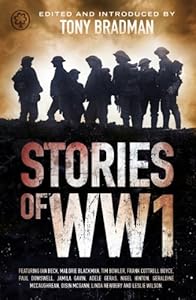
Stories of WW1 edited by Tony Bradman (Orchard Books)

The Great Ice-Cream Heist by Elen Caldecott (Bloomsbury)

Ruby Redfort: Look Into My Eyes by Lauren Child (HarperCollins Children's Books)

Whale Boy by Nicola Davies (Random House Children's Publishing)

A Laureate's Choice: 101 Poems for Children chosen by Carol Ann Duffy (Macmillan Children's Books)

Extra Time by Morris Gleitzman (Penguin Children's)

Wild Boy by Rob Lloyd-Jones (Walker Books)

Ghost Stadium by Tom Palmer (Barrington Stoke)

Geek Girl by Holly Smale (HarperCollins Children's Books)

Operation Ouch! My Brilliant Body by Dr Chris and Dr Xand van Tulleken (Little, Brown)

A Boy Called Hope by Lara Williamson (Usborne Publishing)

...and the accessible titles are :
Boffin Boy Goes to Hollywood by David Orme and Peter Richardson (Ransom Publishing)

Super Animals by Anne Rooney (Franklin Watts)

Winnie's Dinosaur Day by Valerie Thomas and Korky Paul (Oxford University Press)

Croc and Bird by Alexis Deacon (Random House Children's Publishing)

Off to the Park! illustrated by Stephen Cheetham (Child's Play)

The BookBuzz selection process was an absolute joy to be part of. It was a pleasure to meet with such nice, enthusiastic professionals and discuss some brilliant books. Also, to be given a chance to share the joy and benefit of reading with thousands of 11-12 year olds all over the country is a real privilege. I can't wait to meet September's new starters and see what they think to these incredible books.

Schools wishing to register for the BookBuzz scheme (and I do very much recommend it) have until July 28th to register. Registration information can be found here on the BookBuzz website. It's such a worthwhile programme and the pupils really do enjoy it and benefit hugely- plus it's fun to run and it helps settle year 7s in to their new school and break the ice.

The books that I reviewed as part of the process can be found here- The BookBuzz Longlist

Tuesday, 11 March 2014

Dragon Frontier, by Dan Abnett

Jake's family is part of a wagon trail heading from the East towards Oregon, preparing for a fresh start on the frontier and a chance to escape failure and tarnished reputations. Jake's a bit of an outcast though. His horse allergy means that he's not able to ride up front with the other boys his age, so must stay with the waggon and the Oxen and keep an eye on his Ma and his sister. Jake's only real friends are in his adventure books, but he's only been allowed to bring one with him on the road.

When the travellers' camp is besieged one night by sky-borne fire, Jake becomes separated from his family during the panic and destruction. Rescued by the mysterious natives, Jake's wounds are treated and bound and the tribe do their best to nurse Jake back to health, but his illnesses are too advanced for their remedies. Jake is delivered to the nearest town where he is expected to stay, adopted by the Blacksmith. Here he meets the Smith's children, the headstrong Eliza and her younger twin brothers. The latter are very keen on Jake, enthusiastically adopting him as a replacement older brother. Eliza is thoroughly less keen. She's heard the delirious Jake spouting nonsense about dragons and thunderbirds and has decided he's insane.

Jake knows he does not belong in this town, that he needs to find the purple-eyed creature that set his camp alight. He needs to locate his family. The only people that can help him are the natives, so that is where he is going to go- back into the wilderness for some answers. Setting out alone, Jake's mysteriously acquired directional instincts lead him back to the hidden settlement of the Natives. They have some answers for him, but it's not the ones he's anticipating. Life is about to get much more interesting for Jake, suddenly he's very unique and important, and horse hair allergies are not going to interfere with his new ride.

Dragon Frontier is a Wild West fantasy adventure series for lower aged secondary pupils (I'd say) that is a bit of a cross between Skyrim and Red Dead Redemption. There's the search for lost family in the barren and dangerous West, coupled with unexpected magical powers and responsibilities where dragons (and control thereof) are concerned. The frontiersman action and the dragons themselves make this an ideal book for fans of the Beast Quest series, and it would also be enjoyed by readers of the How to Train You Dragon books. There's a lot of action, an epic quest and feelings of isolation or exclusion, which I think a lot of readers will relate to. I also liked that Jake, the main character was a big reader and frequently talked of the immersive power of books and stories, so it get's a nod of approval for secretly promoting reading....

However, personally I found this book a bit of a struggle. Ordinarily, I love a Western. Red Dead changed my life. Cowboys, frontiers, covered waggons and lots and lots of sand- can't get enough. What I found difficult about this was the slightly jarring combination of Western and dragonish Fantasy. It just didn't do it for me. It's unique, certainly, but something about the book left me wanting more. I was disappointed by Eliza and Jake's relationship too. Though they went from enemies to allies to genuine friends, I didn't feel like they ever had any real chemistry- there was never any believable connection made between the two of them. I never really felt that I was invested in Jake's character in any way.

Interesting concept, compotently written, but lacking in dynamic characters and a little bit underwhelming I felt.

Friday, 28 February 2014

Wild Boy, by Rob Lloyd Jones

Firstly, I just want to applaud Walker Books for such a stylish, eye popping, primary coloured gem of a cover. What a beaut, right? I love how it's a cross between pop-up book and sailor tattoo. Coupled with the Victorian setting, freak shows, deductive and observational prowess, dodgy science ethics and a twisting murder mystery, I was getting vertigo from the height of my expectations before I'd even started the first page.

Wild Boy (the only name anybody has ever bothered to bestow on him) is the star attraction in a travelling freak show. Before that, he lived in isolation in a top floor cell in a filthy workhouse, mercilessly bullied by the other boys and abused by the owner. Things aren't much better in the show, but at least he has a friend in his fellow freak Sir Oswald, the no-legged war veteran. Comforted only by the knowledge that he has no place anywhere else in the World, Wild Boy escapes the demeaning, torturous life by escaping into details- he has the most extraordinary talent for seeing things that others don't. Making deductions based on his observations, seeing the little things, making educated guesses and remembering what he's seen.

On the night that he finally stands up to his wicked owner, Wild Boy gets caught up in something way over his hairy head. Mysterious cloaked figures, ominous machines, murder. When a bounty is placed on Wild Boy's head for a murder he didn't commit, he has to find the real killer to clear his own name. Good job he's got those Sherlock style detective skills. Together, he and his frenemy Clarissa, a neglected but feisty acrobat from the circus (Wild Boy punched her in the face once and broke her tooth) must team up to follow the clues left behind by the killer. The perfect team of physical agility and mental brilliance, the killer's trail leads them overground and underground in Victorian London and into the depths of a secret society of mysterious gentlemen.

Wild boy and Clarissa are excellent protagonists, squabbling and fighting amongst themselves, but coming through for each other in the end. Both have been abused and neglected and neither knows life outside of the circus. They make a brilliant team, have a really lovely dynamic and they're both incredibly strong and lovable. The times that Wild Boy's eyes shone with pride whenever he impressed her were a tad heartbreaking, starved of companionship he is bowled over by her friendship and trust.

I loved the subtle nods to Classic gothic literature in this book. Professor Wollstonecraft, electrical scientist took the middle/maiden name of Mary Shelley, the gothic literature and Sci Fi pioneer and author of Frankenstein. One of the test subjects was Arthur Doyle, a nod to Sherlock Holmes creator Arthur Conan Doyle. The book is a modern tribute to the both of them, questioning the dangers of scientific advancement and utilising deductive skills for crime fighting purposes. The Gothic Fiction geek in me doffed my cap to the authors (dead and alive) at these moments.

It's packed with plenty of gore and action, but is definitely aimed at the lower age range for Secondary School readers. The lack of any angst or philosophical wonderings distinguishes it from YA nicely. It's a beautiful story about the transformational power of friendship and about learning to celebrate difference and about learning to be happy in one's own skin. All absolutely vital messages not just for young reader, but for anybody on the Earth. A brilliant book, it’s going to get recommended by myself an awful lot in future…

Wednesday, 26 February 2014

Arrowhead, by Ruth Eastham

A dual narrative that starts with the slow death of a Viking boy, trapped and bleeding at at the bottom of a glacial crack.  In his last few moments of life, he scratches warning runes into the frozen wall, warnings about the golden arrowhead in his hand.

1000 years later, the school outcast finds his frozen body and takes the arrow that has been hidden for so long. He and the new kid, Jack return to the frozen cave the next day in a frantic attempt to hide from apparently deranged bullies, psychotic and bloodthirsty. Seeing the frozen boy's face, unchanged by time, they are startled by the dead boy's resemblance to Jack.

When Jack starts having flashbacks of the Viking boy's (Tor) life, he knows they must be connected in some way.  Suddenly able to understand the ancient runes, Jack is able to decipher the warning message on the wall.  The curse of the arrowhead has been released once more, bringing with it four elemental plagues; air, water, earth and fire, just as it did in Tor's lifetime.  Jack and Skuli must race against the clock, decipher an ancient riddle-like ballad and arrange a Viking Warrior's funeral before the Midnight Sun touches the sea...

Arrowhead is a fast paced adventure, full of fights, fire, mountains and mystery that has a really good setting and structure.  The only place that I feel that this book falls down is in its characterisation.  The author has created an interesting backstory for the main character; a hatred of ice due to the tragic death of his father, a mentally ill mother, a well-tuned moral compass- it sounds promising and full of character potential...but nothing that Jack does or says seems to give him much personality. I get that some characters are more interesting because they're mysterious- he makes the reader want to know more about him.  But Jack just seems a little flat.  I didn't understand  the function of the dog, Sno either.  He was cute and all, and it kept seeming like he was going to do something important or spectacular, but that just never happened.

The novel switches between Viking times and Modern day Norway via Jack's dreams, visions and Hallucinations in which he sees through Tor's eyes.  In this case, it's a really effective way of allowing the reader, and Jack at the same time, to discover more information about the demise of Tor, the greed of his brother (Vekler) and the power of the arrowhead, gradually revealing what needs to be done to quell the plagues and save the town. I also really liked the location of the novel (both historically and geographically)- though Scandinavian (set and written) literature is becoming more popular among adults, it remains quite an uncommon setting for Children's and YA literature, which made it quite memorable.  This could be an excellent tie in novel for those studying Beowulf at school.

Tuesday, 25 February 2014

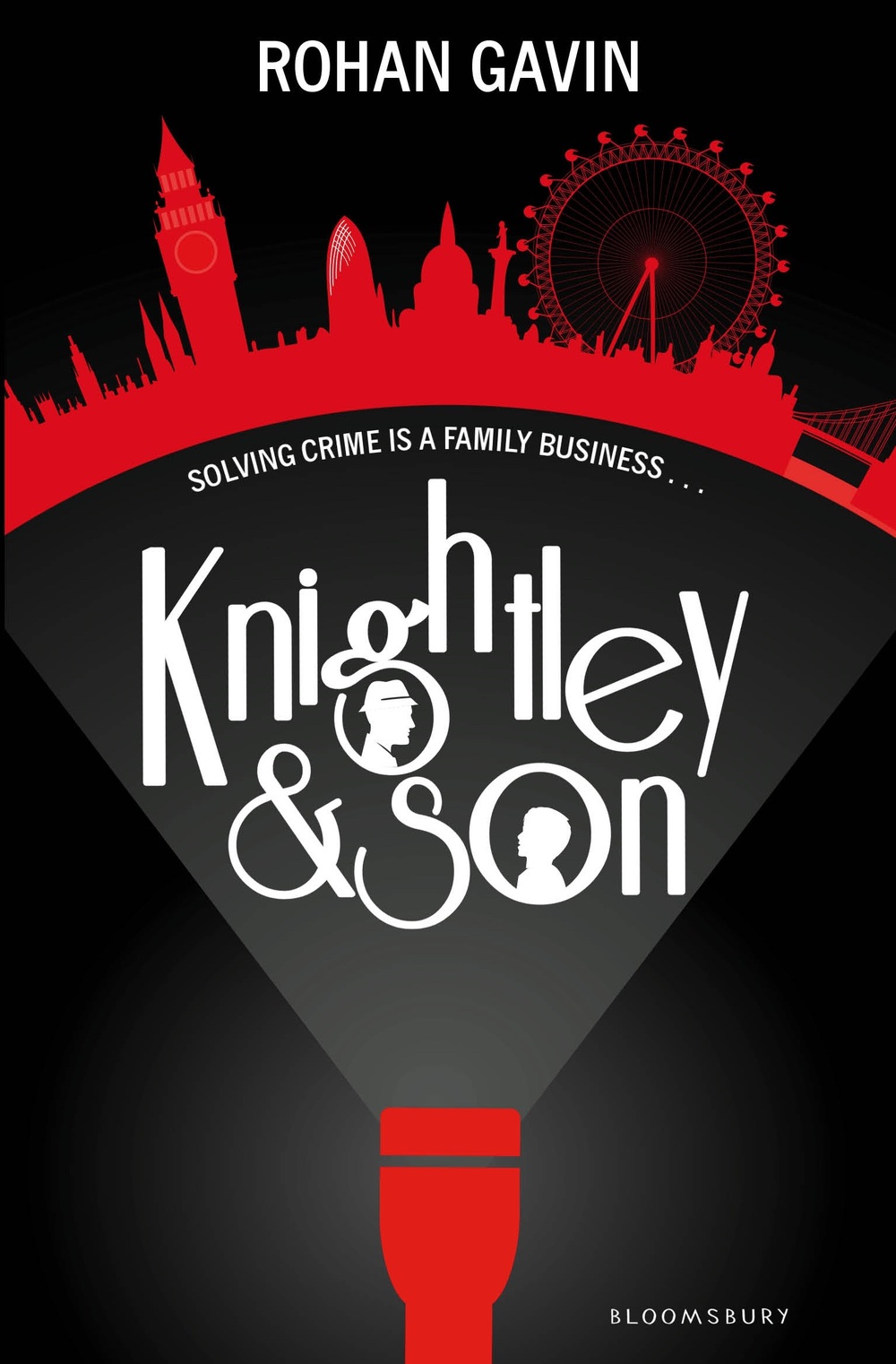
Knightley & Son, by Rohan Gavin

Darkus Knightly is not your average 13 year old. Not just because he's got an odd name, either. With his fondness for tweed, tidiness and intellectual pursuits, he stands out a bit from the crowd. His father, the renowned detective Alan Darkus (specialising in unusual cases) has been in a mysterious, medically inexplicable coma for the last four years. His mother has remarried to the fashion disaster presenter of a Top-Gear knock off, and his relationship with his step sister Tilly is a bit complicated to say the least. Like I said, not very average.

His father's absence has strengthened Darkus' resolve to follow in his detectively footsteps, to utilise the deductive skills he appears to have inherited and find out what happened to his dad. He trawls through his father's case notes each night, desperately looking for clues or leads, the answer that will bring him back. Cue the sudden appearance of 'Uncle Bill' an enormous Scot, who may not technically be related...but he's here to tell Darkus that his father has woken up as suddenly as he drifted off and has done a runner from the hospital.

Reunited, father and son have a bit of a shaky start- Alan is not convinced that Darkus is up to the task of assisting him. Plus it's a dangerous business, and he doesn't want Darkus to get hurt. Faced with the inescapable talent that his son possesses for crime solving, he finally has to admit that Darkus would be an asset to his quest. Together they continue the search for 'The Combination' a mythical crime syndicate that Alan has committed his professional life to exposing, much to the derision of his peers. Convinced they are responsible for all unexplained crime the world over, he is determined to prove their existence and their guilt. Elsewhere, a bestselling self-help book appears to be inciting otherwise law abiding citizens to engage in an inexplicable crime spree...could this be the work of the Combination too?

An exciting mystery story that twists and turns, letting the reader piece the puzzle together as the story rolls along. I know a lot of the year 7s and 8s at my school are big Sherlock fans, and are really into complex mystery stories, so this novel is going to have a great deal of appeal. Like the city in which it is set, the story strikes an unusual balance between the old and the new, wedging itself in the middle. Some elements, such as the suggestion of hypnosis, shadowy crime circles and the dialogue of Darkus and his father feel quite old fashioned, whilst the setting is distinctly modern. Like the Kinghtleys themselves, it spans the times.

I was really impressed by the characters in this story. Both Tilly and Darkus are driven by their own reasons for wanting to expose the crimes of the Combination. Each of them carries enough intrigue to be interesting, enough back story to be mysterious and to make the reader understand their behaviour, and best of all both are really easy to relate to. I love how much of an oddball Darkus is. He's not cool, he's not popular, but he's not bothered. He's insanely clever, wears three piece suits and insists on triangles not squares when it comes to sandwiches, which is better than being normal any day. I think his uniqueness is going to strike a chord with a lot of readers. Same for the character of Tilly. Her rainbow hair disguises how quiet and reserved she is, still suffering from the loss of her mother. Throwing herself in with Darkus and his dad gives her a chance to find closure and explore her own personality and strengths a little more. I look forward to seeing how she develops in later books.

What I think is really elevates this book over other children's mysteries is the emphasis that the author places on the father son relationship. It really is absolutely key to the novel. The story makes it clear that Darkus has spent much of his childhood without his father's (wakeful) presence, and even so, he has become exactly like him, whether by accident or design. He dresses, speaks and acts like him. It's something that feels important to a good father/son team, the desire of the son to be like his dad. I loved how as they got to know each other better, each realised just how alike they were. It was a joy to see how their relationship developed after such a long and traumatic break and how Alan had to learn to see Darkus as a fully functioning detective, rather than just 'My Son'.

There were a few instances where I thought it borrowed a little too much from ACD's Sherlock Holmes, and in cases the BBC version, but I don't think the readership will mind. It's a fast paced, action packed story about families and truth and it's going to be massive.

Thursday, 20 February 2014

Itch, by Simon Mayo

I'm quite annoyed with Simon Mayo. Not only is he a successful and much loved broadcaster, has pretty good taste in music and keeps Mark Kermode from ranting himself to death...he's also an excellent writer and storyteller. How annoying is that?

Simon's debut novel, Itch is the story of 14 year old Itchingham Lofte, periodic table enthusiast and element hunter. Meaning he collects all the elements and stores them in a shoebox in his room. Yep, even the slightly radioactive and/or explosive ones. Cursed with a daft name and an overactive thirst for understanding, he inadvertently explodes himself unconscious, burns off his eyebrows and poisons his entire class within the first few chapters. He's absolutely marvellous.

When Itch is given a mysterious, colour-changing rock by his element dealer friend Cake, Itch's child-hating Chemistry teacher, the mysterious (and apparently psychotic) Dr Flowerdew is suddenly very interested in geology. Is it something completely new that no scientist has ever seen? If so, it could prove to be a new power source, changing life as we know it...every government, scientist and Energy Company is desperate for the rock's secrets. Naturally, there are some less than savoury characters too that will stop at nothing to get their hands on this power also, potentially endangering the whole world. Itch and his cousin Jack (no strong feelings for elements in any way) must use all of their knowledge, their strength and all of Itch's bag of chemistry tricks to keep themselves, their family and the world safe from the destructive power of Itch's little rock.

I honestly cannot recommend this book enough, it's fast paced, entertaining, has some really lovable characters and is actually quite educational. I'm not into chemistry. Not even slightly. Any progress down the "Elemental" thought track inevitably ends up with "WE'RE ALL JUST INSIGNIFICANT SPACE DUST ON AN IMPOSSIBLE LUMP OF ROCK THAT SHOULD NEVER HAVE HAPPENED!!". But I found myself genuinely nodding along (almost understanding) the passion and the awe that Itch feels for his unusual hobby. It is pretty incredible when you think about it- it's the ingredients of the Universe in that backpack.

Itch is such a brilliant character. He's believable, endearingly accident prone, smart, understands his own flaws, loyal. He's a joy to read about and by the end he feels like an actual real-life friend. His sister Chloe and cousin Jack are well written too- their dialogue is realistic, they're funny, intelligent, resourceful and in it to the end no matter what. It doesn't matter that they're girls either, which is refreshing. The three have a nice dynamic and complement each other well as characters. The use of modern technology throughout- Facebook chat, email and texting, for example, gave it extra appeal and authenticity but it is not over done, and the plot didn't depend on these technologies to save the day and to get out of sticky situations, as can often happen.

It's an ideal book for crime fans, mystery fans, kids that like funny books- but it could also prove to be a gateway read for those who struggle to get into fiction. Itch isn't a big reader either- he understands, that's why he hates English and History, too much writing. But the science, the geekery and the sheer fun in this novel might just tempt them to try it. It's a perfect opportunity to send a love of science in a new direction. The book has a genuinely broad appeal and it's bound to be a modern Young Adult classic- I can't think of anybody who could ever dislike it.


Snapshot, by Robert Swindells

Swanky new jacket for 2014
After months of saving his pocket money and thinking he was never ever going to have enough, Victor gets a brand new, state of the art camera for his birthday, which very nearly turns out to be his deathday too. Eager to try out his new present, Victor pops out to take a few shots and get a feel for his fancy piece of kit. A few snaps in, he inadvertently photographs a robbery in progress, recognising his best friend's brother as one of the robbers. After he is spotted by the thieves, Victor is almost run down by the getaway car and then tailed through the town and the estate by a masked man, obviously intent on getting hold of the incriminating evidence on Victor's memory card
After giving him the slip in his maze-like block of flats, Victor witnesses an even more horrific crime, forcing him to hand over the memory card to the police. Whatever is in those photos has cost somebody their life and they are obviously incredibly dangerous...but that's the end of that, right?
The author does an excellent job of building the suspense and creating an atmosphere of threat- starting with the robbery, the pursuit, and the murder and finally the break-in, the tension is mounting all the time. It's genuinely gripping stuff. I loved Victor's voice, his personality and his brilliant turn of phrase- Swindells manages to make his character narrate naturally and fluently, with a huge amount of personality and character, but in a way that is not difficult to read and does not get too ambitious with vocabulary. His complaint about saving up his pittance of pocket money being as difficult as "Pushing a peanut up a mountain with his nose" was particularly endearing.
I really liked the way that peripheral characters were presented in this book- the original robbers of the jewellery shop aren't ruthless killers, just a bit dim and almost pitiful. The police are friendly enough, but a bit inept- lucky more than competent, and the truly dangerous, brutal criminals are scary because of how mysterious and discreet they are. It would have been easy to make every character either good or bad, but this book makes the reader aware that there's more to it than that.
It's a really tightly plotted, suspenseful crime story with an excellent narrator, interesting characterisation of the law and the criminals, and a really satisfying read. My only doubt is whether genuine "City Kids" will be convinced by the narrative, as it is a little bit clean in its language and lacks the 'grit' of some other (newer) crime-related stories. I think struggling readers would be over the moon to read this; the book isn't patronising or over simplified, Swindells has succeeded in the difficult task of keeping the difficulty level low, but the interest level high.
 

Ghost Stadium, by Tom Palmer

The last day of school has just ended and best friends Lucas, Irfan and Jack have got their summer holidays off to a thrilling start- by camping out for the night in the old abandoned stadium of Yorkshire County FC. They have heard that it's haunted and the boys want to see for themselves if there is any truth in those rumours. Things start to get chilling before they've even managed to climb over the wall- is that just Irfan's imagination or was that the shape of a man's body falling from the roof? Could it have anything to do with the mysterious and unexplained death of the team's star player 5 years before?

A brilliant example of an accessible book that has a genuinely high interest age. Much of the time it feels like cover interest ages are merely plucked out of fresh air, but in this case it is obvious that the author has gone to great lengths to make this narrative genuinely appealing to the 12-15 age range and has managed to keep the language and vocabulary accessible and unthreatening, as well as feeling natural and realistic for the age of the characters.

The football background has enough weight to make this book appeal to those who only ever want to read 'football records' books, or don't read at all, but the football theme is not so prominent that it would deter those who have no interest in sports. The mystery narrative is strong enough to stand up alone, without relying on its football context as a 'hook', so the story has a genuinely broad appeal; football, sports, mystery, chiller. Many readers would be able to identify with the feeling of pride and devotion in following a sports team, and others would simply be pulled along by the exciting mystery or the scary series of events that's unfording. It's not going to be difficult to find a lot of readers who are going to love this. I also love that the author sneakily name drops some zombie and horror books from Charlie Higson and Darren Shan- so any further reading is all taken care of ;)

The chapters are short, two pages as a rule, and fairly numerous. To reluctant or struggling readers, this book would represent a huge achievement and confidence boost because it doesn't feel like a book for a low reading ability. This itself is a really valuable asset, and one that is pretty rare and difficult to achieve. All the chapters end on spectacular cliff-hangers, so finishing this story is not going to be a problem, even for the most apathetic of readers. This book is from Barrington Stoke's Dyslexia friendly range, so format wise the pages are a bit off-white, the font is more easy on the eye than usual and the text is spaced in a way that is easier to read, but not especially noticeable to those who aren't looking for it.

Wednesday, 19 February 2014

Sky Run, by Alex Shearer

Sky Run is set in a world where there is no real Earth, just pockets of land scattered around in space, floating above the sun. Sky Sharks, Sky Fish and other bizarre creatures ride the thermal currents of the sky, hunting for food whilst nomadic humans cruise in their boats hunting for clouds and t
he valuable water that they produce.

Orphans Martin and Gemma live with their 120 year old Great-Great-Aunt Peggy and their lazy Sky Cat Botcher on a small floating lump of rock far out in the outlying settlements, days and days away from civilisation. Not wanting her family to grow up in ignorance and isolation and being a believer in education, socialisation and in self-improvement, Peggy enrols her charges in school over on City Island. Martin and Gemma are less than enthusiastic about such a huge journey and the prospect of school but board their "Gran's" ancient Sky Runner anyway.

Their dangerous journey takes them through unchartered sky, past isolated Islands populated with damaged and dangerous people (not least a deranged axe-murdering Motel owner) and into some tricky situations with the local Sky-life. Sky pirates, menacing and oppressed slave populations, frantic Rat catchers and floating minefields also find themselves themselves in the path of the rickety Sky Runner and its steadily increasing crew. Peggy must teach her family (and the newer acquisitions) that though an education is very important, not everything that you ever learn can be taught at school. There are dangers, temptations and obstacles that need skills other than academic knowledge to overcome. They need understanding, patience and resourcefulness too- and that's something that can't be taught in the city.

I found this to be a really enjoyable read with an incredibly imaginative and unique setting. Think the British Gas adverts meets Phillip Reeve's Predator Cities series. The World is really atmospheric and creates suspense successfully: the constant feeling of threat, the idea that life is quite tough for everyone and survival is against the odds (despite Peggy's age).

The characters are varied, well-rounded and I think they've got a very broad appeal. Peggy is a brilliant invention: funny and warm, feisty for her centenarian  years and allows the younger generation to learn from their successes and their failures- but she's tainted with a strange sadness throughout, like she knows something that her niece and nephew don't. Martin and Gemma, who take turns to narrate the story are likable, endearing and recognisably realistic- Martin is a dreamy idealist with no real idea for consequences, and Gemma, who sees herself as more put-upon and wiser, seems to resent his simple happiness quite a lot of the time, though it's clear she loves her brother and her aunt. Their squabbling and sibling-ly disgust at each other is funny and true to life. Though they fight and moan about another, they're a team and they each save the others neck a couple of times...

I really liked the episodic structure of the plot and the variety of accidents and predicaments that the characters found themselves in. It proved that there's a lot to be said for doing the right thing and having people around you that you trust. The message that it's not the destination but the journey that's important also really appealed to me- it's a message that I'd like to see moe of in children's writing.

Ruby Redfort: Look Into My Eyes, by Lauren Child

Eeeeeeasily one of my favourites so far, Ruby Redfort is just so entertaining- this is going to go down a treat. I think it might even have the Katniss factor- a female character that eeeeven boys want to read about- gender becomes irrelevant at last!

Ruby Redfort is far from a normal teenager. A gifted code breaker, she was offered a place at Harvard before she was even finished with Middle School. Not that she wanted to go or anything. She's way too clever for education. Content to observe and record the mundane with her friend Clancy, Ruby spends her days drinking banana milk, writing her observations in her hundreds of notebooks and watching cop shows with the housekeeper...Until one day the housekeeper, and the entire contents of the house are stolen. Everything except the phone. Following the theft of the century, Ruby is coincidentally recruited by a mysterious voice on the phone that gives her a code hidden in what appears to be a normal conversation- who's calling and why? What do they want with her? Maybe a few new sleuth skills wouldn't be the worst thing ever...

Sassy, sarcastic and with the best dress sense ever, Ruby manages to talk like a real teenager, act like a real teenager, and also be aware of how clever she is and not even come close to annoying. Something that a many fictional teens with swagger do not manage to pull off. She oozes bravado, but she's loyal and has a solid moral code, so she really does come off well throughout the book- it's easy to root for her and she is genuinely entertaining. I thought the dynamic between her and her best friend Clancy was skilfully done, their origami communications was such a cool idea and I really got the impression that they were best friends through thick and thin. Clancy’s definitely more of a Doctor Watson though, always a couple of steps behind his Sherlock but brave, loyal and a sixth sense for knowing when and how to save the day.

The plot is excellent and moves swiftly, twisting itself together until every seemingly seperate event is tied together. There are abductions, perilous escapes, low-speed chases, mysterious strangers, valuable treasures and vintage gadgets and some truly funny characters. I loved Ruby's parents- well meaning, but so, so dense. Bless them and their organic tomato diets. I forgot I was reading this as a grown-up and completely got swept up in the action. A really fun read that I think most kids will take something away from.

Friday, 7 February 2014

Rugby Spirit, by Gerard Siggins

Firstly, I am more than aware that I am not the target audience for this book. Not just because I am too old, but also because I have never watched a game of rugby in my life. I've seen it happening in TV glimpses- it looks painful and the closest thing the 21st century has to actual Roman Gladiators.

The author has done an excellent job of telling a complex and interesting story in a very accessible way, which is certainly no easy task. I think a healthy interest in rugby is pretty crucial to enjoying this book. Though there are elements of family drama, an appealing underdog narrative and a bit of chilling mystery in the story, these are all bit-part players when compared to the overwhelming importance of rugby to the book. The author provides play by play commentary of several important games, so some technical knowledge is useful for these sections in particular. It's well written and maintains a good pace throughout, but I'm not sure if there's enough there for your regular non-rugby reader.

Eoin Madden, grandson of the mysterious rugby legend Dixie Madden, begins his first week at his grandfather's old school, Castlerock College. A bit miffed that everybody there seems to know more about his very private, quiet grandfather than he does himself, Eoin quickly learns that the Madden name is a big deal in Castlerock College. From some people, this translates to high expectations on the rugby pitch. From others it just earns Eoin a lot of extra grief from school bully and current rugby star, Duffy. Forced from absolute beginner and rugby fledgling to game-ready athlete, Eoin has to learn the rules and the tactics practically overnight, and in no time at all (but with a bit of practice) finds himself on the first team. Rugby players are born and not made, it seems.

As term goes on, Eoin learns to cope with his increasing fame, an unfortunate injury and greater positions of responsibility. He also has to come to terms with his Grandfather's worsening health and the fact that he may never find out why his grandfather quit rugby so suddenly all those years ago. Eoin has some pretty sturdy rugby boots to fill and with a little help from his History Teacher, his dorm mates and a mysterious character called Brian that he meets at the Aviva stadium, he might just be able to prove he can be a future rugby star in his own right- to himself, to his family and to the rest of his team.

I enjoyed Eoin's journey from new kid to game changer, and I thought he came across as a likable lad- modest, a good friend and a decent, hard worker. I found it a little hard to believe that he was never aware of why his grandfather stopped playing rugby. A tragedy of that nature, in any family, is not a secret. Crimes and scandals are kept secret, not accidents and the big mystery that had puzzled Eoin his whole life seemed a bit of an anti-climax when it was revealed. Brian's story on the other hand, was much more engaging and seemed to fit the narrative much better, though it was a bit of a surprise, considering the very real-life tone of the book. His air of mystery made me want to know much more about him and the things that he'd seen come and go. Mr Finn the history teacher slash ex rugby coach was an excellent character, and I'm glad that he became more of a presence towards the second half of the book.

On the whole, this was an enjoyable, if not entirely understandable read. The author clearly explains the rules, objectives and tactics needed in rugby (even providing helpful diagrams!), the reader learns along with Eoin, but I still failed to grasp it! Rugby is obviously not meant for me, I'm afraid. The author's obvious passion and love for the sport shines through every page, and those that want to take up rugby or already love rugby are going to go mad for this book. Even people who are really into any sport at all could perhaps convert those feelings and emotions into rugby and join in with Eoin's triumphs and setbacks. However, I would advise those unmoved by sports to perhaps look elsewhere for their next read...

Tuesday, 4 February 2014

The Bookbuzz longlist 2014

Bookbuzz is an annual reading programme for schools from reading charity Booktrust, which supports schools in their efforts to encourage reading for pleasure, independent choice and that all important mission of developing a whole school reading culture. Schools that participate in the scheme allow all year 7 pupils to select a book (to keep) from a list of 12 specially selected titles. You can read more about it here- The Book Buzz Scheme

Anyhoo, this year, I am one of the individuals on the "Panel of Experts", to quote the website, that determine what this final list of 12 is going to be.

This is two things.
For starters, it's a massive privilege to get to work with an organisation that has such a brilliant, clear and purposeful mission. Who can disagree with spreading the joy of reading? Why would you not want to be part of that? I'm amazed that they asked me, out of all the bloggers, booksellers, librarians, mums and dads, and children's book readers that exist in the World and on the Internet.
It's also hugely scary. Not just because whittling a longlist of 50 down to 12 a little bit hard. My year 7s loved their books last year. Four months later, they still talk to me about them, still want to read the other 11 that they didn't choose. It got them started in their new school in the best way imaginable- it allowed them to get to know each other, get to know me, and get to know some excellent books well. It's a pretty big responsibility. To be one of the 5 or 6 people that has to choose the book that might switch a kid on to books forever. Picking the right books is going to be tough when there's so many excellent titles out there.

I've always thought that the sheer variety of novels written for the Young Adult audience is incredible. This shortlisting exercise has just entrenched that further- there are as many types of YA novels as there are young adults to read them. There's every 'issue' you could think of, every type of character, with every imaginable quirk and pretty much every setting or location you care to mention. I think special mention has to go to the titles written for reluctant readers- the sheer effort that has to go into enticing non-readers to pick up a book. Setting it against a backdrop of football, ghost stories, ninjas, vampires...any hook that might get caught in the imagination of somebody that doesn't read. I have the utmost respect for publishers like Barrington Stoke, Hachette and Rising Stars and the authors that they work with that try so hard to make books accessible and exciting.

I'm so pleased I've had the chance to read some of these books, there are a handful of titles that I've already assigned to particular kids in my head knowing that they'll be right up their street. Plenty more that I know are going to be choosing them for themselves. I always tell myself I'll read more YA for work, but I always find excuses to read for me instead. Being part of this process has given me the focus that I need to really dig into in some new YA literature. It's made me better able to do my job, which means that more kids and teens at my school are going to get more informed access to the books they want to read, and so I'm quite thankful to the Book Trust for that.

All the titles I've reviewed/thought about for the BookBuzz longlist can be found unfer the Bookbuzz Longlist tag

Last Year's Selection

Thursday, 30 January 2014

The Rig, by Joe Ducie

15 year old convicted criminal and serial escapist Will Drake has slipped the bars of some of the World's most secure prisons. His efforts have earned him a cell on 'The Rig' a disused oil rig since transformed into a a high-tech super prison for young offenders. Ran like clockwork by the demented Warden, the Rig is stranded in the middle of the freezing Arctic Ocean and only accessible by chopper, so swimming is definitely off the cards.

Confident that he won't be there long and compelled by his survival instincts and inconvenient moral compass, Drake doesn't exactly keep his head down. It's not long before his status as a 'Special Case' has attracted the attention of some of the Rig's more psychotic hard-man inmates and the sadistic military guard force. After hatching some rough escape plans, digging some dirt and vowing to escape the Rig if it kills him, Drake is convinced that all isn't as it seems on the Rig. What were those mysterious blue lights that Drake saw shining from the depths? Why are those psychopath inmates so inhumanly strong? And where do they disappear to for weeks at a time?

Working, eating, sleeping, his tracker noting his every location, Drake knuckles down, biding his time.  Falling short of his own rule, he befriends his computer genius cellmate Tristan and a healer girl, Irene from the other wing. Between them they might be able to discover the secret, sinister purpose of the Rig- not that being a floating Hell of 24 hour GPS tracking and frequent beating aren't sinister enough. Maybe one they've found out what goes on under the seabed- what keeps the Warden so smug and the bullies so strong, then they can plan their escape for good. No prison can hold Drake for long.

The Rig is set in a near future where the majority of the World is ruled by the sinister Alliance in which all resources, funds and rules are controlled by one powerful man. An absolutely brilliantly written, slick prison heist novel with a breathless plot, the Rig is one of the best stand-alone YA action novels I've read in ages. It's intricate, clever and has some truly memorable characters. Gradually wising up to the horrific secret buried under the sea, the reader unravels the mystery along with the characters, so expect to have to keep up. Drake makes an excellent protagonist; funny. charming, mysterious. Though it's not narrated in his voice, the reader still experiences his thoughts and feeling, even if they do not have access to his past. The way he slowly but meticulously adds the pieces to his mental map of the prison was done with style and in a way that really ramped up the suspense and revealed Drake's intelligence, survival instincts and impressive eye for detail.

One of the novel's greatest achievements is the strength of its characters. Each of the principal three are reluctant to open up about their crimes and convictions, each wants to preserve themselves from the pain of friendship and trust, wanting to go it alone. Drake, Tristan and Irene all have their own quirks, motivations and a unique and powerful back story, gradually demystified as each of the characters (and the reader) gets to know each other better. All are essentially huge inconveniences to the Alliance and need to be holed up out of the way. The characters are engaging, funny and convincing and they have a great rapport- they talk like real teens, which is hard to pull off. It's very easy to care about them, despite their obvious heroism. Even the villains are well crafted- sparse on the detail and wildly mysterious, as befits a private military. They seem genuinely evil, and delight in their cruelty. The book raises a few questions about corruption, doing the right thing and the needs of the many versus the needs of the few, which was interesting, and it makes it crystal clear which side Drake is on.

I'm not sure if the younger year groups will appreciate the novel's complexity, and there are a few swears, but overall a pacey, intelligent and incredibly slick YA novel that I think is going to be wildly popular. I certainly enjoyed it. I can see it making an absolutely cracking film one day. Will Drake is such a memorable character, like Jason Bourne meets Artemis Fowl.  I look forward to Joe Ducie's next release!

Tuesday, 28 January 2014

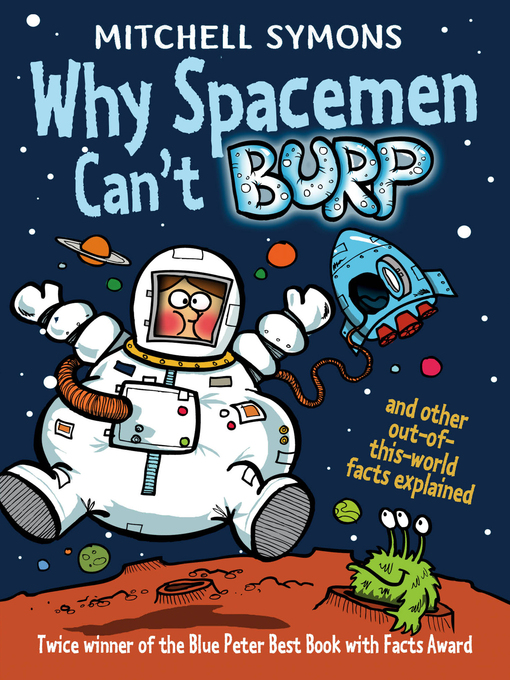
Why Spacemen Can't Burp, by Mitchell Symons


The latest in Symons' series of weird 'did-you-know?' fact books takes a pretty similar format to his other books, even right down to having some sort of bodily function in the title.  We've had burps, bums, bogies, ear wax, poo, farts and pukes.  What will the next one be called?  I dread to think...

Why Spacemen Can't Burp is laid out in a Question and Answer format and seasoned with various appropriate doodles.  Symons answers various (loosely science based) questions, many of which have been sent in to him by inquiring young minds.  He explains some unusual idioms, debunks various myths, urban legends and misnomers and generally fuels the reader with enough interesting facts and amusing tidbits to see you comfortably through your next form quiz or episode of QI.

Covering topics such as human bodies, animals, forces, sayings, food, geography and just about everything else, it's a pretty broad spectrum of facts and oddities, corrections and confirmations.

It's funny, informative and interesting and will obviously be wildly popular, as have all of Symons' other titles. It's full of the gross facts and bits and bobs that young readers love to dip in and out of and out-do eachother reading aloud.  Personally, I find these sorts of books really difficult to read, as my attention tends to wander with each page and there's nothing to develop really, in a book of facts but I know there's a pretty huge readership  for this type of book.

Scary Tales: Home Sweet Horror, by James Preller

Following the death of their Mother, Liam Finn and his family move to a "renovation opportunity" out in New York State.  From the very first moment, the family dog Doolin is not a fan, growling and whimpering at the house.  Liam and his sister Kelly aren't thrilled about the new house either, but they're stuck out there now.

Immediately it becomes apparent to Liam that there is something about the house that is not right- a presence or a force that obviously wants them gone.  Not wanting to upset his dad and ruin his new start, Liam keeps his spooky encounters to himself- the noises in the night, the warnings from local tradesmen about the evil of the house, the electrical appliances that seem to work on their own, the messages in the mirror.

When Kelly's friend from back home comes to visit, they decide to see if they can contact the ghost, chanting Bloody Mary in the mirror. They aren't prepared for what comes out of it- and what it is planning to do to them to get rid of the Finns.

A decent, short ghostly horror story, a bit similar in tone to the iconic Goosebumps series.  The author builds up tension through increasingly severe incidents starting with bumps in the night that lead up to the seance, the increasingly erratic behaviour of Kelly and the disappearance of Doolan, until the book culminates in a violent final event.  A solid sense of foreboding is developed, which must be quite difficult to achieve in such a short book.  I really liked the full page illustrations and margin doodles that accompanied the text- some told parts of the story that the text didn't, almost like a graphic novel panel.  The sketchy, shadowy style really suited the tone of the book and I really liked the dangly spider that got lower and lower down the page as you flicked through, it reminded me of the flick-book pages on the Animorphs series.  The illustrations not only helped to set the tone, establish the appearance of the characters and the locations (helpful to the less imaginative reader) but also helped ensure that the bigger portions of text were broken up a little.

In books so short, there is not always an enormous amount of opportunity to develop characters to any great length- and  feel that this was perhaps one of the weaker aspects of this story.  Each of the characters had some personality, but were all pretty basic- Liam was perhaps the most well-rounded, as the reader has access to his thoughts and emotions, we get a better sense of him as a person.  Kelly, the angry teenage and "let's-move-on" Dad both felt a little one dimensional to me, which was a shame.  I would have like to know more about the mysteriously malevolent Bloody Mary- Why was she so attached to that house?  When was she alive?  Why does she haunt the house and not the road where she was killed?  On the whole the characters are functional, but not hugely memorable.  But I realise that these are the restrictions of such short Reluctant Reader fiction...All in all, an engaging chiller with an excellent style and layout- horror is always a popular genre even with weaker readers, so I think this will prove to be quite a hit in the school's library.

Monday, 27 January 2014

SOS Lusitania, by Kevin Kiely

13 year old Finbar Kennedy dreams of working on the world's biggest and fastest ocean liner, the RMS Lusitania, just like his dad. After a flying visit during his brief period of shore leave, Staff Captain Kennedy is due to set sail from Ireland to New York. Determined to stow away on board and have some adventures, Finbar slips off in the night to find a hiding place on the ship and leaving his Ma and his siblings. Once on board, Finbar gets cold feet at the last moment and tries to disembark but he's trapped in a cabin and he's just overheard something dangerous...

With the Great War looming over Europe and submarine warfare on the increase, many of the passengers are a bit tense, particularly after certain pieces of propaganda have been printed.  Finbar has his suspicions too about certain individuals on board who are definitely up to something; he's heard whispers of gold, weapons, ammunition and other deadly things.

I really liked Finbar, he had the wide eyed wonder of a child, but the bravery and resilience of a much more mature person.  I loved how much pride he took in performing his messenger role and how pleased he was to be even a small cog in what to him, was the most impressive machine in the world.  Putting his hat straight all the time and racing around like a madman, calling everything 'duty'. His father was also a well crafted character.  It was revealing to see, through Finbar's eyes, the difference between what he was like as a father and what he was like as an officer.  He's obviously a very well respected man, which I think surprised Finbar a bit.  He knew himself what a hero his father was, but I think it seems strange to him to have that confirmed by other, important people.

Based on a true maritime disaster, the blurb makes it clear from the beginning that the Lusitania sinks, with a not-insignificant loss of life.  Comparisons are of course drawn to the Titanic, 2 years previously, but this sinking was no accident.  The book's narrative has a German U-boat torpedoing the Lusitania, but also has characters discuss the idea (in whispers) that it might be a British plot to force the Americans into the War. Successfully, if that was indeed the intention.  The lack of promised Naval support from the British appears to back this up in the plot.  The author never makes it clear which he wants to be the truth, but works each possibility into the narrative.  He also provides details in the appendix about the following real life court cases and the evidence given by the crew and the Navy, leaving the reader to decide for themselves who is responsible for the attack.

An enjoyable read, Finbar makes a good narrator- he's morally upstanding and takes his job seriously. He has a few early dealings with spies, smugglers and illness, but on the whole, the book is a pretty slow burner. They sail, they discover, the dock, they explore, they sail and they sink.  Large parts of the novel are just the daily business of a passenger liner in 1915.  The tension never really builds, I suppose because technically there is no perceived threat, just the chance of threat for much of the book.  Characters can't really react to something that they don't know is there.  It's not until the attack itself that the tension starts to mount and the reader begins to wonder which of the characters will make it to Liverpool. The crux of the story is in the sinking, which from the very start, the reader knows about.  It's a bit of an odd layout for a book, and an unusual narrative structure, but being based on true events it's the way it has to go.  It's an interesting novel, and I think it will prove popular, as disasters at sea seem to appeal to the macabre part of a person's imagination, especially those based on real events.

Under the Skin, Catherine MacPhail

Omar and his family have fled their war-torn home country and come to the UK to seek asylum and to find a safe place to live.  Writing letters to his cousin back home, Omar describes their penthouse, his best friend Sam and his excellent prospects in the UK.  The reality is that Omar and his family live in a flat on the top floor of an immense tower block and are subjected to daily abuse by their neighbours and Sam, a boy from school that lives a few floors below- but he doesn't want his cousin to think he isn't happy.  When Omar suddenly comes into possession of a secret that could ruin and humiliate his nemesis, he must make a decision- does he do the right thing and keep quiet?  Or reveal his secret and get Sam off his case.

Under the Skin is a short book, so there is little opportunity for a great deal of character development. However, the characters are pretty easy to understand, without being one dimensional.  Omar is obviously from a country in conflict, he describes how his father was tortured and his family persecuted and how much he loves being in Britain where they don't shoot at you.  He's glad to be in the country, even if he is a bit lonely and it's clear that he really wants to make it work.  He stands up for himself (sometimes physically or violently) but has a good sense of right and wrong despite being wronged himself, which pays off in the end.

It's a short, easy to read book that manages to tell quite a complex story in a ways that's easy to understand. Omar speaks in broken English, which means he keeps it fairly straightforward and he frequently expresses his confusion about some of the sayings and idioms in the English language but on the whole considers English to be a wonderful language. The narrative is broken up by letters from Omar to his cousin, which establishes a bit of a contrast between Omar's reality and what he's writing in his letters.   He creates a good sense of what it must be like to live in exile- the prejudice that he suffers and what it is like to be displaced.  It's a story about taking the moral high ground, seeing things from other perspectives and perseverance.  It reminds the reader that nothing happens overnight and friendships have to be worked at, and new starts do not happen all at once.

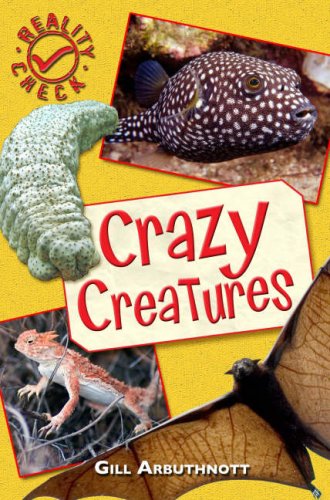
Crazy Creatures, by Gill Arbuthnott

A short wander through some of the world's more unusual and bizarre creatures including vampire bats, naked mole rats and a bird that has the World's smelliest attack sick.  I found the information in this book interesting, but struggled to understand the format a little bit.  The text is kept to a minimum and there are no images, but it's not a fact-file and it doesn't really have any sort of structure...it reads more like a series of quite interesting animal anecdotes that are just grouped into four vague groups...

I have seen similar books to this that include eye catching colour layouts, photos, habitat information and interesting or gross facts. These types of books are accessible, engaging and popular with low ability readers who don't seem to have too much trouble understanding them.  I just found it odd that a book about weird, mind boggling creatures didn't provide any pictures or any other information at all about the animals, apart from the fact that they did something odd or looked a bit strange.  It is quite difficult to appreciate how strange some of the animals are, unless you know already what they look like.  I'm not sure there is much demand for accessible books that just provide random chunks of information and odd animal attributes without any sort of context- I liked the information, but thought that by itself, the contents of the book was lacking in substance.

I think these factual snippets might have been better used as flashcards, perhaps with an image of the creature on the back that could still be used to develop literacy skills, but in a way that fits the format a bit better.

Island of Thieves, by Josh Lacey

Sent to stay with his Uncle Harvey whilst his parents enjoy a child-free holiday,  Tom Trelawney thinks he's in for an exciting week in London.  What he doesn't expect is a whirlwind trip to Peru, thrown into a dangerous and highly unstable situation with gangsters, thugs and thieves.  Convinced he's on the trail of something valuable, Harvey has just one problem (aside from a gang of ruthless criminals on his trail)- the document that he's convinced is a treasure map doesn't actually describe the location of the gold.  So, his first task is to track down the rest of the journal that describes the voyage of the Pelican, the ship of the famous explorer Francis Drake.  But where is the rest of the journal?  After 400 years will the treasure still even be there?  And can Tom and Uncle Harvey evade Peru's most notorious criminal  long enough to actually find the gold?

I really enjoyed Island of Thieves- it reminded me a bit of one of my favorite guilty pleasure films, National Treasure- an unlikely treasure hidden behind riddles preserved in a historically significant document. It's well written, narrated by the likable Tom who can never quite believe what he has gotten himself messed up in- resigned to his demise one moment, determined to accomplish his mission the next.  Quite cinematic in style, the book doesn't focus excessively on description, choosing instead to focus on the action and on Tom's thoughts and feelings, which means that the reader feels like they get to know him well.  The book feels like a re imagining of some of the old fashioned swashbuckling adventure stories, but with guns and organised crime instead of swords and the British Navy.  The author strikes an excellent balance between exciting peril and unraveling mystery, but without too much suffering and violence which I think would give it a broader appeal.

Tom makes an interesting and likable narrator and a good character overall.  Getting stuck into the biggest adventure of his life and then kind of regretting it when it looks like he will probably die (by accident, then murder) and probably never being found by his parents at all.  As the storyteller, his thoughts are readily available to the reader, his admiration for his uncle, as well as his concern for his apparent lack of common sense or sense of adult responsibility are expressed well and does a lot to flesh out the characters of Tom and Harvey at the same time.  Harvey, the reckless but charismatic adventurer that can talk his way out of anything finds his nephew an unexpected asset on the trip, and the two of them make a good (if unlikely) team. The bad guys are stock pantomime villains and a bit two dimensional, but it's not really about them and they do serve a purpose, even if it is to be menacing and villainous.

Another really enjoyable adventure story- I haven't read a good buried treasure story for ages!  A slightly far fetched but swift and twisty plot that that is delivered a way that doesn't seem too absurd at the time.  I loved how Tom's research and reading of the journal brought history to life right infront of him and how excited he was as he made discoveries and connections that went back to the 1500s.  It was refreshing to read something that was simply an exciting adventure, rather than a book that tackled an issue or taught a lesson.  Don't get me wrong, I like lessons and issues, but a book that is just fun is sometimes very welcome.

Stories of World War I, edited by Tony Bradman

A collection of short stories from some of the best children's and young people's writers in the business. Between them, the stories look at World War I from just about every perspective imaginable; the underage enlistees that sign on the dotted line looking for adventure and a ticket out of their home town; the wives, mothers, sisters and children left behind; the men in the trenches; the women on the home front; the broken men that return to their families; the Germans, who had a pretty terrible time too; the soldiers from the Imperial countries who have been shipped in to England to serve the Empire. The book really captures what a global conflict the Great War really was and seems to appreciate the deeply personal and devastatingly unique effect it had on every individual that fought, and every individual that didn't. 

Some of the stories use WWI as a backdrop to address issues as diverse as race, exile, patriotism, class, political unrest and everything in between. None of the authors glamourise, defend or justify the War, they just seek to communicate the horrors of the trenches and the front line, the pain of those left behind and the difficulties faced by all involved, the numbness of those that returned and the holes left behind by those that didn't.

The characters and perspectives are varied, forming a true cross-section of those involved in the conflict.  All stories are easy to read, tailored to the YA audience- many of the narrators are 17 or under, telling their own War experiences.  It's easy to understand the early motivations of the naive, the uninformed and those with no options, and it's easy to empathise with them, knowing that they think they are doing the right thing.  There are a lot of female characters, narrators and voices, so the anthology doesn't feel at all like it is targeting a specific gender.

Though the tone of the anthology is informative and emotional, the stories don't feel exploitative or filled with any sort of political or ideological agenda.  It's respectful and somber and in places it's darkly funny and full of the type of human spirit that always seems to shine through in times of enormous trial or hardship.  A really well put together collection of narratives that do an excellent job of conveying the tragedy and the impact of the Great War.