Showing posts with label School. Show all posts

Thursday, 8 March 2018

It Only Happens in the Movies, by Holly Bourne

I love Holly Bourne. She is part of the UKYA quadrant that I’m always kind of expecting to see secreted away in an eavesdropping corner of the school that I work at, because her teen characters, the way they act and speak and coexist are so 100% percent accurate that she obviously has some sort of secret pipeline into schools. When you, a sensible, nearly 30 YO official Grown Up Person reading Holly Bourne, it's *creepy* the way the years fall off and you're 17 again and there's boy drama and UCAS and Leeds Festivals and staying on sixth form because college seems too scary and HOW DOES SHE DO IT??

It Only Happens in the Movies is about sixth former, amateur actor, cinema employee and professional cynic Audrey. She is done with love. Recently dumped by her ex-boyfriend after a minor bedroom mishap and major betrayal of trust, she has spent the last year watching her family implode after her dad walked out on her mum for a younger woman and won’t stop rubbing their noses in it, another major betrayal of trust and of love in general. Audrey is so absolutely done that she is going to write an A Level Media Studies essay about how damaging and unrealistic and dangerous romantic comedies are, with their perfect couples and their clichés and their airport dashes and declarations and kisses in the rain. Real life is not like that and the world needs to know.

There were a lot of things I loved about this book. I shall nebulously list them.

I loved Audrey. Caring for her mum alone, whilst her dad coos with his new, better family, and her brother is off at uni, she is struggling to manage her mum’s depression and irrational behaviour. It shouldn’t be down to Audrey to cope with it, but here we are and she endures in an incredibly realistic way- resentful, bitter, but with love. Because nuance, people. I loved that she tried to keep that line open to her dad, it shows she’s a good person. But it was good for her to confront her anger too. She was resolute and vulnerable, smart and honest and I would absolutely have been friends with her as a teen. I am also a very big not-fan of romance films (10 Things being the exception, I’m not a monster) but I loved how in tune with, and also disgusted and outraged by the tropes and expectations of both cinema and society she was.

I loved how all of Audrey’s friends were nice and supportive, and no matter how much she isolated herself from them or felt that she didn’t deserve them so she’s doing them a favour by cutting them off, they were still waiting for her when she figured something out. They didn’t intrude, but let her grieve and be angry and waited. Leroy was lovely and hilarious, and I would absolutely read the Spinster-esque spin off with him as narrator. LouLou was incredible, with her pink hair and her sass and everyone was just a part of a drama-free, supportive friend network and that was brilliant. More please.

I liked Harry. I did not love him. He was charming and funny, he was capable of being serious and a talented filmmaker that saw Audrey’s talent. I loved that he made her see her worth, and that it was a value that existed separately from relationships and men and love- it was a talent and a value that was just hers. I liked their relationship. I liked that Audrey knew he was a cliché bad boy, and that it was both futile and formulaic for her to believe that she would be any different than his other many conquests, or for her to even think that she could try and change him. She is also aware of the irony that being aware these things does not mean that she will not attempt them anyway. And then be mad at herself for being predictable and stupid. Audrey is a contradiction, like us all. She knows at the outset that she’s falling into to plot of a rom com, but, aware as she is, she is powerless to stop it. Until she does stop it.

I loved the uncommonness of the ending. I don’t want to spoil it, but it is so unusual for a romantic heroine to get to choose. To not have a guy foisted on her. She gets to put herself first, and to make a decision based on what is going to be the best for her long term, averaging out the ups and the downs of a relationship. 
*spoilery* The “I love you but you are bad for me, so I am going to decline even though it will hurt very much for a long time” is so rare and refreshing and, to prove Audrey’s point, it’s something you rarely see in the movies.

If you love romance films, read it.
If you hate romance films, read it more.
If you like hilarious, realistic stories with awesome, smart, tough young women in them, then definitely read it.

Friday, 22 July 2016

Radio Silence, by Alice Oseman

I loved this book so much. It’s vital and vibrant, heartbreaking and emotional. It’s hard to isolate a main storyline in Radio Silence; it’s more of a web of stories and events that sort of tie together. The novel covers themes of identity, the pressure of living up to expectations, friendship, family, fandom and creativity. It also emphasises that it’s wrong and exhausting to force yourself into a role that you feel society, adults, whoever have guilted you into.

Frances, as a gifted student has been guided towards University, groomed Dumbledore style for the academic echelons of Oxbridge. Throughout the course of the novel, Frances comes to realise that there’s much more out there, more options, more opportunities than her blinkered path has suggested until now. Radio Silence reminds readers that though it is scary to find that your hard-won path is in fact the wrong one, it’s never too late to change, so long as you are brave enough to make your own decisions and trust yourself.

I absolutely loved Frances and, despite our 10 year age gap, I identified with her so hard. She refers to ‘School Frances’ the study machine, the one who everybody assumes will ace her A Levels and go to Cambridge and go off to something complicated and important in adulthood. Clever, boring, quiet Frances who has no connection or anything in common with the people she hangs out with and has a constant inner monologue about not giving away her weirdness. Because ‘Real Frances’ is someone else entirely, a person known only really to her mum. Real Frances dresses like a giant child, creates fan art for her favourite podcast in her spare time and is an absolute social hermit. She essentially wears a mask 24/7 and presents a totally different persona to the word outside her home. Her safe space is Tumblr, where she is a prominent member of the Universe City fandom she posts her art as Touloser.

The “Big night out” scenes could have been stolen straight from my own life. AO captures that feeling perfectly of allowing yourself to be coerced into an activity that everybody else is mad for that you simply Do Not Get, mostly just to fulfil social obligations. That sense of looking around at all the normal, happy teens having fun doing something horrendous like shots and clubbing and genuinely wondering if you might belong to another species altogether. It’s on this night out that she meets Aled Last for the first time (properly). Rather than being the beginning of a lame romance, it’s the start of the first real friendship that Frances has ever had, the first time she can be Real Frances to another person. It also just happens that he is the creator of Universe City and has lived across the street from her the whole time.  A naturally reserved person, Aled is not particularly forthcoming about his home life, save for Frances’ prior knowledge of his runaway sister. It will unfold in the most harrowing way, poor Aled.

A beautiful, heartwarming friendship blossoms between Aled and Real Frances- one based on a mutual love of the others’ work, a shared creative passion, a mutual love of goofy clothes and almost certainly on loneliness too. They work on the podcast together testing new stories, they help each other study and become generally inseparable. Two shy, nerdy creative types have found each other and it’s a gorgeous thing to read, not least because of the total absence of romance. I cannot tell you how refreshing it is to read a YA novel where none of the characters are pining, secretly or overtly, for any of the other characters.

Their friendship is tested in the most modern way when some Facebook and Tumblr detective work outs Aled as the Creator of Universe City and his hordes of demanding, kind of scary fans demand a kind of ownership of his creation, something that they as listeners are so invested in that they feel they have a stake in it. It raises interesting discussions about the role and distance of fans and fandoms in the creation of art, but that’s kind of a whole other thing in itself.

It’s a scary thing to realise that the thing you’ve conditioned yourself in to wanting, that main, glorious life goal- is actually not what you want at all and then having the bravery to admit that. The book asks some important questions about identity, about the projection of different versions of yourself and choices. As teens, you’re offered limited choices- it's really not a good time to be making big life decisions. Sheltered for so long in school, the adults that surround you have mostly gone down the same path; university and then teaching. Obviously schools and teachers want the best for their pupils- but to what extent do they get it wrong in the paths that they steer their young people towards?

There is so much to love about this book. Frances has one of the best narrative voices I’ve encountered in a long time; the reader really becomes close to her. The relationships are all beautifully explored, even amongst the supporting characters. Frances’ relationship with her mum is brilliant, all sarcasm and razor sharp but realistic dialogue. Aled’s relationship with his mother is enigmatically creepy. Everything feels so absolutely realistic and developed. It’s incredible. I've just got to squeze in, one of the many, many reasons to marvel at this book is the incidental mixture of characters. A total mixture of ethnicity, gender and sexuality; but it’s not a story about any of that. Not all novels with a POC protagonist have to be thematically linked to race. Sometimes gay people exist in narratives that are not soley about coming out. I feel like Alice Oseman is really leading the charge on representation and love her slightly more for it.

It is pretty much a flawless book and it is, evidently, very difficult to write thoughts about it in a comprehensible manner. Read it immediately.

Friday, 11 March 2016

Jessica's Ghost, by Andrew Norris

A sweet and uplifting story about battling depression and loneliness and thriving through being different, Jessica's ghost tackles some pretty grim, upsetting subjects in a way that is accessible, relateable and quite enjoyable to read. It reinforces, as does much YA, the merits of being able to be yourself. It shows the liberation of realising that people's opinions don't matter, that none if it matters, as long as there are people in your life that care and that encourage you to be yourself.

Francis, sitting alone on a bench one frost break time is abruptly joined by Jessica, a ghost about his own age who up until now, has not been seen or spoken to, by anyone, in the year since she died. Needless to say, she is surprised to find that Francis can see and hear her. A lonely boy due to his interest in fashion and sewing, Francis and Jessica quickly become inseparable. Francis doesn't really have any friends in school and Jessica is just relieved to have somebody that can see her.

Their happy duo becomes a trio when Francis' mum inadvertently arranges for her son to befriend a newcomer to the street. Andi, thought initially to be Andy, is a rough and ready tomboy, expelled from her last school for fighting and adamant that she will not go to another. After meeting Francis and Jessica (who she too can see), Andi experiences a sudden, dramatic personality change. Her general fascination in Jessica and the fact that she is a ghost creates an instant bond between the three of them and new friends are able to ease her anxiety about school. She goes from being angry, sullen and violent to being reasonable and co-operative, almost over night. For once, she has got people that are willing to accept her, and it makes all of the difference to her outlook and behaviour.

After the miracle that Francis worked on Andi, he's recruited by a second mum, who wants Francis to talk her son Roland into getting out of his room and going to school. Intrigued by Jessica (whom he can see too), it's not long before the trio is a foursome, and Roland is enrolled at their school, much to the amazement of his mum. It's a sweet story really, with Jessica's ghost as a good-deed dooer bringing together three lonely, desperate teenagers, each one of whom has considered suicide. She's hung around after death, convinced that there is something that she's supposed to do but not sure what.

I liked this book's portrayal of depression and found it to be quite realistic and sensitively done. I liked that it raised the idea that depressive thoughts can strike absolutely indiscriminately- no warning, no causes, no pattern and apparently no way out. Jessica talks about falling into The Pit, about how some days a person can feel fine, convinced that the pain and misery was just a blip and it's all sorted now...only to be plunged into despair the next day, thoroughly certain that there is nothing that anybody could do, even if they wanted to, to help. I liked that it acknowledged the difference between the rational, everyday thought process and the thought process of a depressed mind.

Standing out can be painful and alienating and scary, but as long as there are one or two people that you can truly be yourself around, being different becomes liberating. Celebrating each other's weirdness is a powerful thing. I really, really liked this book, but I found it to be thematically quite similar to We Are All Made of Molecules (lots of combating bullies, celebrating what makes us different, anxieties about being weird or standing out, fixing life's issues with the careful application of good friends and family) so it's unlikely that they'll both make the shortlist. I enjoyed this book a lot and thoroughly loved the character of Francis, the dressmaking silver-tongued rescuer that can make all the difference to the life and outlook of a desperate person just by being nice and by being himself, and, of course, encouraging everybody else to do the same.

Friday, 19 February 2016

The Rest of Us Just Live Here, by Patrick Ness


Narratives are full of heroes saving the day, of beautiful teenagers that sacrifice themselves for the good of the World, only to find some sort of deadly-peril-loophole and live to fight another day. World intact. Films, TV shows, books; they're all about the righteous, the brave, the heroic young things with the fate of the World at their feet. Not this one. Though that is going on, somewhere (in the brilliantly tongue-in-cheek chapter previews, a beautiful-but-doesn't-see-it Indie kid named Satchel fights for the souls of Earth and the hearts of Finns 1 and 2, Dylan and an alien Prince) this book follows the more ordinary kids. The ones who want to graduate high school before it gets blown up and go to prom and not die. The kids who worry about their own futures and their families and are vaguely aware of the paranormal weirdness that goes on from time to time but aren't really involved. If you're in your 20s (edit: or 30s!) it's this; it's the story that belongs to all those anonymous kids that Buffy Summers went to school with. The ones in their funny 90s jeans and too-big, too-bright t shirts that carry folders around the corridors, hang out near the lockers, vaguely wonder why Buffy and her crew spend so much time at the library but never pass any classes and why do they always look so worried and go running off into the woods at the drop of a hat. Also remember that time a snake ate the principal?


Narrated by Mikey, a senior year student with some debilitating OCD issues and tendencies, he recounts the events of his last few weeks at school with his sister Mel (recovering anorexic), Henna (beautiful Finnish-African-American, totally in love with her) and Mikey's BFF Jared, who's a lovely, caring gay footballer player and 1/4 God. So it's a pretty mixed bag, character wise. It's very much emphasised throughout that everybody has their things that they need to deal with; pushy parents, alcoholism, mental health issues, illness, religion- and for an individual floored by circumstances, coping with the every day can be just as daunting and impossible as actually saving the world. I loved these characters and desperately wanted them to be happy. Despite the somewhat odd things happening off in the background somewhere, I loved how ordinary they were, how they worry about keeping in touch and who get to find out secrets first. Their friendship was so completely believable and the reader really understands the intensity of teen cliques, the dependency of each person on the support and presence of one another. At its heart it's a story about life changing friendship and being able to love people, flaws and all.

As far as plot goes, there isn't really an epic narrative...well there is, there's a potential apocalypse of blue light and body-stealing aliens developing off-stage, but Ness doesn't follow that story; we know it already. What we follow is a bunch of teens coming to terms with the end of school, the end of their group and the start of something new and scary and unknown. It's the end of life as it's always been. That's a tough time for any teen, even without anxiety issues and eating disorders and all of the insane things that parents get up to to make things even tougher, like running for State Senate. I loved the empathy that was so apparent amongst the characters, how sensitive they were to each other's moods and needs, but definitely okay with pointing out who's being a diva and who needs to get over themselves on this occasion. So definitely completely realistic and true to life and just so, so relatable.

It's no secret that I'm a huge Patrick Ness fan. The way he can weave the reader's emotions into whatever fabric he wants is remarkable. His characters are always believable; flawed, empathetic, heartbreaking in the way they struggle through the difficulties they face. Not always in a "put-upon hero" way, but also in an "I'm doing my best with what I've got, leave me alone" kind of way too. His characters are survivors, even when they feel crap and are at their wit's end and have a bit of a cry. There is so much for readers of all ages and experiences to take from his characters and his stories; everyone can find somebody who is a bit like them in a Patrick Ness book. How valuable and incredible is that?

It's a novel very different (plot wise) to anything Ness has done before, but many of his themes of loss and strength and coming to terms with internal demons are all present and correct. It's an ingenious concept, that you don't need to be The Chosen One to have a story worth telling and to have a meaningful, important life. It's also very funny, and you will think "OMG YES THIS, EXACTLY THIS" so often that you will begin to annoy yourself. If you enjoyed this book, I'd also recommend All of The Above, by Juno Dawson for another mismatched bunch of BFFs trying to live life as best they can, baggage and all. I'd certainly recommend Buffy the Vampire Slayer, seasons 1-7 also, because it's amazing and just ignore the rubber monster costumes.

Friday, 15 May 2015

Smart, by Kim Slater

Smart is a charming and heartwarming book that begins with Kieran, amateur detective and CSI expert sitting on a bench beside the Trent comforting his friend Jean, a homeless woman who has just discovered the body of her friend Colin in the river. When the police dismiss the case as a probably drunken but tragic nonetheless accident, Kieran sets about using his unusual skills; an uncanny drawing knack, an unusually honed sense of observation and a kindhearted determination to solve the case and punish the person responsible.

Kieron quickly emerges as quite a remarkable boy. His narration is straightforward and honest, and in a lot of places thoroughly funny. The reader understands him perfectly, and though he doesn't speak much to other characters, he describes his thoughts and impressions and fears to the reader beautifully. It's obvious he struggles socially- he doesn't fit in at school, he's called names, he never knows what he should and shouldn't say, he has his own teaching assistant at school and suffers from anxiety blackouts when he gets stressed. He's different from everybody else but he's obviously an intelligent and incredibly thoughtful boy.

What makes him most remarkable though is his warmth and his impeccable conscience is in spite of being severely mistreated at home. When Kieron's mother goes to work, his lazy, abusive stepdad Tony threatens and bullies Kieron, and often beats him and his mother. Tony's son Ryan is cruel to Kieran and often breaks or ruins his things, a thug like his dad. Abused, hungry and terrorised, they're trapped in the house of a bullying criminal and living in fear of Tony's whims and moods. Banished to his room during the afternoons Kieran begins sketching the faces and writing down the numberplates of the 'visitors' that come to buy things in little plastic bags from Tony.

Influenced throughout by the paintings and philosophy of CS Lowry, the TV show CSI and half-remembered bits of advice about socially-acceptable behaviour from his TA Miss Crane, Kieran proceeds with his investigations that take him from Nottingham to Mansfield and back, and uncovers a few other mysteries on the way, some that hit harder to home, some that result in justice for the people he cares for. While the comparisons to Curious Incident, by Mark Haddon are inevitable, it feels like a very different book. More accessible, less isolating to the reader. More art and less maths. Kieron's strong sense of right and wrong is more identifiable than the impenetrable mysteries of Christopher's mind. Kieron's condition seems poles apart to Christopher's, though they have their amateur detective observation skills and tenacity in common. It deals more with the seedier side of life, the circles of poverty in forgotten estates, the things that go on behind closed doors.

I loved this book. It's a tightly plotted emotional whirlwind that celebrates doing the right thing and helping out friends. I'm from Nottingham, and it's weird to read about places that I know so well; the Lace Market, the Embankment...I'd even worked out which bus Kieron must have taken if it took an hour and 10 mins from Nottingham to the Ashfield Community Hospital (which is a real place, my Grandma was in there too for a while). Even Sutton (my hometown) got a namecheck and that almost certainly is a first.

It's a story that's both heartbreaking and warm at the same time, and it sensitively handles many dark themes; drugs, poverty, homelessness, alcoholism, domestic violence and abusive relationships. Kieron's learning difficulties are handled well too- you really see the person underneath the classification and that's brilliant. While Kieron obviously has difficulties, we never really find out much about his condition. Most readers of this book will have shared their classroom with someone like Kieron, whether that's the AS-ish disorder or the tragic homelife. I like that it doesn't shy away from handling difficult subjects. It's never preachy, and though Tony and Ryan are despicable it never feels too grim and desperate, so I think most school-aged kids could handle this book and relate to some aspect of Kieron's character.

Tuesday, 10 February 2015

Only Ever Yours, by Louise O'Neill

Following the death of the ‘Old World’ due to rising sea levels and the resulting loss of land, society has rebuilt itself, dividing into ‘Zones’ ruled over by the Father. All naturally occurring citizens of Zones are men and boys- the women, or eves as they are now known, are bred and reared in a sinister and decaying school, before being divided at the age of 17 into three factions; the companions, prized ‘wives, but not quite’ chosen by the men, the concubines, for entertainment and pleasure, or the chastities, the teachers that rear the next generation of eves.

Combining the super-patriarchy emancipation of The Handmaid’s Tale with the Social Media justification fest of The Circle and the appearance based hierarchy of the Uglies series, Only Ever Yours is a pretty convincing, eerily familiar version of what’s to come. Here we see genetically engineered girls of the future bickering and backstabbing behind a fake smile, ruthlessly clawing their way to the top of the rankings by whatever means necessary in order to be at the top of the social pile.

freida, the narrator of the story is a 16th year eve, designed to the highest standards of beauty but told from her design date that there is room for Improvement. Starvation diets, endless hairstyles and wardrobe changes, manicures and gym sessions; a good eve exhibits self-control. They’re dosed up on sleep medication, have their weight controlled by kcal blockers and are kept under the watchful eyes of the chastities. The eves are told that thinking makes them ugly, that prettiness is practically next to godliness and being pleasant, willing and passive and above all desirable is the only thing that matters. The eves are publicly ranked online in order of beauty and behaviour and their only long term purpose is to produce sons and make their husbands happy, before being terminated at 40.

frieda has recently and inexplicably been dumped by her one true friend, the previously loyal, previously leader-board topping isabel. We never find out a huge amount about isabel, other than she has changed a lot over the last year, becoming withdrawn and opening herself up to ridicule and ruthless harassment from the other eves. Inseparable since childhood, frieda is hurt by the distance isabel suddenly places between them and out of loneliness and desperation, she throws herself into unwise and dangerous friendships with the other alpha girls, the top ten eves, including the queen bee and #1 ranking megan.

The School is a highly-pressurised hotbed of resentment, psychological torture and cloak and dagger social sabotage. Classes are no better; the eves take a weekly foto for their online rankings, parade their tanned limbs and tight torsos for each other’s scrutiny and are subjected to ruthless public comparisons between each other in class. The eves are encouraged to point out each other’s flaws and make suggestions for Improvement. The book really casts light on the feigned behaviour and the predatory instincts of the schoolyard; the constant “I don’t want to be judgemental but she’s really fat/ugly/pale etc”.

I really liked the ideas at the heart of this book- the power-hungry girls who will feign concern, encouragement and friendship one moment and then back-stab, twist the knife and post a video of it online. It caricatures an appearance-obsessed society that needs constant online attention to validate one’s existence. In many ways it’s an absolutely razor sharp satire of our modern obsessions with perfection, celebrities, online ego stroking and humble bragging. Any reader who has ever been to a school will identify with the social politics, the underhanded efforts to rise in the esteem of the big social players. Starting rumours, inviting confidences, fishing for secrets. Using information as currency. It’s done well, it really is. megan is like Regina George to the power of a trillion and she’s thrillingly evil, but she’s acting exactly how she has been conditioned. She’s either playing the game incredibly well or she really believes in the values of her society.

As sharp and as witty as the book’s message is, I found myself getting quite restless towards the third act. The Inheritants (the sons from the Eurozone) have come to sample and examine the eves that that they are to choose from…it goes on for a while- frieda seems to have a connection with the alpha male Darwin, son of one of the Euro-Zone’s most powerful men. As their relationship peaks, it’s not hard to guess where it’s going. Once it had dawned on me what lay ahead for her, I really wanted frieda to do something outrageous and to make some sort of active stand against her world; she’s proven herself to be defective in the eyes of society and I would've liked to have seen her fight back against that society more, rather than concede to it. She’s shown she’s no conformist, so why the change? The difference that she has is accidental and I wanted her to embrace her malfunction. I guess I found freida quite frustrating; she knew that her life was a game and she couldn't really decide if she wanted to play or not. I found her lack of conviction a bit disappointing. Maybe I'm too used to protagonists inciting a rebellion- so perhaps the ending was too subtle. It just seemed like there should have been more to the story.

Only Ever Yours is definitely a thought provoking book, certainly one to seek out if you enjoyed the Uglies Trilogy and the questions that raises about appearances and social worth. It’s like a modernisation of Stepford Wives, with a bit of Brave New World with the technological excess of the 21st century factored in. A good read, even if the pace is slightly off.

Tuesday, 27 January 2015

Ms. Marvel: No Normal, by G. Willow Wilson and Adrian Alphona

This is probably one of the first traditional superhero narratives I've read. I read graphic novels fairly regularly, but superhero comics are definitely a new one for me, so my knowledge of the Marvel universe and its inhabitants is pretty limited. Therefore I can't pretend how to know where this fits in, what's happening elsewhere, where in the timeline this comes or anything like that, or how it compares to incarnation that have come before it. So anyway...

Ms Marvel stars 16 year old Kamala Khan, born to a Pakistani family in Jersey City. She's obsessed with the Avengers, writes fanfic and leads a pretty normal, though tragically early-curfewed life. The story begins with a tiny glimpse at the practicalities of growing up Muslim in America. The temptation of bacon, the decision to wear a veil or not. The way people might decide what it says about you, whatever decision one comes to. The differences in parental expectations of American parents and Turkish or Pakistani parents is highlighted too (Or is it different? Don't all parents want their kids to be successful and stable?). It's really interesting to see the mundane, everydayness of other lives, rather than seeing an 'issue' made out of them- a difference is suggested, but it doesn't seem a big deal. Anyway. There's a party at the waterfront and Kamala can't go because there's alcohol. But her recently veiled friend Nikia won't go because there's alcohol. Both girls know their own mind and they both have things to work out for themselves.

When a debilitating fog rolls in as Kamala walks home from her disastrous party, she passes out and has what could be described as a religious experience. The Avengers are speaking to her- imparting wisdom and speaking Urdu and arranged in a beautiful, if slightly unorthodox religious tableau complete with hulk-hand Sloths and seagulls wearing trapper hats. She wakes up from her brush with divinity with inexplicable and initially uncontrollable powers. I love this full-page panel- the swirls, the sash, the hair...it's just incredible and now I feel somewhat indoctrinated into comics.

Basically Kamala has a bit of an identity crisis early on- her polymorph powers let her become the buxom blonde superhero that she thinks people expect, the All-American figurehead that she has always seen in school. A reader could choose to perceive this as a cultural thing, but most likely it's a teen thing. Her indecision doesn't last long- Kamala is ready to show the world that brown hair, brown skin and burkini can be sufficiently super with the right attitude and the requisite amount of kick-assery. I think it is mostly about attitude. Kamala thinks a lot, even at this early stage, about what it means to do the right thing and why people might choose to intervene or not and what that says about them and their place in the world. She's brilliant and I love her.

As well as Kamala being a goofy, funny and occasionally melodramatic girl, she's also got a brilliant family. I absolutely loved the Khans- the deadpan, super sarcastic dad and her holier-than-thou brother who prays all day everyday (possibly to avoid getting a job) and the mum who simply doesn't understand what's going on in the heads of her kids. Her family, though glimpsed pretty briefly, seem dynamic and real, they seem pretty normal. They worry about the grades and the safety of their daughter, they want her to do well in life. It seems you don't need to be a massively traumatised orphan, radioactive or a millionaire to be a superhero anymore...

I loved how identifiable the story is so far, and just how modern it is. Most kids that have ever gone to school have wanted to be somebody else. They've wanted a smaller nose, less/more freckles, bigger/smaller boobs or to be taller/shorter or less clever/cleverer. Most readers too will relate to the pressure that Kamala feels she is under- the type of expectations that come with increased power or influence, the worries that she might not be up to it, might not be worthy of wielding such abilities. What teenager has never doubted their ability to successfully pull off what's expected of them?

It's pretty much a story about taking on a massive challenge despite having no idea whether you can manage it or not. It's about facing up to responsibilities and putting the time into getting something right. It's about learning to be happy with yourself and confident about the things that you can do. The artwork is immense and the characters come alive in the panels- I love how atmospheric they are. Dust, knock-out fog, school study-hall detritus, there's always something going on in the background and in the corners. I loved the neon blue lights too- sometimes it looks like the paper is actually luminous . It's not overly fussy or mega stylised, and I love the purple, orange and pinkish hues that tell the story of Kamala's night time missions. Can't wait for the next issue.

Friday, 14 November 2014

Dead Time, by Anne Cassidy

Dead Time
I’m not a reader of crime fiction, really. Mysteries or detective stories, occasionally, but rarely crime. I have no idea what made me pick this book up (though several students have recommended it to me) but I’m glad that I did, because it was truly gripping!

The first book in the Murder Notebooks series, Dead Time follows 17 year old Rose Smith and her common-law step brother Joshua Johnson. For three years they lived together as a family with Rose’s mother and Joshua’s father, both police officers. One night five years ago their parents went out for a meal and never returned. Rose was sent to live with her uptight and snobbish grandmother in a wealthy area of London and Joshua was sent to Newcastle to live with his uncle.

Now they’re meeting again for the first time in years, despite the fact that Rose’s grandmother has forbidden it. Excited to see Josh again, Rose is waiting to catch her train to meet him when she witnesses the murder of one of her college classmates. A bully and a thug right up until his final moments, Rose can’t honestly say that she’s sad about his death, but it does connect her to a series of mysterious events, other murders and deadly secrets. Rose finds herself under suspicion when she is found at the scene of a second tragic and violent murder.

In between snooping on certain shady characters from college and attempting to solve the two murders, Rose is working hard on re-establishing her relationship with Josh. Sometimes it’s natural and easy; sometimes it’s awkward and stilted. Both characters are flawed and complex and prone to moods and stroppy episodes. Their main conflict is that Josh is obsessed with searching for their missing parents. Rose just wants to put it behind her and move on, but Josh thinks he has found a clue and is determined to follow his lead to see if he can learn anything about his dad’s last movements. Together with Josh’s computer genius roommate Skeggsie they might just have the resources to find the answers to two murders and two disappearances.

I liked the tension that Cassidy builds up throughout the novel- each unearthed piece of evidence raises more questions, every discovery muddies the water. I loved how every character seemed suspicious, each motive seems as valid as the next one. I thought the way that two separate investigations (Rose’s murder quest and Josh’s Missing Persons one) accidentally converge.
I became quite invested in the characters, though I doubt that they are actually completely likable people. Rose is withdrawn and miserable, suffering from some severe ennui, but she’s lonely and displaced, so her enforced isolation is quite understandable. Josh comes across as a little obsessive and selfish, but he’s traumatised and single-minded so again his behaviour is hardly a mystery. I found their anxiety and their bickering to be quite natural and convincing, though I can’t say that Rose’s confusing romantic feelings for her not-quite-stepbrother added much tension to the story. My one problem with the characters was the naive way they went about their investigation- ruining evidence, lying to the police and their half-baked attempts at surveillance. I know they’re teen amateurs, hence the reason we root for them, but any British teen has seen enough cop shows to know that you don’t start making calls off a phone that belonged to a murder victim and was found concealed at the crime scene. You just wouldn’t.

Dead Time is an engaging, well-paced detective crime story with realistically flawed protagonists. I think teen readers would relate to Rose’s isolation and her hidden feelings for somebody that is off limits. The investigation unfolds in a way that is both mysteriously compelling and incredibly satisfying, as pieces are added to the puzzle. All in all it’s a really balanced, well crafted story.

Thursday, 25 September 2014

We Are All Completely Beside Ourselves, by Karen Joy Fowler


We Are All Completely Beside Ourselves
My fist read from the Booker Prize Shortlist 2014 and it's off to a brilliant start. Firstly, it's really difficult to talk about this book without giving away the reveal. Though it's a relatively early one (page 70 odd) the narrator is depending on her reader "going in blind" so to speak. She comes from a research family; call it measuring a reaction to an unseen circumstance. I'd hate to spoil her data collection...

The book is narrated by Rosemary who states early on that starting in the middle of the story is as good a place as any; something that people used to tell her as an incessantly talkative child. She starts with college, switches to childhood and works back to the middle in the end. It's all about her family, or at least what's left of it. She's barely on speaking terms with her parents (Alcoholic psychologist father, depressive post-breakdown mother). Her revered brother simply walked out 10 years ago and never returned and her sister Fern, about whom nobody will speak, was whisked off never to be seen again one night when Rosie was 5 and was bundled off to her Grandparents' for a few weeks.

Rosie's story comes in chunks with little chronology, but much of the middle takes place in 1996 during her unusually long undergraduate education at a California college. The solitary student, so different from her talkative early years, is arrested in an uncharacteristic blip when a police officer mistakes her for a hysterical student. The hysterical student in question is Harlow, also arrested, who becomes one of the first long term friends of Rosemary's life- a whirlwind of bad decisions, impulses and petty crime, Harlow introduces her new friend to narcotics and they get to be on first name terms with the campus police. Add to that a paranoid apartment block manager, a purloined antique marionette and a 'nice but puts up with a lot' flatmate, and that's about all the people in Rosemary's life.

Though time is fragmented and split into chunks, the narrative heaves throughout with Rosemary's grief for her absent sister, and for the much loved Lowell who is involved with domestic terrorist activities with the Animal Liberation Front. He communicates with the family rarely and only by anonymous, cryptic postcards. Rosemary struggles her whole life to fit in, because her whole character has been shaped and reflected in her lost sister. She has literally lost a half of herself.

There's really complex, overlapping themes of identity and grief in this book, and arguments about nature versus nurture and learned behaviour that are explored in ways that are alternately really funny, and incredibly touching. She also speaks at length about the slippery nature of memory and how easy it is to misremember, to replace recollections with photos or stories and how easy it is to just forget or block things out. I think the uncertainty of some of Rosemary's recollections was really well crafted and played on some of the thoughts and wonderings that many readers must have- everybody has memories that they think they remember that could realistically be inventions, scenes from forgotten films or a preferred version of events that have just sort of taped over the real events. I loved Rosemary as a character; I thought her anger and confusion at the state of her family was so believable, she was intelligent, sarcastic and resigned to her "uncanny valley" weirdness.

In less skilful hands, this novel could get a bit daft and seem unlikely, impossible even. The contrast between the comedy capers and the themes explored could have become an obstacle to a lesser writer. As it is, Fowler manages to tackle the absurd and the profound with grace and with emotion. The book raises questions about familial loyalty, animal rights, parental deceit, guilt, self-delusion and self-doubt and even the theme of ownership all trussed up in the more universally relatable dysfunctional family package. A really engrossing, thought provoking book that is an absolute masterpiece in misdirection and playing with the readers' perceptions. Brilliant storytelling, an unforgettable narrator an unforgettable family.

Thursday, 17 July 2014

Noughts and Crosses, by Malorie Blackman

Noughts and Crosses is set in an alternate world where white Europeans never colonised, conquered and persecuted the rest of the globe. In this universe it is the dark skinned Crosses who hold the power and guard access to education, opportunities and politics. The pale skinned noughts work as drivers, servants, labourers and live in hovels on the other side of town.

The book focuses on the evolving friendship of Sephy a wealthy Cross, daughter of a prominent Home Office politician and Callum, the nought son of her mother's housemaid come nanny. Race does not really factor into their opinions of each other- they've known each other too long for that- each seems to exempt the other from their more general opinion of the other's race, which in both cases is not exactly generous...

This year sees a tokenistic attempt at equality and reform from the government: the admission of the brightest and most deserving noughts into Cross schools. As a result, there is outrage from the most important majority of the public; riots, demonstrations, violence. Caught between prejudice and judgement from all sides, being in the same school tests Callum and Sephy's relationship like nothing before and both characters start to question the reasons for their friendship. Is it really worth the guilt and second-guessing of eachother's reactions and feelings?

When Callum's family become mixed up in the Liberation Militia, a radical group of extremists bent on wiping out as many Crosses as possible in their fight for equality, it looks like Callum and Sephy are going to be forced onto opposing sides, despite their feelings for each other. As the book goes on, there are deeds that can't be undone, words that can't be unsaid and years' and years' worth of hostility, injustice and frustration gradually building towards crisis point.

I loved this book- I can't believe it's taken me so long to pick it up. It's really quite a traditional story of forbidden love and social injustice that flips racial persecution and hegemony on its head, and the results are quite eye opening. Every page reminds the reader of the catalogue of injustices that non-white people have been subjected to by the hands of the Europeans over the centuries; slavery, displacement, eradication and marginalisation. Worse, in most cases. But it also makes you realise that almost any other group of people (racial demographic or otherwise) would probably have done the same. It's just the way the human race is- that need to divide by type, to create hierarchies and rank by difference seems pretty inherent.

Noughts and Crosses beautifully written in alternating first person segments, which really gives a good insight into the characters' thoughts and feelings. The reader really understands their frustration and their fear- particularly Sephy as she begins to realise how much of her world, her opinions and her outlook are built on lies, propaganda and denial. The things she does to cope, the things she has to cope with- it just makes her such an endearing and inspiring character. Callum too- the struggles he has between patience and pride and heart and head are so well constructed, he's a really complicated character that continues to develop right up to the final page. Even when he descends into some pretty horrific darkness, it's hard not to sympathise with him because it's clear that his behaviour is rooted in pain and persecution.

The reader just desperately want Callum and Sephy to be together and be happy, and to show the world that it can be done. Malorie Blackman is an absolutely masterful storyteller- she builds whole worlds that feel so real. Brilliant.

Tuesday, 8 July 2014

Eleanor & Park, by Rainbow Rowell


Excuse me for a moment while I squee a little bit; I love love loved this book. Okay.

I've been wanting to read this for a while, and the upcoming YALC this weekend gave me the perfect motivation. It's also become something of a Twitter juggernaut recently...I'm fully expecting a The Fault in Our Stars style explosion of love for this novel...

This book could so easily have been a soppy, twee story of teen-aged star crossed lovers making dramatic gestures and cooing at one another. Thankfully it is so much more than that; it's intense, sincere and tender and it is completely submerged in the heartbreak, pain and beauty of first love. To begin with it simply made me laugh, then it just killed me.

Briefly and without spoiling anything, the wild haired and unconventionally attired Eleanor has just moved into a too-small house in Omaha with her downtrodden mother and numerous younger siblings. Her alcoholic brute of a stepfather threw her out a year ago and has only just allowed her to come back. On the first day of her new high school, Park begrudgingly lets her sit next to him on the bus to avoid the agony of watching the new girl accidentally taking someone else's seat. Terrible bus protocol. Despite it taking several weeks to exchange a word, they gradually fall in love- the rest is a whirlwind of comic books, mix tapes, high school politics and the agonised exhilaration of first experiences. They fall in love in a way unique to teenagers- with intensity and self-consciously. A person only has one shot at first love and Eleanor and Park do not waste their chance on each other.

I absolutely and completely loved the characters; Eleanor and Park are simply brilliant creations. I loved the way that each of them only really came to know themselves when they'd begun to know each other. Park, the only (obviously) half Korean kid in Omaha doesn't struggle with his own identity exactly, but he struggles to place himself in the wider world. Eleanor is hugely self conscious about her body and her home life, but Park manages to make her forget that and truly escape into his company for a few hours a day. Each of them are incomplete without the other, and it is simply a beautiful story of love and discovery, rather than romance, and about the slow building of trust and the self-sabotaging impulses that run through even the strongest of people.

I loved Park's family, and all the crazy that came with it. His relatives were all believable and their relationships were realistic, easy to relate to and really endearing. His "best shape of my life" action hero Tom Selleck dad had me in stitches and it was such a lovely (though inevitably complicated) father-son relationship.  My heart broke for Eleanor and the awful, terrifying situation that she was placed in daily, and I was so angry at her mom for letting it happen, for not taking herself and her family out of the clutches of her husband. I admired Eleanor's strength and her courage, and I loved Park for being able to see through all the secrets and the shame.

This book is incredibly well written, with brilliantly funny prose that can have you laughing on one page and wincing with internal pain on the next. It was compelling and nostalgic, and the intensity of that first love screamed out from every line. I really liked the frustratingly enigmatic ending, some things are just unknowable, even to readers who get to know characters as intimately as we get to know Eleanor and Park. It is simply a lovely book about love and finding the place that you belong.

Thursday, 12 June 2014

The 2014 Re-read of Harry Potter

A few pictures of Myself (brown) and my lil Sister (blonde) at Harry
Potter Studios. Excuse my deathly pallour- worst cold ever...
Following a visit to Harry Potter Studio Tours over May half term, I decided that it was time to re-read the Harry Potter series. This is kind of a big deal for me. I've gone about 8 years without a whiff of Potter. I've thought about picking them up again, but was always scared that it wouldn't be as good. I didn't want to break the spell that Hogwarts has had over me for the majority of my life. I can't live in a world where Harry Potter was disappointing.

From the age of about 12 to about 18, I read nothing else. Apart from stuff they made you read at school Mrs Frisby and the Rats of Nimh, Abomination and Of Mice and Men, for the record). I remember Prisoner of Azkaban coming out, thinking "GOD another of those stupid Harry Potter books?? What is it, the millionth one?" Yes I was that cool, way too cool for Wizard books. But then I read Philospher's Stone in an afternoon and never looked back.

I read them over and over. I remember my English teacher pleading with me at parents' evening to read something else. Not having any of it. Then  Goblet of Fire came out (after an agonizing wait and many rotations of books 1-3) and that got added to the cycle, then  Order of the Phoenix and so on, round and round until Deathly Hallows in 2007. And then it stopped. It was done. After waiting years for the circle to be complete, it was. I read other things.

Until three weeks ago when I burst the cellophane on my new hardback boxed set and read them again. The only way I can describe it is coming home after a really long holiday. As daft as it sounds, Harry Ron and Hermione are my friends too, even though it's been a while. I earned them with the hours and hours I spent with the books, the held breaths and the tears and the out-loud laughs. The end of Order of the Phoenix still chokes me up and I dawdle towards the end of Half Blood Prince try and delay the inevitable...You feel the rage, grief, pride and struggle as much as anybody in the book, and I'd forgotten how brave and brilliant Neville and Luna are- they're unsung heroes that will die for their friends and their cause. It might not be the most sophisticated prose in the world, but it's so ridiculously powerful and it's storytelling at its finest. It is simply the perfect series.

My sister is currently re-reading now too, as is my Aunty. It's catching #PotterForLife

Thursday, 20 February 2014

Itch, by Simon Mayo

I'm quite annoyed with Simon Mayo. Not only is he a successful and much loved broadcaster, has pretty good taste in music and keeps Mark Kermode from ranting himself to death...he's also an excellent writer and storyteller. How annoying is that?

Simon's debut novel, Itch is the story of 14 year old Itchingham Lofte, periodic table enthusiast and element hunter. Meaning he collects all the elements and stores them in a shoebox in his room. Yep, even the slightly radioactive and/or explosive ones. Cursed with a daft name and an overactive thirst for understanding, he inadvertently explodes himself unconscious, burns off his eyebrows and poisons his entire class within the first few chapters. He's absolutely marvellous.

When Itch is given a mysterious, colour-changing rock by his element dealer friend Cake, Itch's child-hating Chemistry teacher, the mysterious (and apparently psychotic) Dr Flowerdew is suddenly very interested in geology. Is it something completely new that no scientist has ever seen? If so, it could prove to be a new power source, changing life as we know it...every government, scientist and Energy Company is desperate for the rock's secrets. Naturally, there are some less than savoury characters too that will stop at nothing to get their hands on this power also, potentially endangering the whole world. Itch and his cousin Jack (no strong feelings for elements in any way) must use all of their knowledge, their strength and all of Itch's bag of chemistry tricks to keep themselves, their family and the world safe from the destructive power of Itch's little rock.

I honestly cannot recommend this book enough, it's fast paced, entertaining, has some really lovable characters and is actually quite educational. I'm not into chemistry. Not even slightly. Any progress down the "Elemental" thought track inevitably ends up with "WE'RE ALL JUST INSIGNIFICANT SPACE DUST ON AN IMPOSSIBLE LUMP OF ROCK THAT SHOULD NEVER HAVE HAPPENED!!". But I found myself genuinely nodding along (almost understanding) the passion and the awe that Itch feels for his unusual hobby. It is pretty incredible when you think about it- it's the ingredients of the Universe in that backpack.

Itch is such a brilliant character. He's believable, endearingly accident prone, smart, understands his own flaws, loyal. He's a joy to read about and by the end he feels like an actual real-life friend. His sister Chloe and cousin Jack are well written too- their dialogue is realistic, they're funny, intelligent, resourceful and in it to the end no matter what. It doesn't matter that they're girls either, which is refreshing. The three have a nice dynamic and complement each other well as characters. The use of modern technology throughout- Facebook chat, email and texting, for example, gave it extra appeal and authenticity but it is not over done, and the plot didn't depend on these technologies to save the day and to get out of sticky situations, as can often happen.

It's an ideal book for crime fans, mystery fans, kids that like funny books- but it could also prove to be a gateway read for those who struggle to get into fiction. Itch isn't a big reader either- he understands, that's why he hates English and History, too much writing. But the science, the geekery and the sheer fun in this novel might just tempt them to try it. It's a perfect opportunity to send a love of science in a new direction. The book has a genuinely broad appeal and it's bound to be a modern Young Adult classic- I can't think of anybody who could ever dislike it.


Wednesday, 19 February 2014

Sky Run, by Alex Shearer

Sky Run is set in a world where there is no real Earth, just pockets of land scattered around in space, floating above the sun. Sky Sharks, Sky Fish and other bizarre creatures ride the thermal currents of the sky, hunting for food whilst nomadic humans cruise in their boats hunting for clouds and t
he valuable water that they produce.

Orphans Martin and Gemma live with their 120 year old Great-Great-Aunt Peggy and their lazy Sky Cat Botcher on a small floating lump of rock far out in the outlying settlements, days and days away from civilisation. Not wanting her family to grow up in ignorance and isolation and being a believer in education, socialisation and in self-improvement, Peggy enrols her charges in school over on City Island. Martin and Gemma are less than enthusiastic about such a huge journey and the prospect of school but board their "Gran's" ancient Sky Runner anyway.

Their dangerous journey takes them through unchartered sky, past isolated Islands populated with damaged and dangerous people (not least a deranged axe-murdering Motel owner) and into some tricky situations with the local Sky-life. Sky pirates, menacing and oppressed slave populations, frantic Rat catchers and floating minefields also find themselves themselves in the path of the rickety Sky Runner and its steadily increasing crew. Peggy must teach her family (and the newer acquisitions) that though an education is very important, not everything that you ever learn can be taught at school. There are dangers, temptations and obstacles that need skills other than academic knowledge to overcome. They need understanding, patience and resourcefulness too- and that's something that can't be taught in the city.

I found this to be a really enjoyable read with an incredibly imaginative and unique setting. Think the British Gas adverts meets Phillip Reeve's Predator Cities series. The World is really atmospheric and creates suspense successfully: the constant feeling of threat, the idea that life is quite tough for everyone and survival is against the odds (despite Peggy's age).

The characters are varied, well-rounded and I think they've got a very broad appeal. Peggy is a brilliant invention: funny and warm, feisty for her centenarian  years and allows the younger generation to learn from their successes and their failures- but she's tainted with a strange sadness throughout, like she knows something that her niece and nephew don't. Martin and Gemma, who take turns to narrate the story are likable, endearing and recognisably realistic- Martin is a dreamy idealist with no real idea for consequences, and Gemma, who sees herself as more put-upon and wiser, seems to resent his simple happiness quite a lot of the time, though it's clear she loves her brother and her aunt. Their squabbling and sibling-ly disgust at each other is funny and true to life. Though they fight and moan about another, they're a team and they each save the others neck a couple of times...

I really liked the episodic structure of the plot and the variety of accidents and predicaments that the characters found themselves in. It proved that there's a lot to be said for doing the right thing and having people around you that you trust. The message that it's not the destination but the journey that's important also really appealed to me- it's a message that I'd like to see moe of in children's writing.

Friday, 31 January 2014

Persepolis, by Marjane Satrapi

This is one of my first Graphic Novels, really, and there could be no better introduction. I was floored by the warmth, the humilty and the wisdom of experience that the book emitted, and I loved the changing perspective of the narrator as she grows up, grows into somebody else, falls apart and pulls herself together.

The book a history, told in pictures. It's the history of a person, a family, a country and a war. It's so many things it's impossible to count- a memoir, a bildungsroman, an autobiography and a piece of art. Persepolis made me realise that I know next to nothing about the people, culture or government of Iraq, Iran or the Middle East and that made me feel guilty and not just a little ignorant. In the West we know only what we're told: the fundamentalists, the terrorists and the extremists. Something that Marjane points out in her youth- people just don't understand Iran.

Part one tells the story of Marjane's childhood during the war(s) with Iraq and the Islamic Revolution. Brought up by liberal, well off parents, Marjane suddenly finds herself much more restricted; forced to wear a veil, forbidden from listening to music, wearing makeup or sneakers and her French-language school closed down in favour of propaganda-spouting religious schools. Nevertheless, the population finds its little ways of rebelling, or they are consumed by the dogma of the regime. This element reminded me of The Handmaid's Tale, the cloak and dagger acts of nonconformity and the camaraderie that such acts invoke. Marjane takes it all in her stride, her youth and swagger her shield, dodging the authorities and listening to Kim Wilde and Iron Maiden anyway.  Her refusal to be beaten forever endeared her to me- I can't imagine what it must have been like to live under such oppressive rule, and the dignity and resilience with which the Irani people bear it amazing.

Part two tells of her education in Austria, the loneliness of unfamiliar places and languages, the isolation of the new kid and the ease with which a displaced person can find themselves slipping away, becoming unrecognisable from their real self. Falling into drugs, homelessness and depression, Marjane struggles with her identity- too Western to be a true Iranian and too dark skinned to be a European. This section of the narrative is told with such emotion and despair that in places it's a bit difficult to read. Ultimately she must return to Iran, but after an absence of so many years, how much will her country have changed?

Marjane is fast becoming one of my favourite literary characters, despite being real. She's somebody that anybody can relate to; often brave, sometimes stupid, she makes mistakes that everybody else could see coming but she learns from them. She's rebellious, untouchable and foolish and she's absolutely hilarious.   The art work too was excellent- the stark black and white was really effective, surprisingly effective, never struggling to convey facial expressions, emotion or identities. Marjane starts off as a very black/white person, so the format fits the character.  In short, I loved everything about this book. Marjane and her family are a joy to read, I'm still not sure I understand the complicated political landscape of Iran, but I felt like I learnt, sometimes along with Marjane herself, what the implications of the regime were for normal Iranian people.

Saturday, 18 January 2014

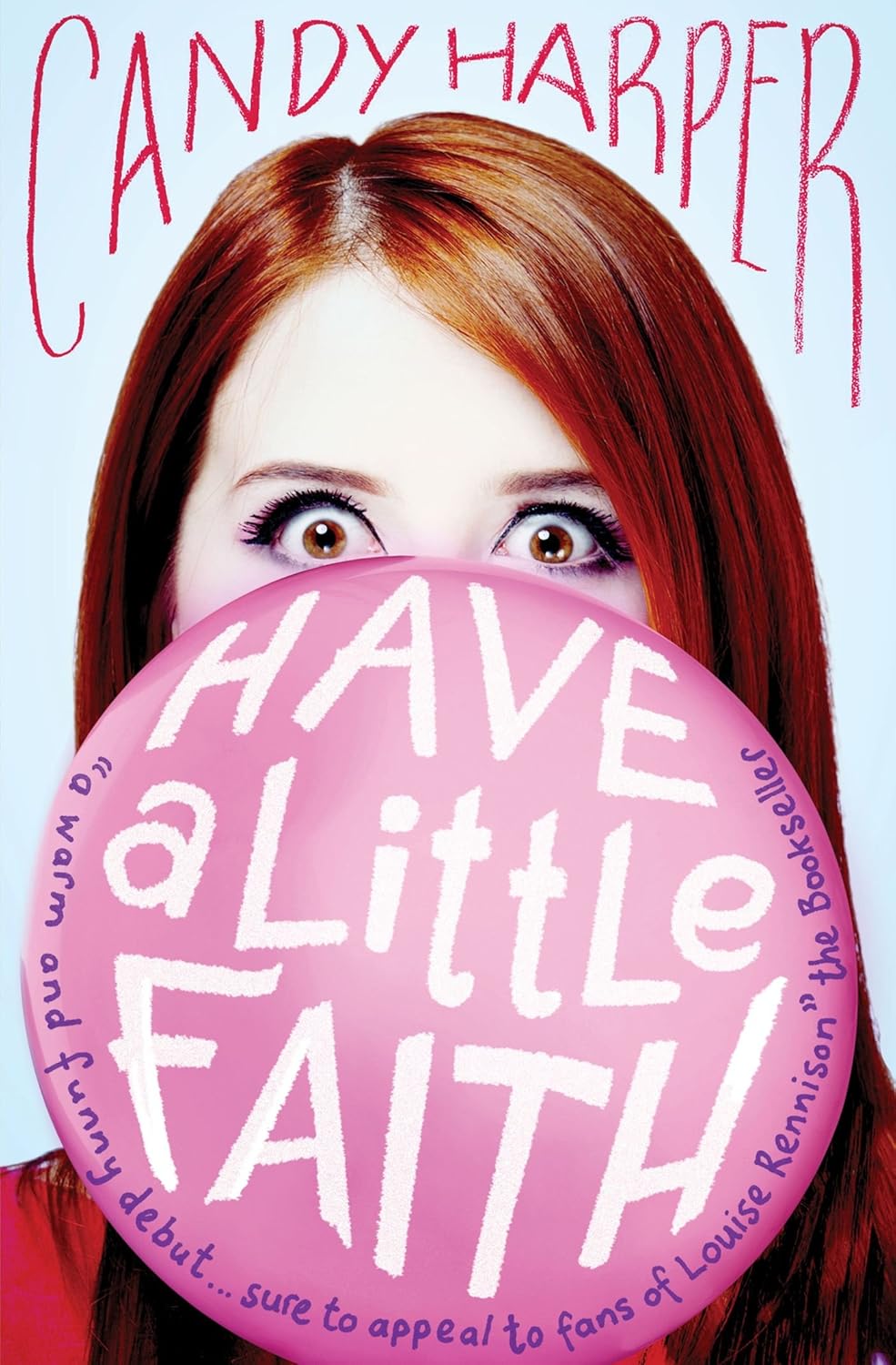
Have a Little Faith, by Candy Harper

Troublemaker year 10 Faith has been re-allocated tutor group as punishment for her many academic misdemeanors.  Cruelly separated from her best mate Megs, she's got to convince stone hearted head of year Miss Ramsbottom that she is a reformed character and model student so that they can be reunited.  However, fate just throws too many opportunities for mischief in her way and Faith just cannot resist rising to the challenge.

Being at an all girls' school lacks a certain amount of mixed-sex-mingling, so despite being a musical dunce, Faith just cannot resist joining the choir in order to meet boys from the local boys' school. Add in a crazy serial-dater granny, some year 10 girl rivalry, some friend drama and boy angst, and year 10 is going to be an interesting year.

My first problem with this book was the many, many interchangeable 15 year olds.  I think there were about 4 main girls and a few peripheral ones?  I'm really not sure.  The boys too.  What they said and did was all sort of blended together. Characterisation on the whole was pretty weak and underdeveloped as all characters fell into one of the following groups: pretty but dumb, thus appealing to boys; scatty and quirky, not so attractive to boys; sworn enemy, but appealing to boys; boy, or uninteresting adult.

Largely though, my problem was Faith, the narrator.  She was difficult to read most of the time and made this book a bit of a slog.  Perhaps the author was trying to evoke the brash swagger of a teen; "I'm incredibly witty and hilarious 100% of the time. Listen to me: hear my quips" or whether she was just an unpleasant character is unclear, but I got bored very quickly of her arrogance and her lack of redeeming qualities.  What Faith considered brilliant comedy came across to me as cruelty, meanness, idiocy and basically being that girl in school that thinks they're hilarious that everybody hates. It's pretty difficult to relate to such a horrible bully. Normally a character like Faith would learn a lesson from the way she's treated people or their behaviour, or the things that happen to themselves and their friends.  Not Faith.  She's far too good for lessons.

The book did deal with some relevant issues, such as jealousy and rivalry in female friendship groups which is very relatable.  It's a mystery why everybody is killing themselves to be Faith's BFF though. Dealing with annoying siblings, first boyfriends, the dilemmas of what to wear for what event and the delicate etiquette of texting would resound with the target audience, but it's not enough to make up for the disappointing narrator. Not a fan, I'm afraid.

Wednesday, 10 July 2013

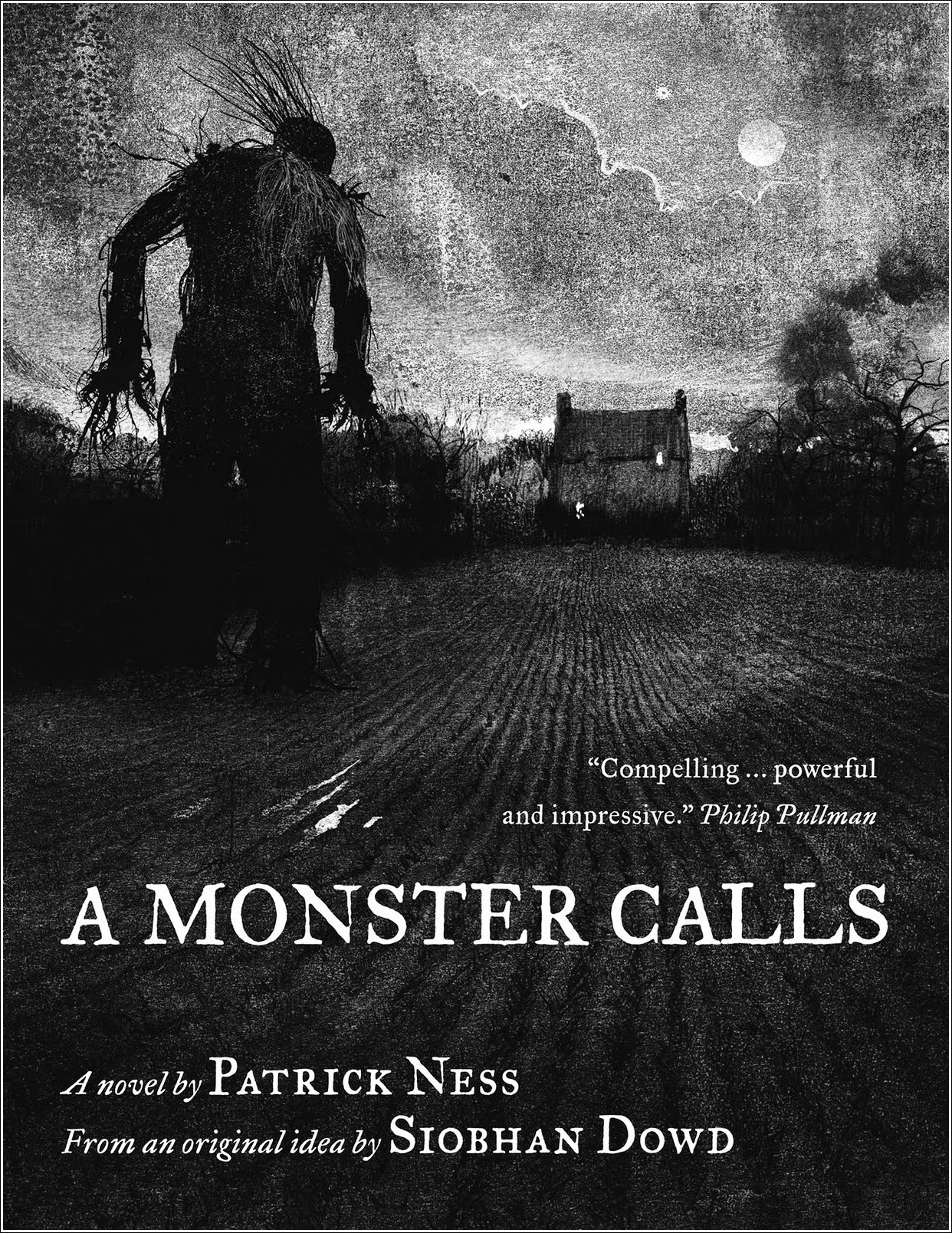
A Monster Calls, by Patrick Ness, Illustrated by Jim Kay

The deserving winner of the double award last year (the CILIP Carnegie and the Kate Greenaway) A Monster Calls is a beautifully tragic fairytale about the worst thing in the world.  It's about loss and strength and coming to terms with tragedy, being allowed to make bad decisions and dealing with life's trials in your own time and in you own way.

Conor lives in the house that he has always lived in with his mother, who is suffering from quite advanced Cancer. This is made clear quite early on. She has tried lots of different treatments but so far none have been very effective. Conor's dad lives in America with his new wife and new baby and the only other family mentioned is Conor's formidable and very un-Granny-ish Grandmother.

One night Conor is visited by a monster, but it's not the monster that he's been expecting- the one that haunts him at night in his recurring nightmare.  This monster that's appeared in the garden (who spends most of his time being an ancient Yew Tree) thinks he can help him with his stories, but Conor's not so sure.  There's not really anything that can help him with what he's going through- bullying, loneliness, his mother's horrible illness, the sympathetic looks, his dad's apparent disinterest in him...

A beautiful story that emphasises the fact that sometimes it's harder than anything else in the world to tell yourself the truth.  It's easier to bury your head in the sand and hum than it is to face up to reality.  Conor, learning this lesson at a horribly young age, needs to accept what's happening to his family before he can even start to understand and get over it- he's a bottler and the monster needs to teach him not to be.


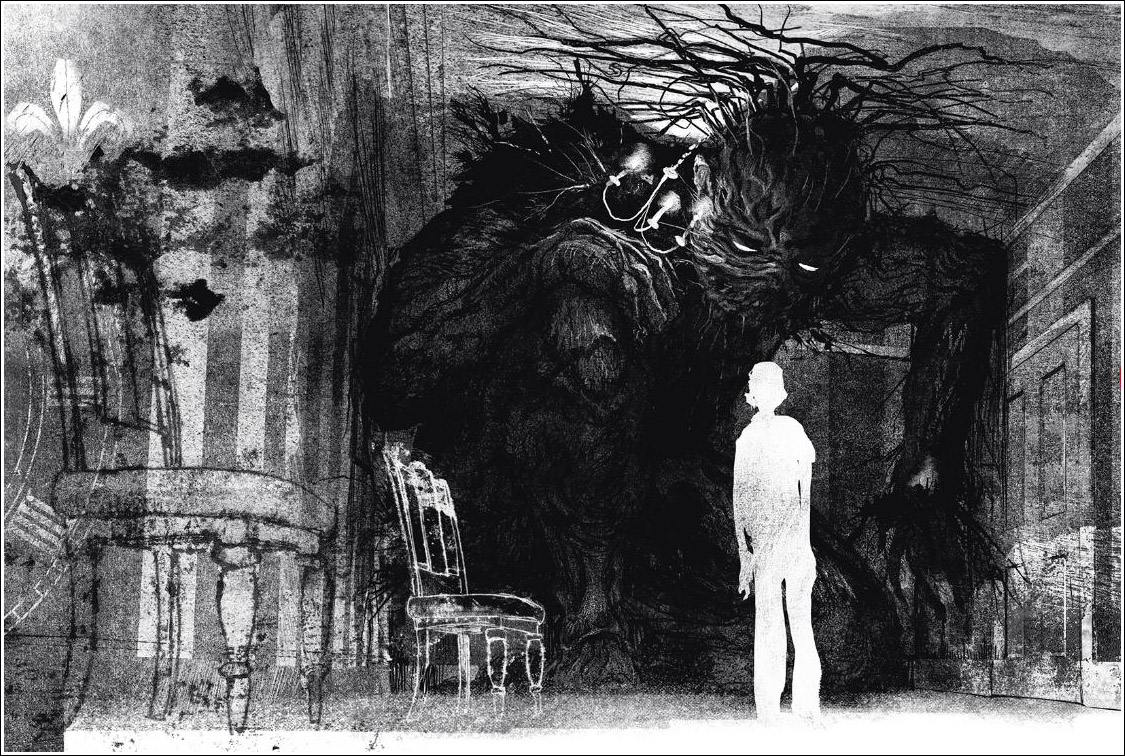
The illustrations in this novel are incredible and add a huge amount to the story- more inky shades of black and grey than anybody knew existed and  textures that add so much menace and atmosphere to the story.  They communicate so well the simultaneous vagueness and the pointless detail that people remember about rooms and locations in which they have horrible news broken to them.  The reader can understand the anger and the fear that is beginning to drown Conor through the changing tone of the artwork.  I can't even begin to imagine how much labour went into the artwork- absolutely stunning.

I think it's fairly well established what an excellent book this is- it is absolutely impossible to dislike it. It's affecting, sensitive without being sentimental and it's incredibly realistic- the ending is devastating and is absolutely brutal in its realism,.  Whether you believe that the Monster is real or is part of Conor's dazed and dreamlike existence, his message cannot be disputed- there's only so long you can lie to yourself. 

You can hear author Partick Ness talking about A Monster Calls on this Podcast from the Guardian.

Thursday, 16 May 2013

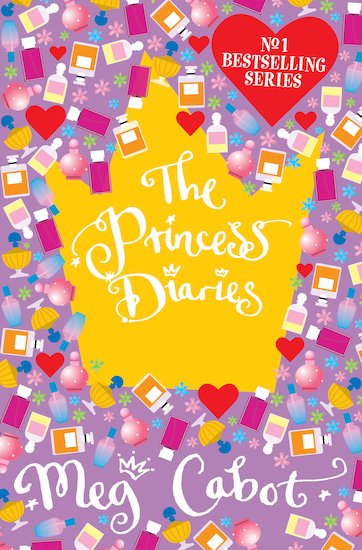
The Princess Diaries, by Meg Cabot


I felt like such a 12 year old reading this, but it was definately fun- like a nice hot bath for the brain.  I can't remember reading many novels like this when I was younger.  Maybe there weren't any...maybe I just read Famous Five forever and then moved onto Harry Potter on a loop until the age of about 17.

Princess Diaries is your classic fish out of water story.  Mia Thermopolis, flat chested sophomore giantess, is just coming to terms with her bohemian artist mother dating her Maths teacher.  Out of all the millions of men in Manhatten, Mia's mother has decided to date the guy that's failing her in Algebra.  The narrator/diarist is a typically akward 16 year old, inexplicably unpopular and according to her daughter-of-two-psychoanalysts-best-friend, struggles to self actualise.  Mia's mum is convinced she bottles up her feelings, so has encouraged her to keep a diary to let it all out.  There are bigger problems in store for Mia than her Mother's love life, her algebra problems or the fact that eye candy extrordinnaire Josh Richter might or might not have accidentally said "hey" to her at the mall once...

I don't think it's a spoiler to reveal that Mia Thermopolis is revealed (by her enigmatic, based abroad father) to be Princess Amelia Mignonette Grimaldi Thermapolis Renaldi of Genovia- a small European tax-haven and home to about 1000 inhabitants.  It happens pretty early on, plus it says so in the blurb...The story follows Princess Amelia as she tries to keep her royal identity a secret from her classmates (especially the popular girls) whilst recieving intensive princess lessons from her hilariously severe Grandmere, Dowager Princess, etiquette expert and Sidecar enthusiast.

Mia has to lean what it takes to be a head of state, how to negotiate and compromise with her Grandmere and her Dad and how to socialise your bodyguard.  She learns new things about herself and comes to realise that she might not have always been as nice as she could have been to others in her school, as well as how to handle the World's press.

Loads of fun- a quick and easy read with some genuinely hilarious writing in places.  I really liked Mia and think that there's something in her that everybody can relate to- even if it's just being unassertive, falling out with your best friend or not being particularly happy with the way you look.  I know some readers might take the "but I hate girly things" attitude, which is understandable looking at the cover, but Mia herself is hardly traditional Princess material (she lives on takeaway Chinese and wears only Doc Martins), something that she points out to her Dad on an almost daily basis.  I can see why this has proven to be such a successful series.

Monday, 22 April 2013

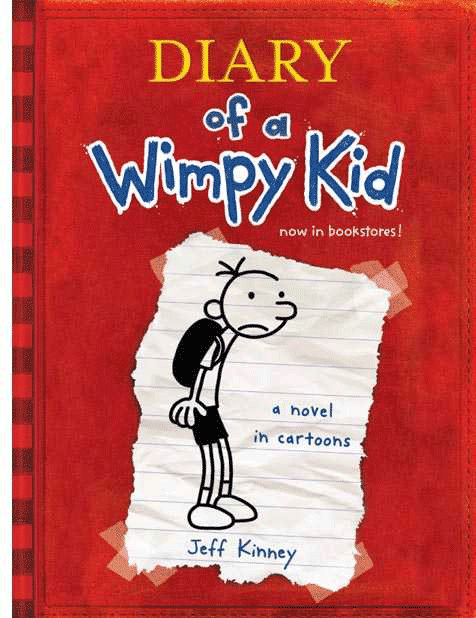
Diary of a Wimpy Kid, by Jeff Kinney

Chances are, if you have any contact with kids who read, they have read Diary of a Wimpy Kid.  Any school librarian in the English speaking world will handle this bad-boy a lot, but shelve it very rarely.  It doesn't even touch the shelf at my school.  I actually got the chance to sneakily read it during the Easter holidays to see what all the fuss is about.

Firstly, I can see why it's appealing to the 11-15 age group.  Greg, wimpy diarist extrordinnaire, is incredibly funny and perfectly captures what it's like to be a put-upon kid in the modern age.  Despite being set in America, his plight is pretty universal.  Middle child, middle grades, middling friends.  His older brother bullies him, his little brother is the apple of his parents' eyes.  Greg just wants to get through school in one piece so that he can go on to adult life and become famous.  So far we don't know what for, but Greg assures us that that's the reason that he's writing this diary, for historical posterity.

It's the averageness of Greg that makes him so universally appealing- he aimlessly drifts through school being a nobody.  He doesn't ask to be top of the class, athletically remarkable or to be popular (well, not super popular anyway, he's still top 100).  What he is is funny.  I'm willing to bet I'm at least twice the target age of this book, but it still made me laugh like a lunatic.  I went to school too.  The 'cheese touch' lurgy was something that was particularly well written and had the hallmarks of a proper school experience.  There's a lurgy, of some form or another, in every school in the world.  I'm pretty sure of that.  His reference to weekend his lay-ins also made me snort- Greg doesn't want to get up on a Saturday, it's merely the foul taste of his own breath that makes him get out of bed.

The cartoons that feature on every page are funny, accurate and tell much of the story.  They also flesh out characters in a way that is not reliant on text.  It's not a comic, it's not a graphic novel, but it's a heavily illustrated book, which partially explains why even the struggling readers can get on fine with DOAWK.  Girls and boys both love this series, so Greg's universal appeal goes beyond gender too.  It really is written for anyone who is/was/knows a kid. 

Very much recommended to the old and the young, provided you can ever get you hands on a copy.