Showing posts with label Science Fiction. Show all posts

Monday, 12 June 2017

The Fallen Children, by David Owen

The Fallen Children is an updated retelling of John Wyndham's The Midwitch Cuckoos, a book I read about 7 years ago and absolutely adored. I definitely think this leans more towards John Carpenter's enjoyably bonkers Village of the Damned than Midwich Cuckoos though, inspiration wise- only a selection of women are found to be inexplicably pregnant rather than all, and there is a great plot emphasis on the missing child- aborted in TFC, dead at birth in VotD which I do not recall even featuring in Wyndham's original (though there is a gender imbalance of 30 girls and 31 boys). It's a really successful transplantation of the story into the 21st century and focuses thematically on the idea of the mob mentality and their angry, auto-hostile judgement, the fear of the 'different' and the difficulties faced by young people in defying expectations, clawing at the slippery scraps of social mobility and the crippling lack of options to those born into poverty.

One evening, the residents and everyone in the immediate vicinity of Midwich Tower black out. It's at night, so many people miss the odd event entirely. However, in the days that follow, our narrators realise that they are all inexplicably pregnant, and that their babies are developing at a supernaturally fast rate. The four young women become the targets of hate crime and violence as they try to discover what happened that night, how come they can read each other's thoughts and feel the others' emotions and how the hell are they going to be able to look after babies. The book was really effective at creating an atmosphere of menace and hostility as it becomes more apparent that the characters are pretty much under siege by their neighbours. It showed how quickly people can turn on those they perceive to be different or dangerous.

Interestingly, The Fallen Children focuses on the lives, emotions and reactions of the young women that find themselves pregnant, something that until now nobody has explored in any great detail. Here, they are 17 (ish) year old Keisha, a former bad girl that's turned her life around, studies hard and has set her sights on university as a route out of the poverty of the Midwich Towerblock. She is furious and disgusted at the violation of her body and mortified that after all her efforts to make something of herself, she is just another estate girl with a baby. Her former friend Siobhan, directionless and damaged also finds herself in a similar situation. She is furious about the hijacking of her body and is most vocal about doing something about it (note: I felt I was supposed to be disgusted by Siobhan being overweight as it was referenced frequently and commented on by more than one character- that just didn't really feel right to me...I think that made me like her more because people were being so horrible to her). Third victim is timid 14yo Maida, a Muslim girl trapped into a future she doesn't want who sees this baby as an opportunity to change her course, and a nurse in her 20s, Olivia, who had previously known herself to be barren and so is overjoyed at the idea of being a mother by any means necessary. I don't recall any sections from Olivia's POV...The last narrator is Morris, ex-boyfriend of Keisha, in trouble with the local thugs, under financial pressure from his family and debtors and, incidentally, not pregnant.

Written in alternating perspectives, I honestly quite struggled to distinguish the voices of the narrators as the POV switched between them- perhaps it's because dialogue continued through some conversations despite the POV switch? I've never really had this problem before with multiple narrators. It would've flowed better for me if the characters' Voices were a little more distinct, if they exhibited more of their personality through the way they spoke and thought- they were just a little bit too similar to keep them all separate and distinct in my head.

I thoroughly enjoyed the novel and felt it kept up a good pace, kept that oppressive atmosphere of fear and hostility, kept that ticking tome bomb of the imminent baby and the race to find out the truth about the Night Out...however, I did feel that after the babies arrived, it lost its momentum somewhat and became a bit more confused with its messages. I really did not like the attitudes of Keisha and Maida regarding Siobhan's successful attempt to end her pregnancy. Like, even if it's a mysterious alien baby that you've no idea where it came from, hearing characters direct hatred, judgement and pain at a person for terminating a pregnancy (ever a supernatural one) leaves a bit of a nasty taste. I get that the super-powerful-babies were physically preventing their carriers from directly inflicting harm on them (that was really well done throughout the narrative- it really feels like the girls are absolutely at the mercy of the fetus inside them) like when Siobhan tried and fails to step off the roof, and when the fetus erase the word "abortion" from their mothers' minds- that read like an unnatural manual override from a parasite within...but to hear some of the post baby bile directed at Siobhan by her former friends just didn't sit right and just didn't feel like it was part of the same book. Like, the baby is out of you now, act like a human. Once the babies are born, we drop Siobhan as a narrator and pick up Maida instead, who suddenly comes across as Children Evangelical and is all for unleashing them on the world.

I really liked how the latter part of the book the shifts the focus onto the idea of belonging, it rescues the third act. Zero, the sole male Child, feels adrift and angry because his twin did not survive- there's an interesting question about nature and nurture lurking under that storyline that asks to what extent we are in control of our own behaviour and destiny. Similarly excluded and lost, Maida feels like she has created something extraordinary but cannot truly be a part of it- Marvel and Helena, the Female Children, share a bond that she cannot ever hope to experience.  During these later section of the book, the characters are beginning to make sense of the similarities and joining the dots between the Midwich occurrence and a similar one in Cornwall, a nice little nod to the (possibly Cornish) fictional village of the source story. There is a lot of delicious mystery left unsolved because sometimes things cannot be explained.

So all in all, it's mostly really good and is definitely an interesting and engaging modernisation- I would definitely recommend The Fallen Children as a fast paced kind-of-mystery about teens placed in impossible situations and having to battle against their whole neighbourhood just to live their lives- I loved the setting and the updating of classic sci-fi, thought the themes of prejudice, difference and that lack of autonomy, either socially or bodily were explored well. I liked the evolution of the story into a story of belonging and being in control of your own direction, but I felt that it fell down by its characters a little. I just couldn't fathom their behaviour- towards Siobhan after the births, Maida's super-villain story arc, how Morris just seemed constantly in denial and hopelessly useless. Maybe that's just totally acceptable teen logic, I dunno.

Thursday, 4 May 2017

Chasing the Stars, by Malorie Blackman

Oh dear. I full blown love you, Malorie Blackman, but this was not good. I had heard the premise of this book at YALC last year- a super modern, feisty femaled, gender swapped Othello in space. Sounds good, right? Then it made it to the YA Book Prize shortlist and I was all WOOO! Sci-Fi on prize lists! Shut the air lock door! But then I read it and was so disappointed.

So Vee and Aidan are the sole crew of the Earth ship Aidan. Their parents and the rest of the crew were killed by a sudden, mysterious virus and the twins are on their Earthbound journey when Vee recklessly launches a rescue mission to a previously uninhabited planet that is currently under attack from Mazons, a bitter xenophobic alien race. After a daring, risky rescue, 22 survivors are snatched aboard. Tensions are high as Vee and Aidan realise they have just filled their ship with strangers capable of who knows what, and they have to adapt to being around people again after 3 years of solitude. Vee gets to know some of the refugees, sparking a connection with broody hunk Nathan quite early on. All goes well for a time, but the new crew members, just as they are adjusting to the prospect of freedom and sanctuary, begin to be picked off in a series of very puzzling 'accidents'.

The story is told in alternating chapters from the perspectives of Vee and Nathan. Sometimes this really, really works (see: Trouble, by Non Pratt; We Come Apart, by Sarah Crossan and Brian Conaghan) but in this instance I struggled very hard to distinguish the voices. Despite the separate fonts, I still had to constantly check who was speaking because the voices were not particularly strong. Sometimes I had the wrong character entirely and then got thrown some anomalous context that made me realise I'd gone wrong...it didn't make for a very fluid reading experience. I found both characters to be incredibly annoying, self absorbed, untrustworthy and untrusting to the point of mania and just so consistently clueless. They would always say one thing, then do another. "Let's keep our relationship secret" then they flirt outrageously and drop saucy comments and double entendres in front of the other crew, confident they are above notice. Vee constantly tells herself that she trusts Nate, then acts like he's the shiftiest guy ever. Or she's the most suspicious person ever. There's occasional hiding things from each other with good intentions, misinterpretation and then overblown falling out about it. The guessing. The second guessing. Nathan seemed emotionally manipulative, flip-flopping between simpering suck up and bitter, petulant child. He might also be a sex addict. Vee completely let him steal her agency and independence, which it is possible to retain, no matter how head over heels in love one claims to be.

I really liked the plot's parallels to the Underground Railroad and the introduction of info about the work of the Resistance towards the end. Early on, the book reveals a very divided society, made up of 'Elites' and 'drones'. The latter are an abused, subjugated underclass, consigned to backbreaking labour in jobs too deadly and places too remote to send regular people. The slavery parallels are obvious, but it's also a comment on penal systems, crime and punishment and the oppression of one group by a more powerful, more autonomous one. I liked this aspect of the novel a lot, and would like to have found out more about the Resistance, which emerges properly within the final pages. It is hinted at earlier, but only ever mused upon in one character's thoughts.

I'd worked out part of the "Twist" quite early- I'm not sure if it's because I watched Red Dwarf  as a kid or because it's a bit obvious that something isn't right- even if my guess was *slightly* off...I won't say. As for the murder mystery element- it felt a bit Sunshine but with a less crazy motive. I couldn't help but feel that the identification and capture of the murderer took a back seat to Vee and Nathan's steamy action and all their juvenile squabbling and dramatic trust issues. In between the two of them taking turns to blow hot and cold on each other, I kept forgetting there was a rampant murderer on board because it's the least tense thing ever. It's a bit predictable, in that it's the least likely character, but is one of the few that has been adequately fleshed out.

The book features one of the most fatal cases of insta-love I've ever read. Yes- I get that sometimes people feel strong emotional connections very quickly after meeting a person. I guess it's rare, but it's not impossible. But this is two infatuated teenagers, who seem to think that going overboard on the insta-love is OK, as long as you constantly comment about how ridiculous and dangerous and out of character is is, how you never thought it would happen, how silly you feel to be a slave to your own urges in this way. It's a bit embarrassing. The kissing scenes go over very, very well trodden ground, all 'darting tongue', 'wandering hands' and earlobe nibbling...the sex scenes are a bit too explicit for younger readers, but too clichéd for older ones- so I'm not sure who this is really aimed at. At least in Othello, the secret marriage takes place before the play begins so we're spared the Love is An Open Door part of the relationship.

Whilst I definitely don't think this book is for me, and I don't think it was crafted particularly well, it's hard to say if the most frustrating elements (the constant trust issues, the blowing hot and cold, the willful ignorance, the misguided self-sacrifice, the 'let's just look longingly at each other and not say our actual feelings' are the author's fault. Possibly it's Shakespeare's fault. I do think this falls well below Malorie's usual standards. I think it had a lot of potential in the setting and the concept, but the whole thing was lacking the polish and the emotional impact of Malorie's other works. Which is such a shame, because she is an enormous, glorious talent and inspiration and arguably one of the founding mothers of the UKYA landscape. Chasing the Stars was frustrating for all the wrong reasons. Rather than being enraged by injustice and prejudice, I found that I was mostly frustrated at the boring space-talk, the well-trodden romantic trails, the uninspiring murder mystery and the irritating characters.

I'm sorry. I will still read all of your future books and still love all of your other books.

Thursday, 20 October 2016

The Martian, by Andy Weir


It's highly likely that you have read this book and/or seen the film (Award winning Comedy film, The Martian) but I'm going to write it up anyway.

Mark Watney is an astronaut and a member of the crew of the Ares 3, a manned mission to Mars in a future near enough to be indistinguishable from the present, but distant enough for Mars missions to be kind of old hat. This Mars mission *is* Historic, but not because it's pioneering. About a week into the mission while out in a storm that's worsening by the hour, Commander Lewis makes the decision to abort. The wind is high and fast enough to compromise the return craft, so it's back to the MAV for everyone and an early 8 month return to Earth. In an intense, confusing, deadly instant, Mark Watney is hit by flying debris and flung into the fug- visibility is close to zero and his suit is recording no signs of life- Mark is dead- the first person to die on Mars.

This is where the book starts; with a battered, patched up and barely functional Mark Watney surveying his options. He's injured. Has limited food supplies. He's alone on Mars. He's pretty much dead.

The rest of the novel comprises of first person logs by Mark as day by day (or Sol by Sol) he battles against the odds and the never ending hostility of Mars to survive. Luckily as a botanist, engineer and all-round McGyer style scientist, he manages to overcome the most obstacles: growing food, creating water, making contact with Earth in miraculous feats of engineering and pluck. Reading this, I couldn't help but Imagine how I would handle the same circumstances- probably just de-suit and walk out of the airlock to certain, swift death. So I had to very much admire Mark's insane resourcefulness, determination and refusal to die, despite the explosions, depressurisation, flippings, tumblings and starvings that Mars threw at him.

This is one of the few occasions ever where I'm glad to have seen the film before reading the book as so much of the science went over my head. It was also handy to have pre-imagined faces to attach to all the names at NASA- characters that have some pretty amazing dialogue but as characters are kind of interchangeable. Having Jeff Daniels, Sean Bean and Chiwetel Ejiofor's famous faces pre-loaded into my head really helped.

Though the NASA guys and the other astronauts are important supporting characters, we find out very little about them- it's very much the Mark Watney show. There's no big emotional reunion with Earth-bound family, no weepy fiancee on the news, desperately waiting for an update on their space stranded betrothed- which I found really refreshing. It wasn't a particularly emotional story, not a vast personal journey- just a really resourceful guy with a sense of humour as dry as his planet, trying not to die or drive himself insane with loneliness, bad 70s TV and disco music and barely managing.

It's pacy and funny and full of action- even if there's never really any suspense (even if you haven't seen the film, it's pretty obvious that Mark isn't going to die- even if he wanted to he probably can't even). It's basically Robinson Crusoe in Space, but funnier. And with more science. I'm pretty sure most of the world have read this- but if you haven't, it's definitely worth giving it a go. It's one of the most universally appealing stories I've read or seen in ages. The film is a really stellar adaptation of the source material, and the book just provides more of the same. More Mark, More Mars, more laughs.

Wednesday, 23 March 2016

The Long Way To A Small Angry Planet, by Becky Chambers

I'm going to start off by saying how surprised, refreshed and downright overjoyed to see legit, air-lock requiring, deep-space wandering science fiction on the longlist for a major literary prize. Reason number 49 to love the Bailey's Prize. *heart eyes*

Anyway. The Long Way to A Small Angry Planet starts with the Mars-born-and-Raised clerk Rosemary embarking upon a new chapter in her life. It's evident that she's escaping something, with an illegally doctored ID file and a head full of secrets, she's taken a job on the Wayfarer, a long-haul tunnelling ship. It's what it sounds like- a ship that drives manually from A to B and punches a wormhole through space. Galactic road builders if you like.

The characters in this novel are its true strength. The multi species crew on board the Wayfarer is an eclectic bag of sapients, a glorious mix of oddballs rattling around in space. The motley crew is strange, flawed, and extremely likeable (with one obvious exception who even so proves his worth by the end). These are all complex, developed characters belonging to various species with long and complicated histories. The author did a really good job of capturing the communal spirit of the ship- to live and work at close quarters with a small bunch of people has its pros and cons and it worked wonderfully. The dynamics of the ship's crew was balanced and despite it all quite realistic. I especially loved Sissix the navigator, member of the lizard-esque Aandrisk race.

The majority of the plot is the Wayfarer's long haul journey to a big, life changing job that could provide the capital for upgrades and a better class of job, jobs not usually done by lowly humans. The contract involves punching a tunnel from Hedra Ka, home to a volatile and inherently violent species that have recently and controversially joined the GC, linking them to central space. As the mission progresses, certain secrets and truths about the crew come to light.

I loved how diverse the universe of this book is. To begin with, we have the multi-species crew aboard the Wayfarer. There's a lot of being observant and sensitive to other cultures, habits and opinions that seem pretty alien to members of other species. It's a harmonious crew though, with lots of mutual love and understanding, very little persecution and effort is made to bridge those cultural gaps among friends. I liked the inclusion of some wider political context too- the reader learns quite a lot about the GC, the Galactic Commons, how its organised, who joined when, the unofficial hierarchy of species. It's refreshing to see a narrative that doesn't hold the human race up on a pedestal as the conquerors of space. In this novel, humans, an immature, squishy species that stupidly populated their home planet to death are begrudgingly admitted as to the GC by its founding species (the Aandrisk, Aeluon and the one with the tentacles) after first being taken on as refugees, fished out of space on the life-boat ships. The Exodans, they became known as. Either way, they're a minor species in a Universe and that was quite refreshing.

My one criticism of the book would be a slight underdevelopment in the character of Rosemary. She serves as the reader's introduction to this new world, describing the patchwork hotch-potch of the ship, the appearances of the species, the sights and smells of these new planets...Yes, she is more familiar with the future than the reader, but being born on privileged Mars, she has never been to multicultural Central Space. She has studied languages and cultures but never been exposed to them directly. Though Rosemary is the rookie, sharing all these first encounters with the reader, her character remains quite flat in comparison with the others. There is such vibrancy in the Grungy human Kizzy, the reptilian sass of Sissix, the homely compassion of 6 legged Dr Chef. Even Captain Ashby, the liberal, ambitious and incredibly empathetic captain seems more three dimensional than Rosemary. She is our eyes, but has much less to hold on to than her shipmates. I hope she can be fleshed out in the upcoming (and much anticipated) sequel.

Some elements such as the claustrophobic confinement and parts where characters attempt to describe physics (I mean ??) reminded me a little of Interstellar. The Universe itself is quite reminiscent in a good way of Futurama- all these different races and species going about their daily lives, space travel being the norm, a multi planetary, bureaucratic universe of commerce and rogue technology. The technology angle was really interesting also- there's a species-wide ethical debate about what does and does not cross the technological line of danger and decency and all kinds of interesting bio-metric questions there...

In conclusion, I really, really enjoyed reading this. I haven't enjoyed a Space Sci-Fi this much since I read Stanislaw Lem's Solaris. Obviously they are vastly different books, but both hugely enjoyable. TLWTASAP is funny, humane and heart-warming book about prejudice, friendship and the world beyond our sky. The book manages at once to be an action packed space adventure and an emotional story of identity and belonging. It also raises questions about colonial histories, racial discrimination and the pointlessness of racism, the politics of unions in which there are several clashing cultures and the value of the individual. Despite its population of alien races, it's an incredibly human book.

Brilliant. I hope it makes the Shortlist. I hope it wins. I hope everybody reads it.

Monday, 16 November 2015

The Mist, by Stephen King

Following a particularly violent summer storm the small lakeside community of Bridgton, Maine is bracing itself for more unusual weather. Commercial artist David Drayton, one of the town's longest standing residents decides to head into town to stock up on emergency supplies for what he assumes is an approaching weather front. He can see the mist rolling in from the other side of the lake and wants to be prepared. He leaves his wife at home picking her way through the wrecked plot and the damaged house, taking his son Billy and his cantankerous neighbour Brent Norton with him as a gesture of neighbourliness after a previous property dispute.

To begin with it's emergency protocol as usual. Canned goods and orderly queues, bottled water and patience. While David and Billy are in the supermarket queue the mist rolls in, but it seems unnaturally thick, otherworldly in its slow pace, its swallowing up of sounds and straight lines, and it reduces visibility to 0%. When a town resident comes bursting into the market, bleeding and screaming about monsters in the mist it doesn't take long for order to descend into chaos. David, stranded with a few tourists and out-of-towners and a handful of familiar faces, one or two army personnel and the supermarket staff suddenly has a situation on his hands and a supermarket full of scared and desperate people.

While the idea of gigantic, flesh eating colossuses from other dimensions seems far-fetched, it’s really not the point of the story, just a scenario that lets the story unfold. The characters themselves struggle to believe what’s happening to them, finding it ridiculous, impossible, even insulting that anybody could possibly suggest that this is anything other than bad weather. The main theme of the story is human behaviour, how fear, desperation and isolation can bring out unexpected character traits and turn previously rational, ordinary people into bloodthirsty monsters. Narrator David is astonished to see Ollie Weeks, the unassuming and thoroughly ordinary market assistant-manager revel himself to have a level head, a good aim and a hidden heroic streak. Mrs Carmody on the other hand, the town kook becomes a hell-fire and brimstone preacher, predicting death and carnage and the end of days. Although that's a less surprising transformation. What’s really interesting is how people change in a pressurised, enclosed environment, faced with certain death or each other. It's fascinating how quickly the pack mentality emerges and how easily people slip into us Vs them discourse.

I really enjoyed The Mist and am definitely going to read some of the other stories in Skeleton Key, though this is by far the longest in the collection. I’m always amazed at how well Stephen King can craft his narrators. They’re textbook every-men, but we get into their heads immediately with only the sparsest but most specific details. David Drayton reminded me a bit of Clayton Riddel from Cell; father and husband (arguably not a perfect example of either but doing his best) thrust into a position of leadership by supernatural forces beyond his control. He’s a very ordinary man trying to survive even though he has no idea what’s going on and people seem to want answers from him of all people.

It’s hard to talk about the book without at least briefly mentioning the film. Unusually, I saw the film first which I really enjoyed, and was retrospectively impressed all over again by how closely it follows the book. Aside from a few small details it’s pretty much page for page, scene for scene right up until the end, which famously differs greatly. With the film the viewer gets two sadists for the price of one with Frank Darabont crushing your tiny ray of hope and then kicking you in the teeth for good measure. Both endings work really well, it's hard to choose one over the other. What are identical stories branch off into two totally different endings that induce completely different feelings in the audience.

I can't stop being impressed by Stephen King and beat myself up every time for avoiding him for so long. The Mist, for such a short book, is really atmospheric, incredibly tense and filled with memorable characters. It’s a survival story, and just like any other flavour of apocalypse, it’s about the human instinct for self-preservation and the unfortunate mental competition between survival and insanity that seems to determine whether or not a person can survive the end of the world. I would very much recommend this as an excellent way in for new SK readers- though brief it has all of his classic elements.

Monday, 1 June 2015

Magonia, by Maria Dahvana Headley

To begin with, this book seems to tread fairly familiar territory. The main narrator, Aza Ray, has defied all medical odds by surviving to be almost 16. A professional ill-person, she's been in and out of hospital constantly all of her life. Living with a rare respiratory problem, so rare that the medical world has named it after her, Aza is constantly breathless, vaguely blue tinted and starts every day knowing she could expire at any moment. She struggles to speak, to breathe, to walk. It doesn't appear to bother her much morale or personality wise- she's just getting on with being a teenager and playing the 'Dying girl in class' role as dramatically as she can manage. Even from the first page, the reader has to admire her attitude.

Firstly, I loved the character and the voice of Aza. She's witheringly sarcastic, sharp as anything and impressively clever. She's taking dying in her stride. Her best (only?) friend Jason is appealingly weird too- spouting facts and snippets of trivia, inventing things, creating ciphers...the two of them are completely on the same wavelength and it's obvious from the beginning that they're meant for each other, even if one is a ticking time bomb of fatal mystery lung ailment.

Aza freaks out one day during class when she claims to have seen floating ships in the sky, calling her name. When she's calm, she writes it off as hallucinations, new meds- but isn't convinced by her own story. She's not the only one to have seen ships in the sky and Jason isn't the first to make the connection between these sightings and abnormal weather patterns. This was one of my favourite aspects of the book- the mythology, weather and magic mix. Jason really delves into the mythology of sky-objects and freak weather (raining frogs etc) and does his research really thoroughly. He falls down a Wikipedia manhole well and truly, as each discovery leads to a new question or a new answer- all adding up to something more than a hallucination.

The novel shifts its horizons suddenly and shockingly when Aza dies on her way to the hospital after an episode- surrounded by her family and a distraught Jason, she slips out of the world and into another. The book then develops into something that's a fantasy whirlwind of mystical bird-people, sky pirates and hidden worlds. The ship communities, with their unyielding laws, intimidating, corrupt captains and ruthless lifestyles are reminiscent of Philip Reeve's Predator Cities, with the Daemons of His Dark Materials (re-imagined as canwrs, internalised bird harmonisers and companions) and with the whole Gaiman-ish question of "What if other worlds were hiding from us in plain sight, and we're just not looking in the right places?". It's Neil Gaiman-esque fantasy for The Fault in Our Stars generation really. Though some elements feel familiar, they add up to a very original concept and a really believable world that has its own struggles and politics. There's something quite 'Return to Oz' about it. The reader gets the impression that Aza has been called home at kind of a bad time. I also really liked that the Magonians' use singing as a sort of life-force. I don't really get it, being a certified non-musical-human, but it's a new one. Like a musical Chi.

I really, really liked the characters in this novel. They all had their little quirks and personalities, and even if they didn't feature for a huge chunks of time in the narrative, it felt like they continued existing away from the action. They were real, and completely tied up in the story. I was moved by Aza's relationship with her family too- she knew her illness took its toll on them but she always tried to stay strong for them. The book conjured a real life family, with it own complications- the idea that mothers can be partially absent through work, but still fiercely loved. That sisters are your best friend and source of most of your earthly frustration, and that Aza's father is an absolute hero to her. So many YA books have their protagonists risking their lives for their significant other- it's nice here that the author remembers that family is worth fighting for too and she's determined to get back to them. Aza's family were so supportive and unflappable- the scenes of them, and Jason, at her funeral were properly heartbreaking.

I loved the book's eco message about climate change and the destructive, pollutant-riddled lifestyles that we've pursued on Earth. It reminds us that there are bound to be consequences of our industry and appliances. There is a bit of a tendency in much Sci-Fi to set up a non human species in opposition to humans based on their unsustainable habits or generally destructive nature, but you can't deny that we, as a species, have a bit of a problem with that. However, the Magorians' use of slaves can hardly go without disapproval. No society has it totally worked out, obviously.

I hope it's the beginning of a series. This novel was a very personal journey of self-discovery and identity for Aza- she got a lot of her questions about herself answered, but now she needs to find out which world she really belongs in and what her presence there means. Whichever world she's meant for- what's her role? Why that world and not the other? I'm very much looking forward to an all out war between the Magonians and the Drowners, which, even now, feels almost inevitable.

Monday, 16 March 2015

Grasshopper Jungle, by Andrew Smith


Set in the small, crumbling town of Ealing, Iowa, Grasshopper Jungle tells the story of Robby Brees and narrator Austin Szerba as they entertain the possibility of the end of the world. Austin is confused- he confesses himself to be in love with his girlfriend Shann Collins, but also in love with his handsome and charismatic best friend Robby. Naturally he is riddled with confusion, an almost preternatural 'horniness' and has no idea how to deal with his contradictory desires. He records his own personal history in a series of journals, complete with doodles and mantras.

The novel starts with Robby and Austin skating and smoking on an abandoned strip of tarmac behind the dilapidated mall. Beaten up by a gang of bullies from the other school for being "queer", they find themselves bleeding, shoeless and trouserless as their belongings are tossed up onto the roof of the second hand shop. Returning that night to retrieve them, Robby and Austin take the opportunity to explore the store and discover a whole host of weird stuff hidden away by Johnny McKeon, heir to his dead brother's odds and ends. There's a tube of 6ft giant cockroaches, a severed head floating in fluid, a two-headed boy in a jar and a tank of a weirdly gelatinous, glowing mold labelled Contained MI Plague Strain 412E. The now defunct McKeon industries obviously made some pretty dodgy stuff before the eldest McKeon brother died in a plane crash.

During Robby and Austin's exploration, their assailants break in looking for booze and steal the contained plague strain- scrambling back onto the roof and away into the night, they watch it break on the pavement outside. It mixes with the blood spilled by Robby earlier in the day. Austin doesn't recognise this event for what it is- the beginning of the end of the world and the birth of a new dominant species on Earth. The rest of the book sees the two protagonists trying to make sense of what they've seen, including a 6ft cockroach burst out of the body of a local vagrant. More confused than ever, they do some digging on McKeon industries and dig in for the end.

I absolutely loved this book- it's tense and shocking and even though the Giant Insect premise seems far fetched, it becomes believable quickly. The genetic experimentation of the 1970s seems plausible enough when the pieces start to come together and the characters start to realise what they're up against. As we learn more about the plague and the increasingly mad scientist, we learn more about Austin's Polish background. From the beginning he slips in pieces of his family history, his great-grandfather and grandfather's traumatic passage to America...but as he and Robby learn more about the history of the town and of the scientific research that went on there, Austin sees more and more connections to his family that confirm what he's always thought. The whole of history is converging on him.

Austin is an engaging narrator- his confusion, anger and desperation come across easily, but so does his undeniable and intense love for his two best friends. He might not always think things through, but he's kind of a prisoner of his own inner conflict. I loved his musings about the nature of history, how historians have the ability to shape and alter it and how the human race seems doomed to repeat the same dumb mistakes forever. There's an appealing nihilistic streak to him, like he'll try his best to save the world, but if it doesn't work he can cope with it. I loved the bond between the two main characters too- Austen loves Robby, Robby is thoroughly in love with Austen...it was really tender and surprisingly un-awkward, considering how conflicted Austen is. I got the impression that whatever he would have decided sexuality wise (had he had enough of a world left in which to decide) Robby would've been happy for him. 

This book had me actually snorting with laughter in several places- it's gross and bizarre but also ridiculously gripping. It's not really suitable for younger readers so I'd be surprised to see it make the Shortlist, but it was thoroughly enjoyable and definitely memorable. I would love to see a sequel where we get to see what life is like for the survivors living underground in the bunkers...

Thursday, 26 February 2015

The 100, by Kass Morgan

Following a Nuclear disaster (known afterwards as the Cataclysm) the remnants of the human race escaped the uninhabitable Earth for a new life in the stars. 90(ish) years later, a group of 100 juvenile criminals are being sent back to their deserted planet to explore and to determine whether or not it is now safe for re-settlement. Kind of like Wall-E, but with shady teens instead of adorable robots.

The inhabitants of the crumbling space colony live miserable lives governed by The Council- the judges, juries and executioners. They are divided into three sub crafts that are joined by bridges; Phoneix houses the social elite (scientists, doctors, politicians), Arcadia is the sort of middle class and Walden houses the families of the lowest social order. The population is strictly controlled as food, water, materials and oxygen are in low supply. The Council have taken to issuing incredibly harsh punishments on anybody they deem to have threatened to social order or the survival of the human race. Usually it's death. Life on the decaying space-city is becoming more and more unbearable and brutal.

The narrative follows several dispensable young convicts destined for Earth, whether they want to go or not. Clarke is a trainee doctor condemned for Treason- she's angry and she has secrets. Wells is the Councillor's son, who deliberately jeopardised the colony in order to ensure a one-way Earth trip. He feels guilty for landing Clarke, the girl he loves, in prison and has vowed to protect her. Glass escapes the Earth shuttle at the last minute, making a break for her boyfriend Luke- love's star crossed young dream. The last protagonist is Bellamy, a muscled hot-head who forces his way onto the mission to protect his little sister, Octavia.

The plot jumps back and forth, revealing the secrets of each character as they explain why they were confined and the circumstances of their arrest. And they do explain it. It's not slowly and naturally discovered over time through a well crafted structure- it's pure exposition. Massive chunks of flashback in each character's story- Here be Secrets. The narrative  moves around, showing the perspective of the four protagonists, but it's still told in the third person. I found that the tone and the style of the writing never really changed to suit the subject, so it was hard to tell at the beginning of each chapter who we were following. The third person style meant that there was no real character coming out of these sections as the reader never gets a proper insight into the characters' heads. We don;t get to hear the story told in their voices and that kind of bugged me- having to constantly check who I was following all the time.

I really, really like the concept of this novel. So the re-settlement of an abandoned Earth isn't a new idea, but sending out a bunch of condemned teens, alone and frightened, as the first scout group seemed to have loads of potential. I was anticipating a tense survival scenario full of drama, cavernous ruins of well-known landmarks, division and friction and themes about the nature of power and the responsibilities of leadership. The very elements that make Charlie Higson's The Enemy series so ridiculously compelling. Once the 100 get to Earth, there's a faintly Lord of the Flies-esque battle for power with some of the more Alpha lads, Clarke whizzes round patching people up and Bellamy struts around being muscly and bad tempered. Where the plot should have really picked up the pace- it just sort of fizzled out and became a flaccid love triangle dilemma for Medic Clarke. They marvel at the weather and the naff musical hyperbole reaches a deafening crechendo. See what I did there.

It is the beginning of a series, so the ending is left open. Well. To be honest there isn't an ending. The first book in most series' is self contained, but not this one. It's not the first of a trilogy, it's the first third of a story. I don't think I'll be bothering with the rest.

Wednesday, 11 February 2015

Rocket Girl, by Brandon Montclare and Amy Reeder

I think the story of this comic is that a teen NYPD cop from 2014, Dayoung Johansson needs to go back in time to the 1986 to sabotage/prevent a scientific breakthrough at Quintum Mechanics. If she's successful, her technologically advanced future world will cease to exist because the tech that the world is based upon will never have been invented. It should never have been invented. 2014 shouldn't look like it does. She doesn't seem massively fazed by her task of destroying everything she's ever known in life, but maybe that will come later.

A bit of a fish out of water, Dayoung needs to do some serious damage to Quintum Mechanics' R&D and avoid getting arrested by the 1986 police. There might even be time for a spot of damsel-in-distress rescuing and some superheroics. I loved the end couple of pages where Dayoung gets her 1980s outfit on and really digs in to life in the virtual stone age.

The style of the book is incredibly kinetic and the artists have created the movements of Rocket Girl's jetpack beautifully, the lights of New York (both overground, underground, present and future) whizzing by in a blur- but I found the pace and the movement kind of made the story hard to follow. In places the panels kind of jump around all over the place, all different shapes, sizes and orders and I had to go back in several places and re-read parts.

I found myself too noticing more and more the amount of open mouths in the artwork- and the more I noticed, the more I looked for, and the more I found, the more it irritated me. Totally irrationally, of course. Other than that, the artwork is gorgeous- moody blues and purples and I loved the contrast between 1986 and 2014 New York. Though 27 years have dramatically changed the appearance of the city, all its technology doesn't seem to have gone far to solving its social problems.

If I'm honest I don't think the story or the concept really grabbed me- I get that it's a vol 1, so things are only just getting started, but I'm not sure if I'd go looking for vol 2. I didn't really understand Dayoung as a character, so I struggled to warm to her really. A beautiful looking book, but I can't sat it's one of my favourites.

Wednesday, 22 October 2014

The Sacrifice, by Charlie Higson

The Sacrifice, Charlie Higson, The EnemyThe Sacrifice is the fourth book in The Enemy series and we have a pretty established cast of characters by now. This breaks the pattern of the preceding books in the series in that it doesn’t introduce a new cast, instead the book begins to further develop those we have already met. This is where Higson has woven his web, now he’s beginning to pull the strands together. London, the World for what matters, is becoming smaller as contact is established between the groups. Community is reborn in a fashion. This book sees a watershed in the narrative where the focal point of the series ceases to be coming to terms and coping with the new world, instead shifting to making sense of it and the pursuit of answers.
So,

This book focuses primarily on two related stories and on one apparently separate one. The Sacrifice continues the chronology, following immediately after the events of The Fear. It begins to look at the development and evolution of the adults and the disease that has changed them beyond recognition and turned the world upside down.

After being taken in at the Tower of London, the Kid and Small Sam are keen to get back on the road to the Natural History Museum in search of Ella, Sam’s sister from whom he has become separated. Nice guy Ed, star of the second book isn't keen to let them go as it would mean going through the No Go Zone and that’s just suicide. However, they slip away after encouragement and persuasion from Tish, a green-clad girl that Ed rescued from grownups. The three of them head off towards Kensington. Their journey and their eventual (unexpected) destination is one half of the main story, and we find out what some divergent characters from The Dead  have been getting up to for the last year.

Realising that they have put themselves in danger by leaving the tower and reluctant to lose any more kids after the disappearance of DogNut, Ed sets off with a small rescue party of loyal fighters to find Small Sam and The Kid. Stopping off at the Houses of Parliament, he discovers the existence of a sort of information exchange between settlements of kids and the hunters that destroy adults on a mercenary basis. It’s here he meets Nicola at Westminster and learns not only that DogNut passed through recently, but that Small Sam and his friend are not on their way to the museum at all, but have seen sighted near St. Paul’s Cathedral. He also learns of David’s settlement at the Palace and the expatriates that have fled his regime. Ed’s group’s pursuit of Sam and The Kid and their dramatic rescue make up the other side of the group-based story.

Separately, Shadowman has continued to track The Fear singlehandedly through London, observing them, learning their behaviour and gathering intelligence on them. The adults are beginning to display some signs of organisation- setting traps, using weapons, displaying a herd mentality- survival of the fittest. Naturally this disturbs Shadowman greatly. I really liked the accidental lapses in Shadowman, when he catches himself off guard almost feeling proud of The Fear, impressed by their strength and organisation. I'm increasingly intrigued about Shadowman’s character in general. Inherently mysterious, he’s obviously an incredible survivor, intelligent and resourceful and he’s demonstrated both a detached and hardened exterior and a surprisingly heroic side. He's a contradiction and an enigma. What intrigues me most is his peripheral nature. The main story wouldn't be hugely different without him, but the amount of time invested in his narrative makes him seem incredibly important. I look forward to seeing where Shadowman is going.

Another aspect of this book that really caught my imagination was the religious themes. Being a huge extremist, Mad Matt, Pope of the religion of The Lamb really has change to flex his crazy muscles in this book. His pomposity, his arrogance and his fundamentalism lead him to make some really dodgy decisions- decisions that are not seen only in Theocracy but in Military rule too. But I liked that the scared 14 year old showed through sometimes. It’s something not communicated very often- that religious extremists might have a scared and confused person inside that just wants someone to tell them to stop. Is it important that the two primary themes are evolution and religion in this book? Is that intentionally polarised? Is Wormwood, the monster living underneath St. Paul’s some kind of bridge between the two? I honestly can't wait to find out.

Not as character driven as the previous instalments of the series, The Sacrifice definitely gives the reader the sense that things are heating up. The adults are evolving, the settlements are all up to their necks in their own problems and conflicts. David is trying to take over the physical World, Matt the Spiritual one. The politics of power have remained dangerous and contaminating throughout. The kids are starting to ask questions about the disease, they’re starting to get a grip on the new world, establish an order, get things organised. But unfortunately so are their advisories. The adults in this fourth book are truly terrifying. They've stopped simply being gross and dangerous and have become eerie and uncanny, automatons in some cases. It’s just getting weirder. I'm continually baffled by the breadth of the narrative in this story and the skill with which the separate strands are all developed, reigned in then combined. To have so many plates spinning and to still leave the reader gagging for more is a pretty incredible feat. I'm sad already to have passed into the concluding half of the series. Two more books to go!

Thursday, 21 August 2014

Under the Dome, by Stephen King

This was my 2014 summer holiday read (Tenerife, if you're asking) on account of its immense, breeze-block proportions and I could not have picked a better one. It's a book that demands a fast, intensive reading because it takes place over a short period of time, every segment ends on a cliffhanger and it is just incredibly absorbing. I loved the intricacy of this book and was blown away by the storytelling skill and the sheer vision that unravelled through the story. Let me join the queue of people wanting to shake Stephen King's hand and declare him a genius.

Under the Dome begins 11:44 AM on Saturday October 21st of an unspecified year; the small Maine town of Chester's Mill is suddenly and inexplicably separated from the outside world by an invisible and semi-permeable barrier of mysterious origin. The immediate and unexpected appearance of the barrier causes a plane crash, a lorry collision, a multi car pile up resulting in several fatalities, a severed hand and subsequent bleed out and a bisected squirrel. The borders of Chester's Mill are undeniably closed, and you are either trapped on the inside or trapped on the outside, though it's a while before this can be realised (the in/out rather than the this side/that side). Former army Captain turned fry-cook Dale Barbera, 'Barbie' to his friends, is on his way out of Chester's Mill after a car park ruckus with the town's troublemakers when the barrier comes down. He's the first on the scene of much of the action and remains the main character and hero, albeit reluctantly at times, throughout.

Having said that, there is no central narrative. It's the story of the town and its inhabitants, rather than a person. King spins the story in his omnipotent narrator fashion, looking down on Chester's Mill like the bacteria in a petri dish and picking up and leaving off the actions and thoughts of various characters periodically. The story frequently switches from resident to resident and from group to group, creating connections, overlapping and combining and framing events in ways that the reader can begin to assemble the pieces of Chester's Mill long before any of its residents can see the full picture. We follow the interweaving stories of Barbie, representative of Marshall law and slander campaign victim; Julia Shumway, the town's newspaper editor and journalist and her Corgi Horace; big Jim Rennie the town's ambitious second selectman and master manipulator; his psychopathic small town bully-boy son Junior and his twisted friends; Rusty Everett, the put-upon physician's assistant and familyman and 'Scarecrow' Joe McClatchley, the 13-year old strategy wizard and computer genius. These main characters are supported by a rich and authentic supporting cast, including an atheist Reverend, middle class drug addicts, stranded academics, holiday makers, jacks of all trades and some bloody brilliant dogs.

It's an ensemble novel, full of brilliantly crafted normal people living perfectly ordinary lives until the dome. Families, sassy old ladies, small time cops and skater kids and hoards of regular Joes. They are so well constructed, that even the characters introduced simply to die mere sentences later feel real. We're talking some seriously short character lifespans here, but it's never forgotten that somebody will miss them. Somewhere, the narrative is strengthened or affected by their death.  Amongst other themes, the book is about the corrupting influence of power and the idea that if a state (or town, or village or anything) is cut off and inaccessible in every sense- then effectively, there is no accountability and no consequences. If there is no possibility of personnel entering or leaving the Dome, then it becomes entirely at the mercy of its most powerful and determined residents, as there are always people that will seize an unlikely opportunity from an otherwise tragic situation. Under the Dome also looks at collective behaviour, how otherwise peaceful and neighbourly people can, if the circumstances are manipulated just so, become riotous, murderous and incredibly cruel. Or they can become heroes. It shows how fear and suspicion can bring out the best and the worst in people, and how revealing it can be when people's true selves are revealed. There are such acts of cruelty and violence that it seems that maybe the Dome, for all its transparency, is just the veil that the individuals have been waiting for to finally drop the act of "civilisation" and descend into total barbarism.

For such a long novel, the pages fly by. King builds up an entirely living, breathing (lol) community struggling with their sudden imprisonment and later, their fame and fate. He explores the pressure of being at the centre of a nation-wide media frenzy, the subjects under the microscope for reasons that nobody can fathom and the impotence of the World's political might. The characters are complex and brilliant, the pace is staggering and the prose is unmatched. It is simply a masterpiece. To maintain such a breathless pace throughout such a behemoth of a novel would be impossible for any other author. In places the tension is unbearable and building up to the novel's spectacular finale is kind of exhausting. But it's worth every page. An absolute stunner.

I've gone out and bought about 7 other Stephen King books, based on the jaw dropping quality of Under the Dome and The Shining.

It's also answered a question that's bugged me for years. "Can you love a book, but hate the ending? Or will a disliked ending always taint the preceding plot?" I've swung between Yes and No for years, never quite sure. The answer is yes; you can love a book and completely hate the ending.

Monday, 28 July 2014

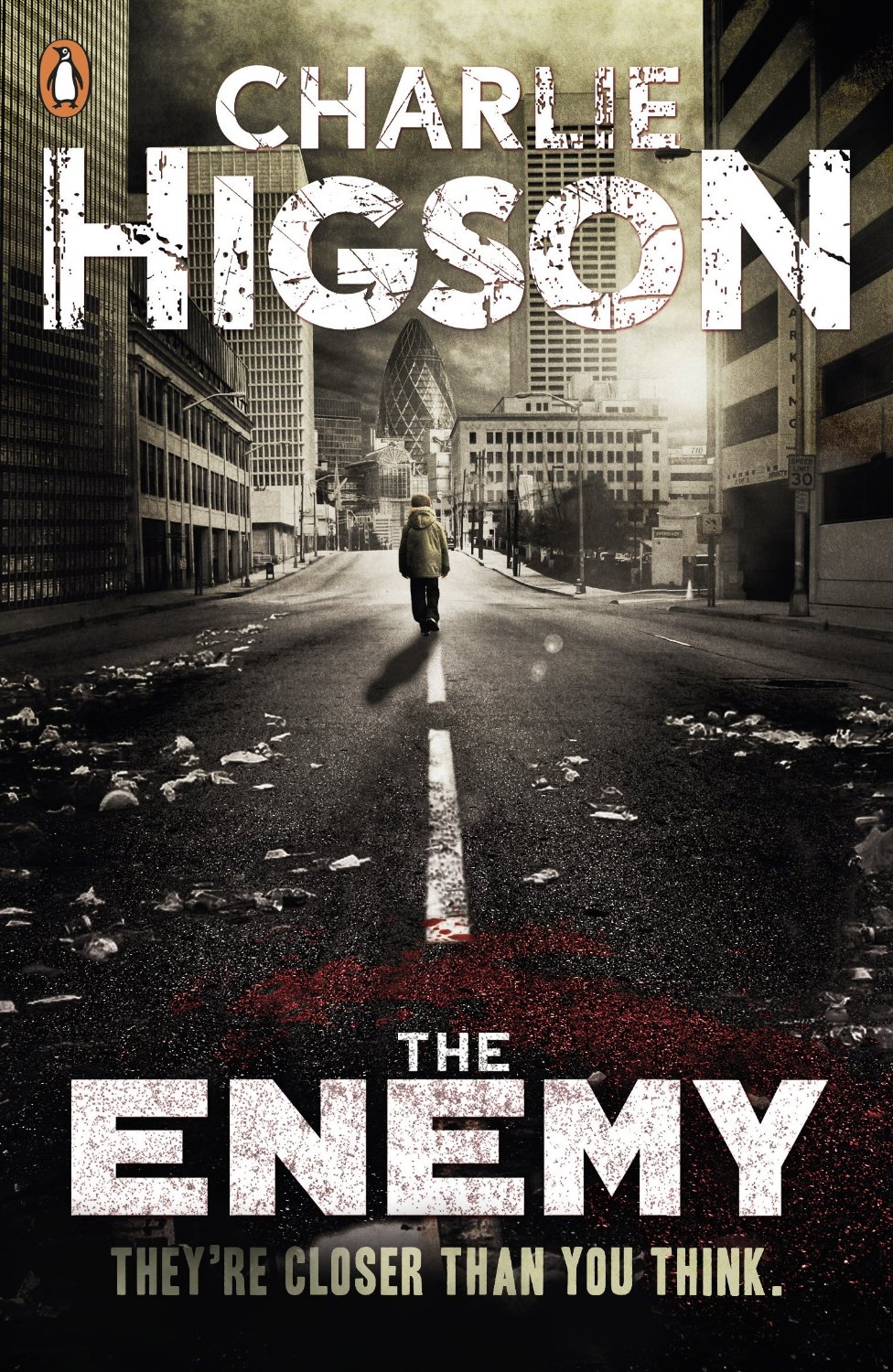
The Enemy, by Charlie Higson

I got so engrossed in this novel this summer that I actually sustained some of the worst sunburn I've ever had in my life- bubble blisters and the lot- because I couldn't put this book down. Now there's a testament if ever I heard one.

The Enemy is set in a post-apocalyptic London after a global epidemic of a horrifying sickness has reduced all people over the age of 14 into flesh-eating monsters. The remaining children have formed small bands of survivors all over England in an attempt to fend off the attacking adults and to increase their chances of survival. The story follows a group of survivors based in a Waitrose store, led by 13 year old Aaran and his right hand woman Maxie. They are becoming increasingly worried about the apparent increase in the intelligence of the attacking adults, they are getting smarter and they're picking off the little kids more easily. Waitrose is not going to sustain and protect them for much longer.

It's a brilliant combination of The Walking Dead and Lord of the Flies. But British, and with YouTube. How do kids cope in a world without adults? What if there are adults but they're fatally hostile? It's an action packed struggle for survival against the odds and against the people that are supposed to look after you, with additional themes of belonging, security, leadership and responsibility and the battles for power and dominance which have no age restrictions. 

Charlie Higson is such a brilliant, brilliant story teller, switching between the main Waitrose group (later allied and merged with the Morrison’s group) as they make their way across the grown up infested streets of London to the rumoured safe zone of Buckingham Palace, and the solo journey of Small Sam, snatched by the adults and taken to the Arsenal stadium as he makes his way to find them at the palace. The groups learn fairly quickly that safety always comes at a price, and in this case that price is manipulation and dictatorship. 

Higson looks at both the best and the worst personality traits that emerge in times of trial- it really is the only real way to ever discover what type of person you truly are. The leadership skills that only really reveal themselves under immense pressure, loyalty, cowardice, villainy and greed. Higson really does a brilliant job of distinguishing between those who want nothing more than to survive in modest security, and those hell bent on domination.

Each section ends with a breathless cliff-hanger and features all manner of escapes, rescues, battles and alliances. What I appreciated most of all was that none of his characters are bullet proof, which so often happens in survival fiction. There are characters that the reader is certain will survive that are killed off- nobody is safe. I love that Higson doesn't shy away from really going to town on some of the deaths, the gratuitous gore and some of the impossible decisions that these 12 and 13 year olds have to make. He's so good at creating these sympathetic, put upon teens that are just trying to keep their flocks together. He also has a brilliant knack for striking exactly the right balance between funny, horrific and the familiar things that modern teens will relate to. It all contributes to that horrible authenticity of the scenario.

It's a breathless, tense start to the series that really examines the nature of responsibility and leadership and the temptation of seizing control when the opportunity presents itself. Thoroughly engrossing, believable and full of genuine horror, I enjoyed it hugely and will definitely be reading the rest of the series. I am an absolute sucker for survival apocalypse stories, and this is such a brilliant take on the zombie genre.

Charlie Higson being a dude. https://www.youtube.com/watch?v=1jUXsJOlmoY

Wednesday, 2 July 2014

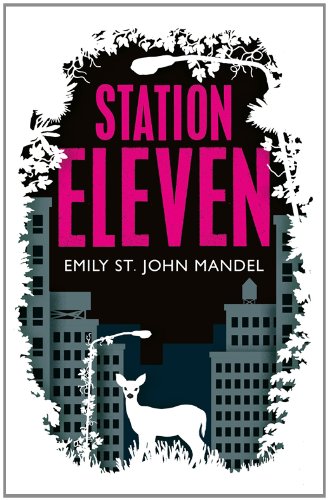
Station Eleven, by Emily St. John Mandel

Station Eleven begins with a Canadian production of King Lear, starring the famous Hollywood actor Arthur Leander. When Arthur collapses on stage, a Paparazzi turned paramedic rushes to his aid, thinking about the strange connections that have brought him and Arthur together over the years- connections that have been significant to him and probably unnoticed entirely by Arthur. As he walks through the snow later that night to his apartment, he receives a panicked call from a Doctor friend, warning him of the speed and efficiency of a new type of flu strain. He prepares for the worst.

Elsewhere in the world, the Georgia Flu rips through the human race, spreading instantly from person to person. It's guessed that the fatality rate was around 99%.

Twenty years later and settlements of survivors are gradually developing. New, post-flu families are coming together and children are being born. Scavenging, growing crops, living communally in petrol stations and airports, rebuilding some sort of life albeit one without technology, medicine or electricity. The human race is depleted, but it goes on.  Station Eleven charts the historical and future paths of six key figures and the curious fingers of fate that hold them together; the actor Arthur Leander; Jeevan, the paramedic alerted to the pandemic in the nick of time; Arthur's first love Miranda and her mysterious artwork; Kirsten, an actress in the Travelling Symphony; Arthur's oldest friend, Clark who boards the last scheduled flight and the sinister self-proclaimed 'prophet'.

Firstly, I haven't enjoyed such an absorbing, believable post-civilisation novel for ages. The pre-flu world is recognisably mundane, the human race going about its business and arrogantly assuming that it will continue to do so forever. The panic, the disbelief and the fear inherent in any catastrophe is presented in a very personal way through the eyes of various characters, rather than from society as a whole. The reader senses the panic on the streets, but nobody truly witnesses it. The author really conveys how horrifically isolating surviving a disaster can be and raises the point that whoever you are standing next to at the time are the people that you are going to have to try to survive with. The post pandemic world is strangely beautiful, nature reclaiming the cities and human life much more communal and sustainable and in some ways quite appealing. I was absolutely swept up in this novel's world and events, the characters were brilliantly crafted and the way that their connections to each other was gradually revealed was incredible.

I loved the out-of-sequence format of this book, the jumps back to civilisation in the pre flu world and then forward to the different groups of survivors in different post-collapse eras. Once the reader assembles the parts in their heads, it builds up to a shocking reveal that draws the elements together wonderfully. There are so many delicate strands to this novel, all connected through decades that tie up in unexpected ways and at the centre of it all is Arthur, the man that dies in the first chapter. His life has a water-ripple effect that continues to be felt years after the end of civilisation when his fame has been forgotten.

I relished the value placed on art in this novel, its importance to any civilisation and the need that all human beings have for stories. Among the bands of survivors are the Travelling Symphony, a theater group slash orchestra that roam the Eastern territories of what was once the United States, performing the plays of Shakespeare and  musical concerts to the people of these settlements, because 'Survival is Insufficient'. I love that there are always some survivors that want to preserve what came before, that can't bear to see so much history and heritage snuffed out for good. I always wonder what it is that will come to define certain generations in the future, what will be remembered or rescued and sometimes whether or not certain generations will be lost forever.

The book was so elegantly written and so compact in its themes and focus. Every event is significant, every character is important and has an impact on the course of events or on another character's behaviour. The storytelling is absolutely gripping, weaving in and out of the lives of the characters and gradually tying up the loose ends. It asks questions about the legacy of fame, the different things that comfort and sustain people in hard times and the inestimable value of art and music, and does so in a way that is ridiculously compelling.

It's a beautiful, unique book that combines elements of The Year of the Flood, with its rural settlers and the fragmented structure, shifting backwards and forwards of the event that changed the world, with the nomadic storytelling importance of The Postman and the gradual return of the man-made to the natural world of Earth Abides. It makes you consider what lengths you would go to to survive and whether or not you'd want to remember and preserve what you'd lost or to begin anew. Faultless- an absolute pleasure.

Thank you to @SamEades at Pan Macmillan for the proof copy.

Thursday, 3 April 2014

Earth Abides, by George R. Stewart


Earth Abides is the story of the almost extinction of the human race due to a deadly contagion, and the eventual rebirth on human civilisation. Said to be at the head of the Post-Apocalypse novel family tree, the book follows the path of a Californian man and his attempts to continue civilisation in any way that he can.

When Isherwood Williams emerges from his geographical studies in the Californian mountains and he returns to find the town deserted, dogs roam the streets, cars line the sides of the roads and all the newspapers re dates two weeks ago. Foraging for his food and making use of the city's stores of electricity and water, Ish considers himself fairly well suited to isolation. Socially awkward, a bit introverted, prone to spending weeks alone in the mountains and even minus appendix; he seems the ideal candidate for "last man alive". Seeing as there is nobody to prevent him from doing so, Isherwood decides to take a road trip across America, heading for New York, Chicago and other big cities to see how many stragglers make up the remainder of the human race and to decide what to do with the rest of his life...

Upon his return (plus canine friend), Isherwood establishes "the tribe"- an assortment of friendly local people, strangers initially, that establish a comfortable but simple way of life amongst the empty streets of the town. Living communally and making decisions together, the old world adults build a stable but isolated community. As their community is swelled by children and grandchildren, Isherwood tries his hardest to keep 'civilisation' alive, trying to promote reading, democracy and practical skills.

The novel raises some interesting questions about religion and the skillset and legacy of mankind. Isherwood, one of the last remaining Americans, is a professor and so values learning, books and academic pursuits. His children and grandchildren don't- they fidget through school and want to run wild outside. It makes the reader wonder 0from which stage in human history the second era of humanity might have resumed if the group had had different skills, or if it was composed of other randomly spared individuals. A farmer, for example might have continued from the stage of the agricultural revolution, advancing the community by several thousand years. As it is, humanity returned in San Francisco to a hunter gatherer lifestyle- scavenging for tins and dry goods and relying upon what was left behind from the 1940s and resorting later to hunting for cattle and mountain lions.

Isherwood actively scorns religion throughout, scoffing at the children's primitive superstitions and their half made, improvised belief systems- he believes new humanity will be better off without religion. The construction of new systems of belief is something that the book observes and wonders at frequently. Isherwood is stunned and intrigued by what appears to be an entire religious system, complete with gods and holy symbols germinating in the consciousness of those born after the disaster. Its culmination at the end of the book is almost tragic- Isherwood has truly become the last American and now he has no control over what comes afterwards, or how others will remember him in the future...

There are some really beautiful descriptions throughout this book- simple but evocative. The empty glass and concrete of New York's deserted skyscrapers, the musky silence of the University library and the precious knowledge and human history that it preserves, the gradual decay of the human world as nature reclaims the country. The shepherd free sheep roaming the fields and the re-establishment of a natural food chain. The Golden Gate Bridge looms over the tribe's settlement, reminding all who remember of the once great capabilities of the human race. It's quite a powerful thought- the hard work and progression of almost two million years lost in two generations.

Though it is not a pacey book by any means, I really enjoyed this novel. Isherwood is an interesting protagonist, and the reader really gets to understand him and the motivation behind his behaviour. His frustration at his inability to steer his tribe in the direction that he thinks best is understandable, and his persistence is impressive, his decisions often difficult. It's easy to become invested in his survival and the survival of the tribe, though none of its members are characterised enormously. There's something about the isolated community living off the land that really appeals to me. Bring on the demise of the human race.

Wednesday, 19 February 2014

Sky Run, by Alex Shearer

Sky Run is set in a world where there is no real Earth, just pockets of land scattered around in space, floating above the sun. Sky Sharks, Sky Fish and other bizarre creatures ride the thermal currents of the sky, hunting for food whilst nomadic humans cruise in their boats hunting for clouds and t
he valuable water that they produce.

Orphans Martin and Gemma live with their 120 year old Great-Great-Aunt Peggy and their lazy Sky Cat Botcher on a small floating lump of rock far out in the outlying settlements, days and days away from civilisation. Not wanting her family to grow up in ignorance and isolation and being a believer in education, socialisation and in self-improvement, Peggy enrols her charges in school over on City Island. Martin and Gemma are less than enthusiastic about such a huge journey and the prospect of school but board their "Gran's" ancient Sky Runner anyway.

Their dangerous journey takes them through unchartered sky, past isolated Islands populated with damaged and dangerous people (not least a deranged axe-murdering Motel owner) and into some tricky situations with the local Sky-life. Sky pirates, menacing and oppressed slave populations, frantic Rat catchers and floating minefields also find themselves themselves in the path of the rickety Sky Runner and its steadily increasing crew. Peggy must teach her family (and the newer acquisitions) that though an education is very important, not everything that you ever learn can be taught at school. There are dangers, temptations and obstacles that need skills other than academic knowledge to overcome. They need understanding, patience and resourcefulness too- and that's something that can't be taught in the city.

I found this to be a really enjoyable read with an incredibly imaginative and unique setting. Think the British Gas adverts meets Phillip Reeve's Predator Cities series. The World is really atmospheric and creates suspense successfully: the constant feeling of threat, the idea that life is quite tough for everyone and survival is against the odds (despite Peggy's age).

The characters are varied, well-rounded and I think they've got a very broad appeal. Peggy is a brilliant invention: funny and warm, feisty for her centenarian  years and allows the younger generation to learn from their successes and their failures- but she's tainted with a strange sadness throughout, like she knows something that her niece and nephew don't. Martin and Gemma, who take turns to narrate the story are likable, endearing and recognisably realistic- Martin is a dreamy idealist with no real idea for consequences, and Gemma, who sees herself as more put-upon and wiser, seems to resent his simple happiness quite a lot of the time, though it's clear she loves her brother and her aunt. Their squabbling and sibling-ly disgust at each other is funny and true to life. Though they fight and moan about another, they're a team and they each save the others neck a couple of times...

I really liked the episodic structure of the plot and the variety of accidents and predicaments that the characters found themselves in. It proved that there's a lot to be said for doing the right thing and having people around you that you trust. The message that it's not the destination but the journey that's important also really appealed to me- it's a message that I'd like to see moe of in children's writing.

Friday, 6 December 2013

More Than This, by Patrick Ness

I don't recall seeing a cover that sums
up the themes and style of a book as
efficiently and as effectively as this.
It's a transition, and it's walking a line
between two worlds.
Where do I start?  Where can I possibly start in explaining to anybody what an astounding piece of writing this is?  More than that, how can I do so without giving away any of the pieces of such a beautiful, intricate puzzle?  It's 2013.  People should have stopped being surprised at the emotional depth of Young Adult literature. The public will be aware that there are unimaginable levels of sophistication to all types of fiction, all kinds of themes and a multitude of ways to handle those themes.  More Than This is an absolute beacon of warmth, humanity for ANY fiction, not just YA fiction. There are no words.  But here are some words that will attempt it.

The story starts with a death.  Somewhere, cold and alone, a boy drowns in a turbulent sea.  We know he is dead, and he knows he is dead- his spinal chord unambiguously severed.  He- Seth, as it turns out, is as surprised as anybody when he regains consciousness outside his childhood home.  Thirsty, naked, and a bit unsteady on his feet- but certainly not dead.  Waking up to a dusty, deserted, but achingly familiar World, Seth has to work out where he is- Hell? Purgatory? The Afterlife? and how he came be there so alone.

Partick Ness so so skillfully drip feeds both the characters and the reader information, slowly layering up a picture of a life that ended in such a violent death.  As Seth gathers more information from his surroundings, memories and horribly vivid dreams, his past becomes revealed and memories begin to emerge- some intensely private, some buried so deeply as to be almost impossible to recall.  As the gaps are filled in for the reader and for Seth, his theories about the World in which he finds himself change and his understanding of himself and his life is blown apart. From the reader's perspective, you find things out, you think you know where the plot is going, you're pretty bloody pleased with yourself for working it out and then...what's that? It's another insane plot twist that will flip your stomach and blow your mind.  Ness weaves in and out of the past and the present, showing that we can walk a line between two worlds quite easily, withholding key pieces of information until the most essential moment, backtracking and sidestepping and ever so slowly unraveling the scrambled mass of plot strands.

This book really captures what it is to be a teenager disappointed with one's lot in life (so far).  There's a harmless self-centered-ness, an intense anxiety (and inability to believe that the suffocating anguish of being a teenager is temporary) and the fear of the dawning realisation that this might be it.  This might be as good as it gets, and that's pretty crushing.  Most teenagers feel misunderstood and alone at some point, and Ness really brings those feelings across brilliantly.  The book forces you to ask what is it that matters in life.  Is it knowing?  Is it feeling or loving or being satisfied that everything you are is real?  Or is it just being happy, however that is achieved?  

There are more things I would like to talk about- the reason for Seth's crushing guilt, the things he has to hide, the things he longs for and his pretty terrible family life, but the elements of this novel fit together so beautifully and so thrillingly that I don't want to reveal too much.  I enjoyed the breathless pace and the importance of these discoveries as they are made so much that I'd hate to take that away from anyone.

Such a beautifully written, insanely original and tightly plotted novel.  Written with the same tenderness and profound understanding of human nature, loss and pain that is a bit of a hallmark of a Ness novel, More Than This is pretty staggering.  It's a novel of afterwards: Afterlife, aftermath, after love and after loss and after everything.  It's being at the end and being ready for it.

I'd recommend this to people that want something more than the average dystopian future narrative, and to the technologically minded.  It would also be a great read for Video Game fans and seeing as it deals with a lot of "issues" (immigration, LGBT, domestic violence, bullying, berevement) there's a lot of ways in...

Wednesday, 25 September 2013

The Bodysnatchers, by Jack Finney

This is a re-read for me, one I nominated at my book club and it won the vote! Yaaaay.

I really enjoyed re-reading this- one of the easiest, creepiest and most swiftly-paced Science Fiction books I can think of.  I can't say as there was anything profound and important that could only be discovered on a second read...but that's sort of the beauty of the style of this book- it's so easy and quick to read and the pages just fly past.

If Philip Marlowe is a hard boiled Private Detective and Walter Neff is a hard boiled criminal/insurance salesman, then Dr. Miles Bernell is very much the hard boiled GP. Born, raised and Doctoring in the small Californian town that his father practised in before him, Miles knows every soul in Santa Mira, knows their business, their jobs, their characters. He knows every hill and path through the valleys and every field on the edge of town. When he starts getting patients visiting his surgery telling him that their relatives aren't really their relatives, he doesn't know what to make of it. First it's just one. Then it's half a dozen. All convinced that despite looking, acting and remembering to the last detail like they always have done, they're just different.  When Miles and his neighbours discover something impossible and undeniably horrific in the basement, something that looks like a dead body but has never been alive, never been completed or had the finishing touches put on it, they know they've got a potentially species threatening disaster on their hands. It's just a case of finding out how far it's invaded so far...


It has to be said, this book could be considered a tad dated in areas when it comes to gender roles- the women fix a lot of coffee, cook sausages, go into shock quite a lot. The men smoke cigars, make decisions and speed around in cars...Miles is certainly the gung-ho saviour dreamboat that was apparently so ubiquitous in the 1950s. His one-time sweetheart, the recently re-appeared future squeeze Becky has to constantly remind Miles that women can do more than stand clutching their faces frozen in horror at the sight of anything, which she proves later on. I'm not convinced this book would be published today, it's not gory enough, it's ending might be seen as a bit of a cop out and the horror of being turned to dust in your sleep just seems too subtle.

The story of the space spores drifting to Earth and perfectly replicating humans, turning the originals to dust in their sleep is always thought to be a metaphor for communism or free will or something...the idea of the doppelganger is nothing new, but this novel combines the uncanniness of the doppelganger with deadly organisation skills- a recipe for the end of humanity. Whatever it is, it's chilling, slick, in places quite funny, and generally a really enjoyable entertaining and highly original Science Fiction novel. Soooo some of the characters' actions and decisions are questionable... yeeees some of the science might be a bit made up...I knooooow the ending is a bit too convenient...It's a fun, hammy, B-Movie fan's dream come true and I love it.

Tuesday, 11 June 2013

The Unit, by Ninni Holmqvist


This debut novel takes place in (presumably) very near future where the famously democratic nation of Sweden has implemented a new social policy. Designed to cut down the national cost of the elderly, the ill and the socially unproductive, all childless adults aged 50 for women and 60 for men are deemed 'disposable' and are taken to a facility called the Unit. At the Unit they can enjoy the best entertainment, leisure facilities, companionship, good food, theatre and comfortable living space, but they will be required to undergo constant medical tests (some harmless, some not so much) and ultimately to sacrifice their vital organs to those deemed to be 'needed' by society.

Dorrit has just turned 50. Intelligent but unsociable, an unpublished writer and all round bohemian, she has never married, never had children and never had a career that is considered to contribute to the nation's prosperity. She leaves her beloved dog, Jock, and her ramshackle house behind and signs her body over to medical science. The unit proves to be the only place in her life that Dorrit has met truly likeminded people, mostly 'pointless' intellectuals such as herself. Amongst the childless she is no social outcast, and now she has time and need for friendship. Her tragedy is that during her first week, she meets and falls in love with another resident who, had she met him on the outside she may have led a happy life with.

To begin with, I was convinced that this book was a Swedish re-hash of Never Let Me Go but with Borgen jumpers instead of boarding schools. I changed my mind. NLMG hides the true reason for the existence of the characters and of the school they attend- we understand it's not a normal school, but can't work out why. When its organ-farm purpose is revealed to the reader, the characters discover that there are organisations, such as their old school, working to determine the ethical implications of cloning and forced organ harvesting, and asking questions about what makes a person a true person and what makes one just a walking bag of spare parts. There's none of that here. We know from the beginning what the purpose of the unit is, and so does Dorrit. Society knows. The donors know where their organs go and the recipients know where they come from. It's the assumption that it's all fine and sensible and that it's the right thing to do because it's the economically sustainable thing to do that makes this book shocking.

The residents of the unit arrive shell-shocked and confused, they have outbursts throughout their stay of grief and rage as their friends and the people that they have fallen in love with within the unit are taken forever and recycled- but for the most part, they accept their fate. I think this is what intrigued me the most about these characters- the fact that they have lived in the outside world outside of social norms, but become so passive and so resigned within the unit. Are these people- artists, writers, poets- genuinely dissatisfied with their childless lives? Do they crave companionship and security? Are they really that conventional at heart? Do they really buy into the state's idea of the reuse of 'disposable' human tissue? Dorrit, faced with an unusual amount of options, decides her own fate in a very obvious way but the reasons for her choice are never confirmed in any real sense. The reader has a lot to consider when deciding what motivates the behaviour of the characters that they read about, which is a brave move on the part of the author.

I honestly did enjoy this book a lot, despite expecting not to. It's haunting, original and well written in a stylishly sparse way. I genuinely liked Dorrit and her friends; I felt the injustice of their social position acutely and hated the cruelty of the two-tier social system. Books like this prove that behind every supposed fictional Utopia there's some hidden (or in this case unhidden) horror that's necessary to keep the important people comfortable.

I look forward to discussing it at our meeting!

Saturday, 22 September 2012

The Man in the High Castle by Philip K. Dick

I was nursing a bit of a post-hunger-games book hangover at the time of reading, so had gone for
something completely different.

I started this knowing only the basics: It's an alternate future (or past, I guess, as it's the 1960s) where the Axis forces won World War II.  That was all I knew.  Having finished the book I'm not sure I'm any the wiser.

The narrative switches between several story groups.  They never really link up, so I assume the Author is trying to show a sort of cross-section of life in Japanese San Francisco.  The character groups are:

  • Robert Childan, a middle aged US citizen Antique Americana dealer and a young Japanese couple he becomes besotted with.  The antiques dealer sort of flips between admiration for the unemotional efficiency of the 'superior' Japanese race and hatred and contempt for them, seeing what the American nation has been reduced to.  He adopts the Eastern ways of thinking and acting, he worries that his behaviour is unappealing or vulgar.   He still secretly retains the opinion that the Japanese are trespassers and that they are ultimately inferior to his own race of Americans.
  • Frank Frink, an illegal Jew beginning a jewellery business.  He attempts to revive the pride of the US art world, offering something contemporary and new, rather than pre-war household tat that has proven so popular with the Japanese.  We also meet his estranged wife, Julianna and an Italian soldier that she goes on an ill-fated road-trip with.
  • An elderly Japanese diplomat, Nobusuke Tagomi, and his dealings with a Swedish plastics technician.
  • The Nazis pop up now and again.  The backdrop for the whole plot is the death of the Nazi Party's leader and the choosing of his successor.

Canada also appears to be the only country not currently possessed by either the Germans or the Japanese.  Poor Canada.  Even the fascists shun it.

The most interesting aspect of this book so far for me has been the characters' discussion of a banned book The Grasshopper Lies Heavy, an in-narrative novel depicting a fictional alternative future where the Allied forces won the war.

The former US states are divided up between the Japanese and the German empires.
Note the apparent neutrality of Canada...
I think this is where I fell down with this book.  Ultimately, I know very little next to nothing about the Second World War.  Most of what I do know, I learned from Call of Duty.  To me, all Russians therefore sound like Gary Oldman.  The Grasshopper Lies Heavy depicts several events that I presume happened in the WWII.  A War buff could read this and bask happily in the topsy-turvyness of it all.  I'm just sat there thinking, "So did that happen in real life?  Is the actual author making this fictional author seem like a crazy person, a dimension traveller or a prophet?  What was it that enabled the Allies to win the war that didn't happen here?"

So while I'm sure this was a very intelligent and well written book that makes profound comments on the nature of power and the position of the victors,  it just failed to make any connection to my non-American and history-starved brain.  Which is more my fault than its